
The Case of Little Albert: Conditioned Fear
In the annals of psychology, few studies remain as simultaneously famous and controversial as the experiment conducted by John B. Watson and his graduate student Rosalie Rayner on a young child known as “Little Albert.” This investigation, undertaken in 1920 at Johns Hopkins University, aimed to demonstrate the power of classical conditioning in shaping emotional responses, specifically fear. The experiment, while foundational to behavioral psychology and our understanding of learning, has also been widely criticized for its ethical implications, the potential for harm to an infant, and the questionable scientific rigor by modern standards. Nevertheless, the case of Little Albert continues to be a compelling illustration of how fears can be learned and generalized, leaving an indelible mark on the field.
The early 20th century witnessed the rise of behaviorism as a dominant force in psychology. Led by figures like John B. Watson, behaviorists rejected the introspection-based methods of earlier psychological schools, arguing that psychology should focus solely on observable behaviors rather than unobservable mental states. Watson, in particular, believed that the environment was the primary determinant of behavior and that human beings were essentially blank slates, shaped by their experiences.
Watson’s Vision for Psychology
John B. Watson’s seminal 1913 paper, “Psychology as the Behaviorist Views It,” is often considered the manifesto of behaviorism. In it, he famously declared, “Psychology is a branch of the natural, a truly experimental, and a theoretical branch of science. Its ultimate goal is the prediction and control of behavior. Introspection need not be used, and the uselessness of it can be brought about by the fact that the experimental study of animal behavior has made it possible for psychology to abandon its reliance on consciousness.” This radical departure from prior psychological thought emphasized objectivity and the scientific method. Watson sought to establish psychology as a legitimate science, akin to physics or chemistry, by focusing on what could be measured and manipulated.
The Nature vs. Nurture Debate and its Behavioral Interpretation
The age-old debate between nature (innate predispositions) and nurture (environmental influences) was profoundly shaped by behaviorism. Watson’s perspective leaned heavily towards nurture, arguing that most behaviors, including emotional responses, were learned through interaction with the environment. He believed that with sufficient control over environmental stimuli, he could condition individuals to develop any desired behavior or emotional disposition. This belief fueled his desire to demonstrate the malleability of human emotions through experimental means.
The Unconditioned and Conditioned Stimuli
At the core of classical conditioning, a concept pioneered by Ivan Pavlov, lies the distinction between unconditioned and conditioned stimuli and responses. An unconditioned stimulus (UCS) naturally elicits a unconditioned response (UCR) without any prior learning. For instance, a loud noise naturally causes a startle response. A conditioned stimulus (CS), on the other hand, is a neutral stimulus that, when paired with a UCS, eventually elicits a conditioned response (CR), which is similar to the UCR. The goal of classical conditioning experiments is to establish this learned association. Watson sought to apply this principle to the development of fear in humans.
The case of Little Albert, which demonstrated the principles of conditioned fear through classical conditioning, has been a significant topic in psychology. For those interested in exploring more about the implications of this experiment and its relevance to modern psychological practices, a related article can be found at Unplugged Psychology. This resource delves into the ethical considerations and the impact of conditioning on behavior, providing a comprehensive overview of how such experiments have shaped our understanding of fear responses.
The Subject: Little Albert and his Baseline Emotional State
The identity of “Little Albert” has remained a subject of historical and ethical debate. While initial reports identified him as Albert B., later research has suggested he might have been William Barger, the son of a wet nurse working at the hospital. Regardless of his precise identity, the crucial aspect for the experiment was his apparent emotional disposition prior to conditioning.
Pre-Experimental Assessment of Albert’s Temperament
Watson and Rayner reported that Little Albert, at approximately nine months old, exhibited no fear responses to a variety of stimuli that might typically evoke apprehension in infants. These included objects like a white rat, a rabbit, a dog, a monkey, masks with and without hair, cotton wool, and burning newspapers. He was described as being generally fearless and displaying no anxiety when objects were presented to him. This baseline assessment was critical for the experiment’s premise, as it aimed to demonstrate that fear, in this instance, was not an innate predisposition but rather a learned response.
The Absence of Pre-existing Fears
The researchers specifically sought a child who did not already possess a fear of the object they intended to use as the conditioned stimulus. The white rat was chosen due to its relatively common presence and its potential for association with a frightening experience. The absence of any pre-existing aversion to the rat was crucial to ensure that any subsequent fear response could be attributed to the conditioning process itself, rather than a prior phobia. This careful selection of the subject and their initial emotional state was intended to provide a clean slate upon which to build a conditioned fear.
The Ethical Considerations of Subject Selection
Even in the early 20th century, ethical considerations regarding research on human subjects were beginning to emerge, although they were far less stringent than today. The decision to use an infant, who could not consent to the experiment, raises significant ethical questions. The researchers relied on the implicit consent of the mother, who was a hospital employee, and the child’s vulnerability meant that the potential for harm was substantial. The lack of informed consent and the potential for psychological distress are central to the ethical criticisms leveled against this study.
The Conditioning Procedure: Building a Fear Response

The core of the Little Albert experiment involved a systematic process of pairing a neutral stimulus with a fear-inducing stimulus. This pairing was designed to create a conditioned association between the neutral stimulus and the feeling of fear.
The Neutral Stimulus: The White Rat
The white rat was chosen as the neutral stimulus (NS). Initially, when presented to Albert, the rat elicited no fear. He would reach for it, showing curiosity rather than apprehension. This initial lack of response was essential for the conditioning process to be effective. The researchers wanted to demonstrate that a stimulus that was initially perceived as non-threatening could, through association, become a source of fear.
The Unconditioned Stimulus: The Hammer and the Gong
The unconditioned stimulus (UCS) used to evoke a fear response was a loud, sudden noise. This was created by striking a steel bar or gong with a hammer behind Albert’s head. This sound was known to startle and frighten infants, eliciting a distinct unconditioned response (UCR) of crying and distress. The intensity and suddenness of the sound were key to ensuring a strong and consistent fear reaction.
The Pairing Process: UCS and CS Together
The conditioning was carried out in a series of sessions. During these sessions, the white rat was presented to Albert. Just as he reached for or showed interest in the rat, the loud noise was produced. This was repeated multiple times. The pairing of the rat (NS) with the loud noise (UCS) was the crucial step in establishing the conditioned fear. The rat, initially neutral, was now consistently associated with the frightening sound.
The Goal: A Conditioned Fear of the Rat
The intended outcome of this systematic pairing was for the white rat to become a conditioned stimulus (CS). The researchers hypothesized that after repeated pairings, the mere presence of the white rat would be sufficient to elicit a fear response in Albert, even without the accompanying loud noise. This conditioned response (CR) would manifest as crying, whimpering, and attempts to crawl away from the rat.
The Results: Generalization and Persistence of Fear

Following the conditioning trials, Watson and Rayner observed significant changes in Albert’s behavior towards the white rat. His once fearless interaction had transformed into a clear display of fear. However, the experiment did not stop at just demonstrating the conditioned fear of the rat itself.
The Conditioned Response: Fear Manifests
After several pairings of the rat and the loud noise, Albert began to exhibit signs of distress as soon as the rat was presented. He would whimper, cry, and attempt to crawl away from the animal. This indicated that the rat, once a neutral stimulus, had become a conditioned stimulus capable of eliciting a conditioned fear response. The researchers had successfully demonstrated that fear could be learned through classical conditioning.
Stimulus Generalization: Fear Spreads
A particularly noteworthy finding was the phenomenon of stimulus generalization. Watson and Rayner discovered that Albert’s fear was not limited to the white rat. He began to show similar fear responses to other furry objects, even those that bore no resemblance to the rat. This included a rabbit, a dog, a fur coat, and even Watson’s hair. This suggested that Albert had generalized his conditioned fear from the specific conditioned stimulus (the white rat) to other stimuli that shared similar characteristics (e.g., furry texture, white color). This indicated a broader impact of the conditioning process on his emotional responses.
Persistence of the Conditioned Fear
The study also provided evidence for the persistence of conditioned fears. While the experiment was conducted over a relatively short period, the fear responses exhibited by Albert towards the rat and similar stimuli appeared to endure. This raises questions about the long-term effects of such conditioning and the potential for permanent emotional damage. The study’s limited duration and lack of follow-up make it difficult to ascertain the true longevity of these learned fears.
The Role of Other Stimuli
While the white rat was the primary conditioned stimulus, the researchers also presented other stimuli, such as a wooden box, which did not elicit fear. This helped to reinforce the idea that the fear was specifically associated with stimuli that had been paired with the loud noise or shared similar characteristics. The presentation of a variety of objects served to isolate the effects of the conditioning.
The famous experiment involving Little Albert demonstrated how fear can be conditioned in humans, highlighting the principles of classical conditioning. This groundbreaking study has led to further exploration of emotional responses and their origins. For those interested in delving deeper into the psychological implications of conditioned fear, a related article can be found at Unplugged Psych, which discusses the broader impacts of conditioning on behavior and mental health.
Critiques and Ethical Concerns: The Shadow Over Little Albert
| Metric | Value | Description |
|---|---|---|
| Subject | Little Albert | Infant participant in the conditioned fear experiment |
| Age | 9 months | Approximate age of Little Albert during the experiment |
| Conditioned Stimulus (CS) | White rat | Initially neutral stimulus paired with loud noise |
| Unconditioned Stimulus (US) | Loud noise (hammer striking steel bar) | Stimulus that naturally elicited fear response |
| Conditioned Response (CR) | Fear response (crying, avoidance) | Learned response to the white rat after conditioning |
| Number of Conditioning Trials | 7 | Number of times the CS and US were paired |
| Generalization | Yes | Fear response generalized to other white furry objects (e.g., rabbit, Santa mask) |
| Extinction | Not documented | No formal extinction trials were conducted or recorded |
| Experiment Date | 1920 | Year when the experiment was conducted by John B. Watson and Rosalie Rayner |
Despite its historical significance, the case of Little Albert is fraught with ethical criticisms and scientific limitations that have been extensively debated over the decades. Modern ethical guidelines for research involving human subjects would render such an experiment impossible today.
The Unethical Nature of the Experiment
The most prominent critique centers on the severe ethical violations inherent in the experiment. An infant was subjected to a potentially traumatic experience that induced fear and distress. The child could not consent to the experiment, and his mother’s consent, given her employment status, is questionable. The potential for long-term psychological harm was significant, and the researchers did not adequately address this. The act of deliberately inducing fear in a vulnerable subject without ensuring their well-being is a clear breach of modern ethical standards.
Lack of Consent and Vulnerability of the Subject
The vulnerability of an infant subject cannot be overstated. Infants are incapable of understanding the nature of experiments or providing informed consent. The researchers relied on the implicit consent of the mother, which is generally considered insufficient for such ethically sensitive research. This lack of true consent places the experiment in a morally precarious position.
The Question of Deconditioning
A significant ethical failing was the apparent lack of any attempt by Watson and Rayner to decondition Albert’s fear. While the experiment concluded with the observation of conditioned fear and generalization, there is no record of them taking steps to alleviate his distress or reverse the learned fear response. This leaves Albert with potentially lingering phobias, a clear ethical oversight. Some accounts suggest that a colleague of Freud, Mary Cover Jones, later worked with a child named Peter and successfully deconditioned his fear of rabbits using a gentler approach, but this was separate from the original Little Albert study.
Scientific Rigor and Reproducibility
Beyond ethical concerns, the scientific rigor of the Little Albert experiment has also been questioned. The sample size was extremely small (n=1), making it difficult to generalize the findings to the wider population. The experiment was not replicated, and the precise methodology and observations have been subject to reinterpretation. Furthermore, the identity of Little Albert and the extent of his initial emotional state have been debated, casting doubt on the clarity of the baseline conditions. The lack of precise measurements of fear responses and the reliance on subjective observations further detract from the experiment’s scientific robustness by contemporary standards.
The Legacy and its Ambiguities
The case of Little Albert remains a powerful and enduring illustration of classical conditioning and the formation of learned fears. However, its legacy is dual-natured. It provided compelling empirical evidence for behaviorist theories and the plasticity of human emotional responses. Yet, it also serves as a stark reminder of the ethical responsibilities inherent in psychological research, particularly when involving vulnerable populations. The experiment continues to be discussed in psychology courses worldwide, not only for its scientific insights but as a cautionary tale about the potential for harm in the pursuit of knowledge.
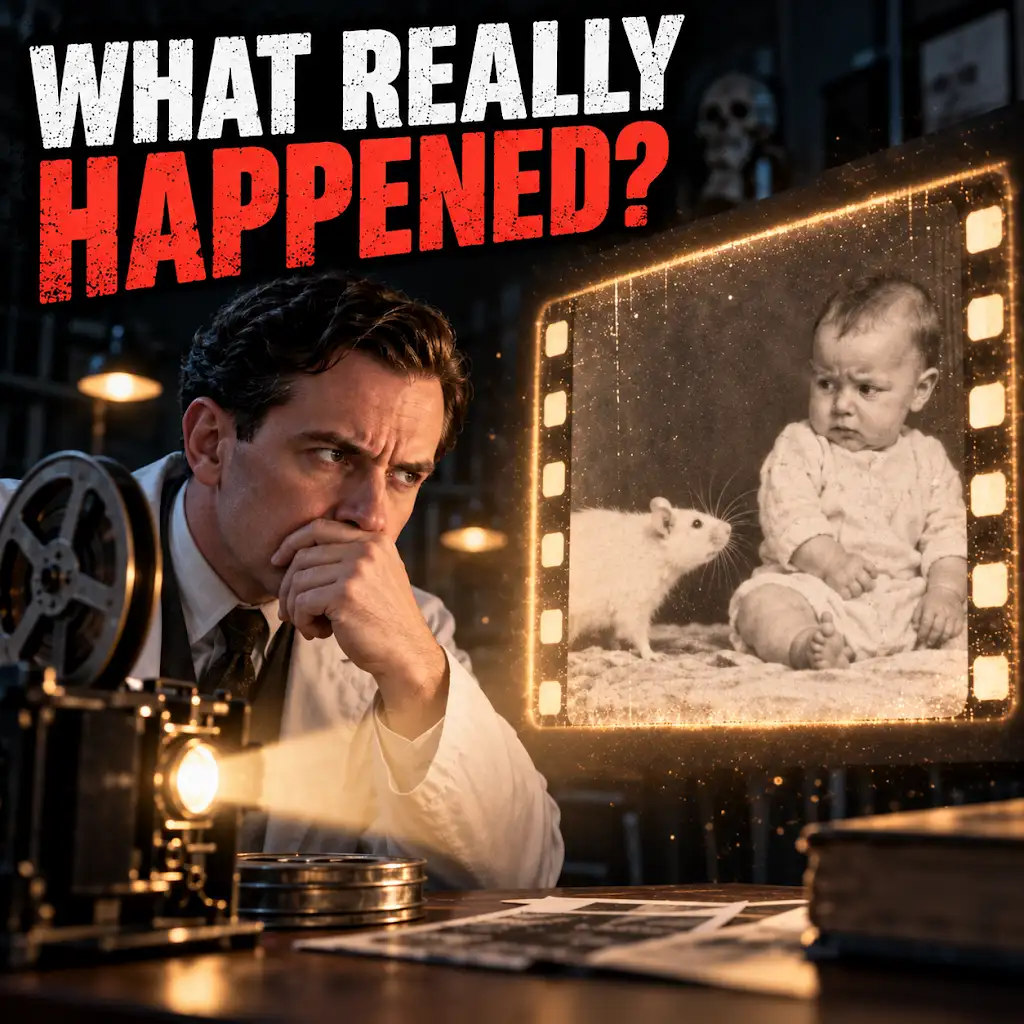
The Little Albert Experiment May Not Have Worked
FAQs
What is the Little Albert experiment?
The Little Albert experiment was a study conducted by behaviorist John B. Watson and his assistant Rosalie Rayner in 1920. The study aimed to demonstrate how fear could be conditioned in a young child.
Who was Little Albert?
Little Albert was the pseudonym given to an 11-month-old boy who participated in the experiment. His real identity was never revealed to the public.
How was fear conditioned in Little Albert?
In the experiment, Little Albert was exposed to a white rat, a rabbit, a monkey, masks, and other stimuli. Whenever he reached out to touch the white rat, a loud noise was made behind him, causing him to startle and cry. This pairing of the rat with the loud noise led to Little Albert developing a fear of the rat.
What were the ethical concerns surrounding the Little Albert experiment?
The Little Albert experiment raised ethical concerns due to the lack of informed consent from the child’s mother, the potential for psychological harm inflicted on Little Albert, and the lack of debriefing or follow-up after the experiment.
What was the impact of the Little Albert experiment on the field of psychology?
The Little Albert experiment is considered a classic study in the field of psychology as it demonstrated how fear could be conditioned in humans. It also highlighted the ethical considerations that researchers must take into account when conducting experiments involving human subjects.