You’ve heard the whispers, the buzz emanating from the hallowed halls of your institution. It’s not just the usual academic chatter; it’s something more profound, a palpable shift in the air, fueled by the “Third Wave Experiment.” This isn’t a science lab with beakers and Bunsen burners, nor is it a historical reenactment. This is you, and your peers, diving headfirst into the intricate currents of human interaction, dissecting the very fabric of social dynamics. You’re not just observing; you’re participating, experimenting, and learning in real-time.
The Genesis of the Third Wave: Why Now?
You might be wondering what prompted this shift, this deliberate dive into the social realm. The answer, like many things concerning human behavior, is multifaceted. You’re part of a generation acutely aware of the complexities that shape our interconnected world. You’ve witnessed the power of collective action, the challenges of navigating diverse perspectives, and the profound impact of social structures on individual lives. The traditional curriculum, while valuable, often presents social dynamics as theoretical constructs, divorced from the raw, messy reality you experience daily. The Third Wave Experiment seeks to bridge that gap, to move beyond textbooks and lectures and into the lived experience.
Bridging Theory and Practice: A New Educational Paradigm
You’ve spent years absorbing abstract theories about group behavior, communication styles, and societal norms. Now, you’re being challenged to see those theories come alive. The experiment isn’t about memorizing definitions; it’s about understanding how those definitions manifest in your interactions with classmates, professors, and even the wider community. You’re learning to identify the subtle cues, the unspoken agreements, and the power imbalances that shape your daily exchanges. This isn’t about academic detachment; it’s about active engagement, about recognizing your role as both a subject and an architect of social reality.
Responding to a Changing World: The Urgency of Social Literacy
Consider the world beyond your campus. You’re bombarded with information, bombarded with differing opinions, and often bombarded with conflicting agendas. To navigate this landscape effectively, you need more than just factual knowledge; you need social literacy. You need to understand how narratives are constructed, how emotions influence decisions, and how to build consensus amidst disagreement. The Third Wave Experiment is your training ground, equipping you with the essential skills to thrive in this increasingly complex social ecosystem. You’re not just learning for a grade; you’re learning for life.
In exploring the innovative approaches to psychology education, the Third Wave experiment students can benefit from insights shared in a related article on the Unplugged Psychology website. This resource delves into contemporary teaching methods that emphasize experiential learning and the integration of technology in the classroom. For more information, you can read the article here: Unplugged Psychology.
Deconstructing Your Social Ecosystem: The “Inner Circle” Exploration
The first wave of the experiment focuses inward, on the immediate social circles you inhabit. You’re encouraged to critically examine your existing relationships, the dynamics at play within your friend groups, your study partners, and even your family. This isn’t about judgment or condemnation, but about a dispassionate, yet insightful, observation of how these relationships function. You’re the anthropologist of your own life, meticulously documenting the patterns, the communication styles, the shared rituals, and the underlying hierarchies.
Mapping Your Network: Visualizing Connections and Influence
You’ve likely never consciously mapped out your social network before, but the experiment demands it. You’re using tools, whether digital or analog, to visualize who you interact with most frequently, who influences your decisions, and who you, in turn, influence. This process can be eye-opening. You might discover unexpected connections or realize the true extent of another person’s impact on your choices. You’re learning that social networks are not static entities but dynamic webs of influence and interdependence.
Identifying Key Nodes: Who Holds the Power?
As you map your network, you’ll naturally begin to identify “key nodes” – individuals who seem to hold a disproportionate amount of influence or connectivity. This isn’t about assigning blame or celebrating dominance, but about understanding the mechanics of social power. You’re learning to recognize leadership qualities, communication strategies that foster cohesion, and the subtle ways in which certain individuals can shape group sentiment. This self-awareness is crucial for understanding your own position within these networks.
Unpacking Communication Styles: The Art of Listening and Speaking
Within your inner circle, you’re encouraged to pay close attention to how people communicate. Are they direct or indirect? Do they favor assertive or passive language? Are they active listeners, or do they tend to dominate conversations? You’re learning to identify these patterns in yourself and others, and to understand how they affect the overall flow and effectiveness of your interactions. This is where the “experiment” truly comes alive – you’re not just observing; you’re actively trying to adapt and improve your own communication, perhaps even experimenting with different approaches to see the results.
The Dynamics of Inclusion and Exclusion: Who Belongs and Why?
Every social group has its unspoken rules of belonging. You’re exploring these mechanisms, examining how individuals are welcomed into or excluded from certain circles. This can be uncomfortable, as it often involves confronting the realities of social hierarchies and the potential for prejudice. You’re learning to recognize the subtle markers of inclusion – shared jokes, inside knowledge, a sense of mutual understanding – and the equally subtle signals of exclusion. This exploration is vital for fostering empathy and understanding the challenges faced by those on the margins of social groups.
Subtle Signals: The Language of Acceptance and Rejection
You’re honing your ability to detect the nuanced ways in which acceptance and rejection are communicated. A slightly averted gaze, a less enthusiastic response, a lack of invitation – these may seem minor, but collectively, they can signal a shift in social standing. You’re learning to interpret these signals, both to understand the dynamics within your existing groups and to be more mindful of the impact of your own non-verbal communication.
The Cost of Belonging: Conformity and Authenticity
The desire to belong is a powerful motivator. You’re exploring the ways in which this desire can lead to conformity, where individuals suppress their authentic selves to fit in. You’re grappling with the tension between adapting to group norms and maintaining your individuality. This is a crucial ethical consideration within the experiment: how much are you willing to compromise your beliefs or values to be accepted?
Navigating the “Outer Circles”: Group Dynamics in Action
Once you’ve gained a deeper understanding of your immediate social landscape, the Third Wave Experiment expands your focus to larger, more diverse groups. This could involve collaborative projects, extracurricular activities, or even simulated social scenarios designed to replicate real-world challenges. Here, the complexity of social dynamics intensifies, and you’re tasked with navigating new and often unfamiliar territory.
Collaborative Ventures: The Engine of Social Synergy
You’re likely participating in group projects that demand more than just individual effort. These are environments where you must learn to collaborate effectively, to leverage the diverse skills and perspectives of your team members. You’re discovering the power of synergy, where the combined output of a group far exceeds the sum of its individual contributions. You’re also learning about the potential pitfalls of group work – the free-rider problem, interpersonal conflicts, and the challenges of equitable task distribution.
Task Allocation and Responsibility: The Foundation of Teamwork
A well-functioning team requires clear roles and responsibilities. You’re exploring how tasks are allocated, the justifications behind these allocations, and the implications for individual accountability. You’re learning to advocate for yourself, to offer your strengths, and to understand how effective task management contributes to the overall success of the group.
Conflict Resolution: Turning Disagreement into Progress
Disagreements are inevitable in any group setting. The Third Wave Experiment doesn’t shy away from this reality; instead, it encourages you to view conflict as an opportunity for growth. You’re learning constructive ways to address differences, to find common ground, and to emerge from disagreements with stronger relationships and more robust solutions. This involves active listening, empathetic communication, and a willingness to compromise.
The Impact of Leadership: Formal and Informal Influence
In larger groups, leadership often takes on more defined forms. You’re observing how formal leaders – elected officials, appointed project managers – exert their influence, and also how informal leaders emerge organically from within the group. You’re analyzing different leadership styles, their effectiveness in various contexts, and the ethical responsibilities that accompany leadership roles.
Authoritative vs. Democratic Leadership: Finding the Right Balance
You’re witnessing firsthand the outcomes of different leadership approaches. Does an authoritative leader inspire greater efficiency, or does a democratic leader foster higher morale and buy-in? You’re analyzing the trade-offs and learning to appreciate that the “best” leadership style is often context-dependent.
The Power of Persuasion: Shaping Group Opinion
Beyond direct authority, persuasion plays a significant role in group dynamics. You’re learning how individuals or groups can influence the opinions and decisions of others, often through compelling arguments, emotional appeals, or the skillful manipulation of information. This awareness is crucial for developing critical thinking skills and resisting undue influence.
Examining Societal Structures: The Macro-Level Experiment
The Third Wave Experiment doesn’t stop at interpersonal dynamics; it also encourages you to look beyond immediate groups and examine the larger societal structures that shape your lives. You’re encouraged to think critically about the institutions, cultural norms, and power dynamics that influence your experiences as students, as citizens, and as members of a broader community.
The Influence of Institutions: Rules of the Game
You’re dissecting the ways in which institutions – your university, government bodies, cultural organizations – set the rules of the game. You’re examining how these rules are created, how they are enforced, and how they impact individuals and groups within society. This involves understanding concepts like bureaucracy, policy, and the mechanisms of social control.
Bureaucracy and Its Impact: Navigating the Labyrinth
You’ve likely encountered the complexities of bureaucracy in your academic journey. You’re now encouraged to analyze why these systems exist, their intended purposes, and their often unintended consequences. You’re learning to navigate these systems effectively, but also to question their efficiency and fairness.
Policy and Social Change: The Power of Legislation
You’re exploring how policies are developed and implemented, and how they can be agents of social change. This could involve analyzing historical policies, current debates, or even proposing your own policy recommendations based on your observations. You’re understanding that laws and regulations are not neutral but reflect the values and priorities of those who create them.
Cultural Norms and Socialization: The Unseen Hand
You’re recognizing that many of your beliefs, values, and behaviors are shaped by the cultural norms of your society. You’re exploring how these norms are transmitted through socialization, from family and peers to media and education. You’re learning to question these norms, to identify where they might be limiting or unjust, and to understand the process by which they can evolve.
The Construction of Identity: Socially Defined Roles
You’re examining how your identity is, in part, a social construct. You’re exploring the roles that society assigns to you based on factors like gender, race, socioeconomic status, and how these roles influence your opportunities and experiences. This is about understanding how social expectations can shape your sense of self.
Media and Narrative: Shaping Perceptions
You’re critically analyzing the role of media in shaping public perception and influencing social narratives. You’re learning to deconstruct the messages you receive, to identify underlying biases, and to understand how media can be used to both reinforce and challenge existing social structures.
Students involved in the Third Wave experiment often seek insights from various resources to enhance their understanding of the psychological principles at play. A particularly relevant article can be found at Unplugged Psychology, which delves into the nuances of contemporary psychological practices and their applications. This resource provides valuable context and examples that can enrich the learning experience for those participating in the experiment.
Personal Growth and Future Implications: Becoming a Social Architect
The ultimate goal of the Third Wave Experiment is not simply to understand social dynamics, but to empower you to become a more effective participant and, potentially, a change agent within society. You’re developing the skills and awareness needed to navigate complex social situations, to build bridges across divides, and to contribute to a more just and equitable world.
Developing Empathy and Perspective-Taking: Walking in Another’s Shoes
Perhaps the most profound outcome of this experiment is the cultivation of empathy. By actively engaging with diverse perspectives and understanding the underlying forces that shape individual experiences, you’re developing the capacity to truly walk in another’s shoes. This skill is invaluable in resolving conflicts, fostering understanding, and building stronger, more inclusive communities.
Active Listening and Validation: Creating Safe Spaces for Dialogue
You’re learning that empathy isn’t just about feeling for someone; it’s about actively listening and validating their experiences. This means creating safe spaces for dialogue where individuals feel heard and respected, even when their views differ from your own.
Challenging Your Own Biases: The Path to Objectivity
The experiment encourages you to confront your own unconscious biases, the ingrained assumptions that can color your perceptions. By acknowledging and challenging these biases, you move closer to objectivity and a more nuanced understanding of social reality.
Becoming a Social Architect: Designing a Better Future
You are not just a passive recipient of social forces; you are an active participant, and potentially, a designer. The Third Wave Experiment aims to equip you with the tools to consciously shape your social environment. You’re learning to identify areas where change is needed and to develop strategies for fostering positive social transformation. You’re moving from simply observing social dynamics to actively influencing them.
Identifying Opportunities for Positive Change: Where Can You Make a Difference?
Through your explorations, you’re developing an informed perspective on where social improvements are needed. You’re learning to identify leverage points and to conceptualize realistic strategies for enacting positive change, whether it’s within your immediate circle or on a larger societal scale.
Building Bridges and Fostering Collaboration: The Art of Connection
You’re honing the skills to connect with individuals from diverse backgrounds, to build trust, and to foster collaboration. This ability to bridge divides is essential for tackling complex social challenges that require collective action and a shared commitment to progress. You are, in essence, learning to be a social architect, capable of designing and building more effective and equitable social structures for the future.
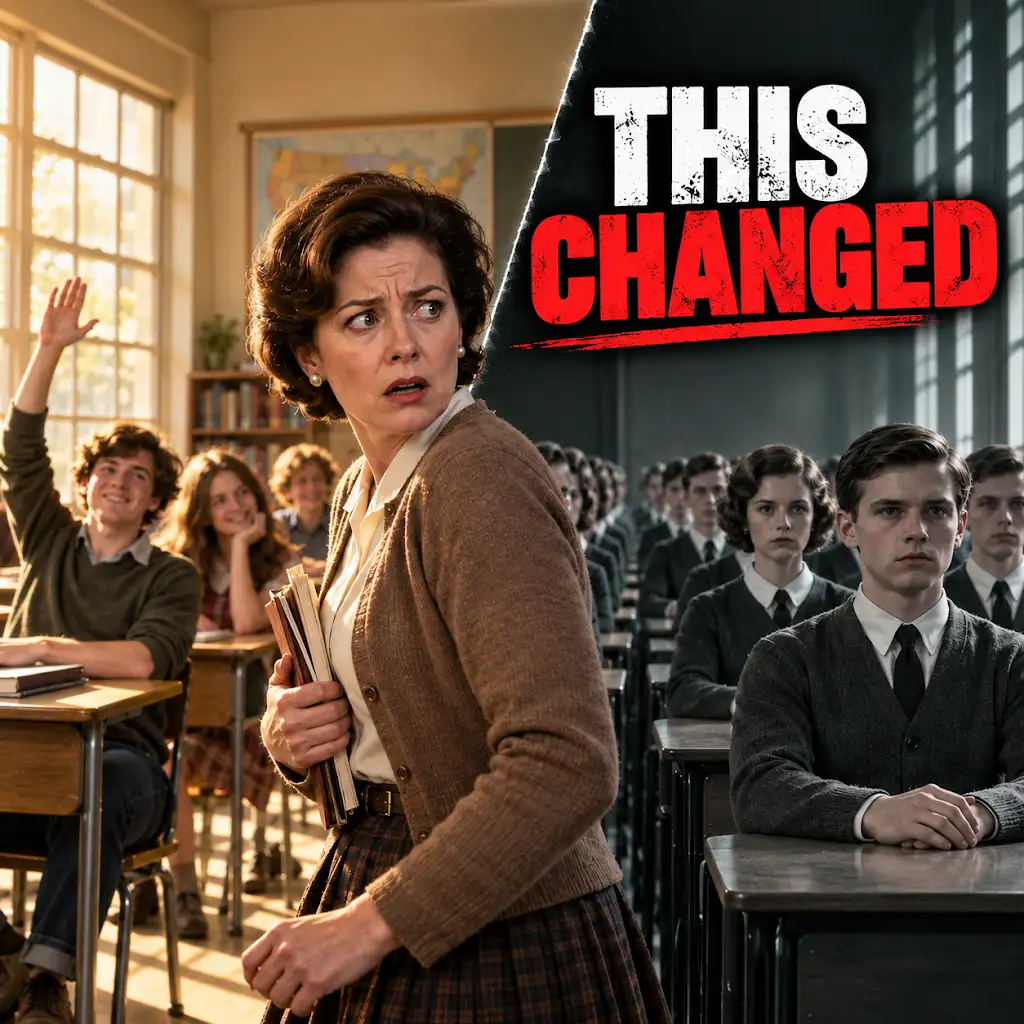
They Started With Rules. Then Students Began Policing Each Other
FAQs

What is the Third Wave experiment?
The Third Wave experiment was a social experiment conducted by high school teacher Ron Jones in 1967 to demonstrate the appeal of fascism and the dangers of groupthink.
How did the Third Wave experiment involve students?
In the Third Wave experiment, Ron Jones divided his history class into a social movement called “The Third Wave” to teach the students about discipline, community, and the power of unity.
What were the outcomes of the Third Wave experiment?
The Third Wave experiment quickly spiraled out of control as students became increasingly devoted to the movement, leading to a loss of individuality and critical thinking among the participants.
What lessons can be learned from the Third Wave experiment?
The Third Wave experiment serves as a cautionary tale about the dangers of conformity, blind obedience, and the potential for authoritarianism to take hold in society.
How did the Third Wave experiment impact the students involved?
Many students who participated in the Third Wave experiment reported feeling a mix of confusion, guilt, and shame once they realized the true nature of the experiment and its parallels to real-life fascist movements.