You stand at the precipice of a profound shift, a revolution in learning that’s bubbling beneath the surface of traditional education. You’ve heard whispers of it, perhaps seen glimpses in the more dynamic classrooms, but what if you could step directly into the heart of this transformation? What if you could experience firsthand the pioneering spirit that’s redefining what it means to be educated? This is your invitation to explore the Cubberley High School Experiment, a bold venture into the “Third Wave” of education, and understand how it’s shaping the minds and futures of its students.
The term “Third Wave” might conjure images of innovation and progress, and rightly so. It refers to the societal and technological shifts that have propelled us beyond the industrial, manufacturing-driven “Second Wave” into an era defined by information, connectivity, and constant change. For education, this transition is not merely about incorporating new gadgets; it’s a fundamental re-evaluation of pedagogy, curriculum, and the very purpose of schooling. Cubberley High School, in its audacious pursuit of this future, has become a living laboratory, a testament to the power of embracing this evolving landscape. You, as an observer, a potential participant, or even a skeptic, are about to delve into the mechanics of this groundbreaking endeavor.
The Seeds of Change: Why Cubberley Embraced the Third Wave
You’re likely familiar with the “factory model” of education, a system born from the needs of the industrial age. Rows of desks, standardized curricula, and a focus on rote memorization – it served its purpose, but in today’s world, it feels increasingly anachronistic. Cubberley High School recognized this disconnect. They saw students graduating ill-equipped for a workforce that demands critical thinking, collaboration, creativity, and adaptability. The traditional approach, while perhaps effective in producing dutiful workers, was falling short in cultivating innovative thinkers and engaged citizens.
Recognizing the Shifting Landscape
The impetus for Cubberley’s experimental approach wasn’t born in a vacuum. It was a direct response to the palpable changes in the world around them. You might have observed these shifts yourself: the exponential growth of technology, the rise of the gig economy, the increasing complexity of global challenges.
The Digital Revolution and Its Implications
The internet, smartphones, artificial intelligence – these are not just tools; they are fundamentally altering how we access information, communicate, and even think. Cubberley understood that simply digitizing textbooks or adding a few computers to classrooms wouldn’t cut it. They realized that education needed to mirror the interconnected, dynamic nature of the digital world. This meant fostering digital literacy not as an add-on, but as a core competency, integrated into every aspect of learning.
The Evolving Nature of Work
The jobs of tomorrow are not the jobs of today. Automation is reshaping industries, and the demand is shifting towards skills that machines cannot easily replicate: problem-solving, emotional intelligence, and the ability to learn and adapt continuously. Cubberley’s experiment is designed to cultivate these very skills, preparing students for a future where lifelong learning is not a choice, but a necessity.
A Commitment to Future-Readiness
At its core, Cubberley’s decision to embrace the Third Wave was a profound commitment to their students’ future. They weren’t content with preparing students for yesterday’s challenges; they were determined to equip them for the opportunities and complexities of the 21st century and beyond. This forward-thinking vision propelled them to explore new pedagogical models.
The Third Wave experiment conducted at Cubberley High School is a fascinating case study in social psychology and group dynamics, illustrating how quickly individuals can conform to authoritarian structures. For those interested in exploring similar themes and gaining a deeper understanding of psychological experiments, I recommend reading the article available at Unplugged Psychology, which delves into various psychological phenomena and their implications in real-world scenarios.
Deconstructing the Cubberley Model: Key Pillars of the Experiment
You’re probably wondering what this “experiment” actually looks like in practice. It’s not about random innovation; it’s a carefully constructed framework built upon several foundational pillars. Cubberley has moved away from rigid, subject-specific silos to a more integrated and student-centered approach.
Personalized Learning Pathways
Gone are the days of one-size-fits-all education. Cubberley’s experiment champions the idea that every student learns differently and at their own pace. You’ll see this manifest in how learning objectives are approached and how progress is measured.
Differentiated Instruction and Pace
Imagine a classroom where students aren’t all on the same page, literally. Cubberley’s educators are skilled in providing varied levels of support and challenge, allowing students to delve deeper into areas of interest or receive additional reinforcement where needed. This isn’t about remedial work; it’s about optimizing each student’s learning trajectory.
Student Agency and Choice
You’ll notice a significant shift in the power dynamic. Students are not passive recipients of information; they are active participants in their own education. This means offering choices in project topics, learning methods, and even the assessment formats they utilize. This fosters a sense of ownership and intrinsic motivation.
Utilizing Technology for Tailored Experiences
Technology plays a crucial role in enabling personalization. Sophisticated learning platforms can track individual progress, identify areas of struggle, and recommend resources tailored to each student’s needs. This allows educators to intervene more effectively and efficiently.
Project-Based and Inquiry-Driven Learning
This is where the “doing” of learning truly comes to life. Instead of abstract lectures, Cubberley students are often immersed in authentic, real-world problems and challenges. You’ll witness learning that is active, engaging, and deeply meaningful.
Authentic Problem-Solving
Students tackle projects that mirror challenges faced by professionals in various fields. This might involve designing a sustainable city, developing a marketing campaign for a local business, or researching solutions to a community issue. The learning happens through the process of solving these problems.
Fostering Curiosity and Critical Thinking
Inquiry-driven learning encourages students to ask questions, explore their curiosities, and pursue knowledge independently. Instead of being told the answers, they are empowered to discover them, developing crucial critical thinking and research skills along the way.
Interdisciplinary Connections
Many projects at Cubberley naturally span multiple subjects. You might see a history project that requires mathematical data analysis, or a science experiment that demands persuasive writing. This reflects the interconnected nature of the real world and helps students see the relevance of different disciplines.
Collaboration and Communication as Core Competencies
The Third Wave demands individuals who can work effectively with others. Cubberley’s experiment prioritizes the development of these vital social and interpersonal skills. You’ll see less individualistic work and more emphasis on teamwork.
Team-Based Projects and Group Dynamics
Students frequently work in collaborative teams, learning to leverage each other’s strengths, negotiate ideas, and resolve conflicts. This mirrors the collaborative environments they will encounter in higher education and the workforce.
Developing Effective Communication Skills
Beyond simply presenting findings, students are taught to articulate their ideas clearly, listen actively, and provide constructive feedback. This includes both verbal and written communication, as well as digital communication etiquette.
Building a Community of Learners
Cubberley aims to cultivate a supportive learning environment where students feel comfortable sharing ideas, learning from mistakes, and celebrating each other’s successes. This sense of community is crucial for fostering resilience and a growth mindset.
The Educator’s Role: Shifting from Sage on the Stage to Guide on the Side
You might initially expect to see teachers lecturing from the front of the room. At Cubberley, however, you’ll observe a profound shift in the educator’s role. They are no longer the sole dispensers of knowledge but rather facilitators, mentors, and guides, orchestrating a richer learning experience.
Facilitating and Mentoring
Instead of lecturing, Cubberley teachers are actively facilitating discussions, guiding student inquiry, and providing support as needed. They act as mentors, helping students navigate challenges and develop their own learning strategies.
Empowering Student-Led Learning
Teachers create the environment and provide the resources, but they empower students to take ownership of their learning journey. This means stepping back and allowing students to explore, experiment, and sometimes even struggle, as valuable learning opportunities.
Providing Targeted Support and Feedback
With personalized learning, teachers can identify individual student needs and provide targeted support and feedback. This is often done through one-on-one check-ins, small group work, and detailed, constructive feedback on projects.
Continuous Professional Development
To effectively implement these new pedagogical approaches, Cubberley’s educators are engaged in ongoing professional development. They are constantly learning and adapting, sharing best practices and refining their skills to meet the evolving needs of their students.
Measuring Success: Beyond Standardized Tests
You’re likely accustomed to seeing success measured by standardized test scores. Cubberley’s Third Wave experiment redefines what it means to measure student achievement, embracing a more holistic and authentic approach.
Authentic Assessments and Portfolios
Cubberley moves beyond multiple-choice tests to assess learning through authentic means. This means evaluating students based on the projects they complete, the presentations they give, and the portfolios they build to showcase their growth and accomplishments.
Demonstrating Mastery Through Application
Instead of just recalling facts, students are assessed on their ability to apply knowledge and skills in real-world contexts. This might involve solving a complex problem, designing a functional prototype, or creating a compelling persuasive argument.
Showcasing Growth Over Time
Portfolios provide a rich and dynamic record of a student’s learning journey. They allow for the demonstration of growth in understanding, skill development, and the ability to reflect on their own learning process.
Peer and Self-Assessment
Students are encouraged to engage in peer and self-assessment, fostering metacognition and a deeper understanding of learning objectives. This helps them develop the ability to evaluate their own work and that of their peers constructively.
The Third Wave experiment at Cubberley High School, which aimed to demonstrate the power of groupthink and conformity, has sparked significant interest in educational psychology. For those looking to explore similar themes in more depth, a related article discusses the psychological implications of such experiments and their impact on students’ behavior. You can read more about it in this insightful piece on educational psychology.
The Impact and the Future: Cubberley as a Beacon of Innovation
You’ve witnessed the core components of Cubberley’s Third Wave experiment. Now, consider the broader implications. This isn’t just about one school; it’s about charting a course for the future of education, demonstrating what’s possible when we dare to innovate.
Preparing Graduates for a Dynamic World
The ultimate goal of any educational institution is to prepare its students for life beyond the classroom. Cubberley’s experiment is designed to produce graduates who are not only academically proficient but also adaptable, resilient, and equipped with the skills and mindset to thrive in a constantly evolving world. You’ll see these students emerge with confidence, a passion for learning, and the ability to contribute meaningfully to society.
Cultivating Lifelong Learners
The Cubberley graduate is not someone who stops learning after receiving a diploma. They are individuals who have developed a genuine curiosity, a love for exploration, and the skills to continue learning and adapting throughout their lives. You are witnessing the creation of individuals who embrace challenges as opportunities for growth.
Fostering Innovative Thinkers and Problem Solvers
By engaging in authentic problem-solving and project-based learning, Cubberley students develop the capacity to think creatively, approach challenges from multiple perspectives, and develop innovative solutions. You are seeing the future leaders and innovators taking shape.
Empowering Engaged Citizens
Beyond academic and professional success, Cubberley’s experiment aims to cultivate responsible and engaged citizens. Students learn to collaborate, communicate effectively, and understand the complexities of the world, preparing them to contribute positively to their communities and society as a whole.
Cubberley as a Model for Educational Reform
The lessons learned at Cubberley are invaluable for other educational institutions seeking to adapt to the Third Wave. You are observing a blueprint, a testament to the fact that a more effective, engaging, and future-oriented approach to education is not only possible but essential.
Inspiring Other Schools to Innovate
Cubberley’s success serves as an inspiration, demonstrating that embracing change and prioritizing student-centered learning can yield remarkable results. You are witnessing a ripple effect, a catalyst for broader educational reform.
Sharing Best Practices and Methodologies
The insights gained from Cubberley’s experiment are being shared, providing valuable guidance and practical strategies for educators and administrators looking to implement similar changes. You are observing the dissemination of knowledge that can transform learning landscapes far beyond Cubberley’s walls.
Shaping the Future of Learning for All
Ultimately, your exploration of the Cubberley High School Experiment is an investment in the future of education. You are gaining a firsthand understanding of how learning can be reimagined, making it more relevant, engaging, and empowering for generations to come. You are witnessing the dawn of a new era in learning, and you are now a part of understanding its potential.
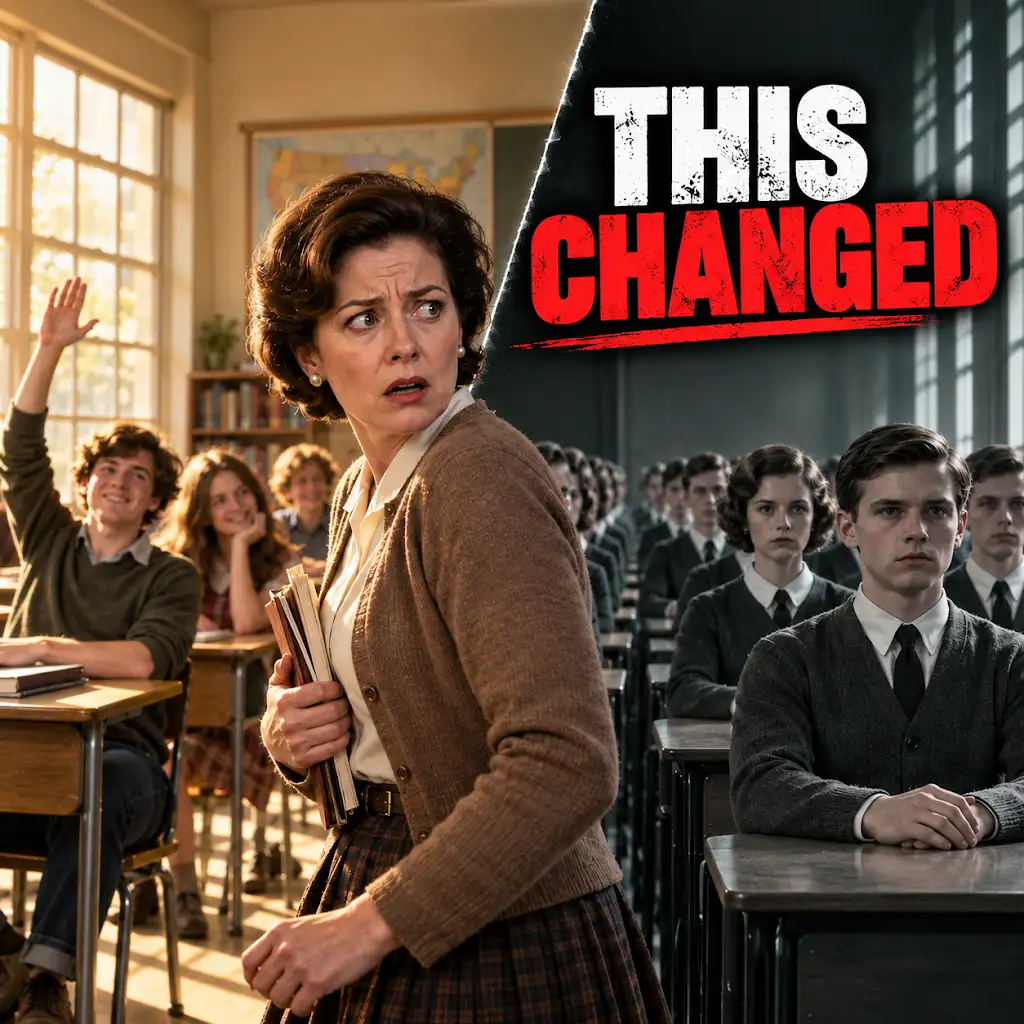
They Started With Rules. Then Students Began Policing Each Other
FAQs
What was the Third Wave experiment at Cubberley High School?
The Third Wave experiment was a social experiment conducted by history teacher Ron Jones in 1967 at Cubberley High School in Palo Alto, California.
What was the purpose of the Third Wave experiment?
The purpose of the Third Wave experiment was to demonstrate the appeal of fascism and the potential for authoritarianism to arise in a democratic society.
How did the Third Wave experiment unfold at Cubberley High School?
During the experiment, Ron Jones implemented strict rules, symbols, and a sense of unity among his students, leading to the emergence of a powerful group mentality within the classroom.
What were the outcomes of the Third Wave experiment?
The experiment quickly spiraled out of control as students became increasingly invested in the group dynamic, leading to behaviors of conformity, obedience, and even discrimination against those who did not conform.
What lessons can be learned from the Third Wave experiment at Cubberley High School?
The Third Wave experiment serves as a cautionary tale about the dangers of unchecked authority, the power of groupthink, and the importance of critical thinking and individual autonomy in a democratic society.