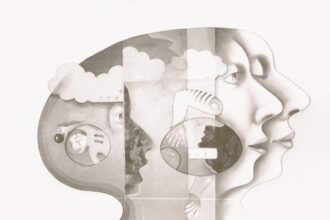
You stand at a crossroads, the path ahead shrouded in uncertainty. A chorus of voices, both external and internal, clamors for your attention, each offering a different direction, a conflicting piece of advice. In these moments, the weight of decision can feel crushing. But within you lies a powerful, often untapped, resource: your own judgment. This isn’t about reckless defiance or a refusal to consider others; it’s about cultivating a deep-seated trust in your own capacity to assess, decide, and act. This is the essence of self-reliance, a cornerstone of a fulfilling and empowered life, and its roots are firmly planted in the fascinating landscape of your own psychology.
You’ve likely experienced it. That subtle ache, the nagging doubt that whispers, “Am I doing this right?” It’s a primal human need to connect, to belong, and to be affirmed by others. For millennia, our survival was intricately linked to the approval of our social group. This evolutionary legacy means you’re wired to seek external validation, a tendency that can manifest in various ways throughout your life. This isn’t inherently negative, but it can become detrimental when it eclipses your own internal compass.
The Social Mirror: Reflecting or Distorting?
Think of how you present yourself to the world. You’re constantly engaging in a form of social mirroring, adjusting your behavior and beliefs based on how you perceive others reacting to you. This can be a useful tool for social navigation, allowing you to adapt and integrate. However, when you rely too heavily on this mirror, you risk distorting your own image. You begin to see yourself not as you truly are, but as you believe others want to see you. This can lead to a life lived in performance, where your actions are driven by the desire to elicit a specific response, rather than by your genuine desires and values.
The Fear of Judgment: A Constraining Force
The flip side of seeking validation is the deep-seated fear of judgment. You worry about being deemed incompetent, foolish, or simply wrong. This fear can be a powerful inhibitor, preventing you from taking risks, expressing unpopular opinions, or pursuing paths that deviate from the norm. You might find yourself censoring your thoughts, downplaying your achievements, or avoiding situations where you might be scrutinized. This self-imposed censorship is a significant barrier to developing robust self-reliance.
The Illusion of Consensus: When More Opinions Don’t Mean Better Decisions
It’s a common instinct: when faced with a difficult choice, you seek out more opinions. The more people you ask, the more confident you feel that you’re arriving at the “correct” answer. But is this always true? You might be caught in the illusion of consensus, where the sheer volume of external input drowns out your own discerning voice. Not all advice is created equal, and simply accumulating opinions doesn’t guarantee wisdom. You need to develop the discernment to filter, to weigh, and ultimately, to integrate information in a way that aligns with your own understanding.
Trusting your own judgment is a crucial aspect of psychological well-being and decision-making. It involves recognizing the value of your instincts and experiences when faced with choices. For further insights into this topic, you may find the article on Unplugged Psychology particularly enlightening. It explores the intricacies of self-trust and its impact on mental health. To read more, visit this article.
The Inner Compass: Understanding Your Cognitive Toolkit
So, how do you navigate away from the siren’s song of external validation and towards the steady hum of your inner compass? The answer lies in understanding the psychological mechanisms that allow you to trust your own judgment. This isn’t a mystical gift; it’s a skill that can be honed and strengthened.
Cognitive Biases: The Invisible Architects of Your Thoughts
Your mind is a complex engine, and like any engine, it has its quirks and shortcuts. Cognitive biases are systematic patterns of deviation from norm or rationality in judgment. They are often unconscious and can significantly influence how you perceive information and make decisions. Recognizing these biases is the first step towards mitigating their influence.
Confirmation Bias: The Self-Fulfilling Prophecy
This bias drives you to seek out, interpret, and remember information that confirms your pre-existing beliefs. If you’re leaning towards a particular decision, you’ll likely gravitate towards information that supports it, while dismissing anything that contradicts it. This can lead to a distorted view of reality and reinforce potentially flawed decisions. For example, if you believe a certain investment is a sure thing, you might only read positive news about it, ignoring cautionary reports.
Anchoring Bias: The First Impression That Sticks
This bias describes your tendency to rely too heavily on the first piece of information offered (the “anchor”) when making decisions. Subsequent judgments are then adjusted around this anchor, often without sufficient deviation. If you’re negotiating a salary, the initial figure presented can significantly influence the final outcome, even if it’s not entirely realistic.
Availability Heuristic: The Vividness Factor
This bias means you tend to overestimate the likelihood of events that are easily recalled, often because they are vivid, recent, or emotionally charged. A sensational news report about a rare accident might lead you to overestimate the danger of that activity, even if statistics show it to be relatively safe.
Intuition: The Whisper of Your Subconscious
Beyond conscious reasoning lies intuition, often described as a “gut feeling” or a “sixth sense.” This isn’t magic; it’s the rapid, unconscious processing of information based on past experiences and accumulated knowledge. Your intuition is a powerful tool for self-reliance, but it requires cultivation and discernment.
The Difference Between Intuition and Fear
It’s crucial to differentiate between genuine intuition and the anxious flutter of fear. Fear often manifests as a sense of dread or an urge to avoid, while intuition might be a quiet knowing, a subtle nudge in a particular direction. Learning to attune yourself to the subtle signals of your intuition requires practice and self-awareness.
Building Trust in Your “Gut”: The Role of Experience
Your intuition is built on a foundation of lived experience. The more you engage with the world, the more data your subconscious has to draw from. Every decision you make, every success and failure, contributes to the development of your intuitive wisdom. As you gain more experience, you’ll start to recognize recurring patterns and subtle cues that your rational mind might miss.
Cultivating Critical Thinking: The Art of Dissection and Synthesis

Self-reliance isn’t about blindly following your impulses. It’s about intelligent decision-making, and that requires a sharp critical thinking toolkit. This involves the ability to analyze information objectively, identify assumptions, evaluate evidence, and construct logical arguments.
Questioning Assumptions: Unearthing the Foundation
Every idea, every piece of advice, rests on a set of assumptions. Your job as a critical thinker is to uncover these assumptions. What is being taken for granted? Are these assumptions valid? For instance, if someone tells you to pursue a certain career path because it’s “stable,” what are the underlying assumptions about stability? Is it purely financial, or does it encompass job satisfaction and personal fulfillment?
Evaluating Evidence: The Strength of the Support
Once you’ve identified assumptions, you need to examine the evidence supporting any claims or recommendations. Is the evidence credible? Is it based on empirical data, expert opinion, or anecdotal accounts? You need to be wary of information that relies heavily on emotion or personal testimony without robust backing. You are the ultimate arbiter of what constitutes strong evidence for you.
Identifying Logical Fallacies: Dodging the Pitfalls of Bad Reasoning
Logical fallacies are errors in reasoning that undermine the logic of an argument. Recognizing these can help you dissect flawed advice and prevent yourself from being swayed by persuasive but unsound arguments.
Ad Hominem: Attacking the Person, Not the Argument
This fallacy involves attacking the character or personal traits of the person making an argument, rather than addressing the substance of the argument itself. You might dismiss someone’s advice simply because you dislike them, even if their advice is sound.
Straw Man: Misrepresenting the Opponent’s Argument
In this fallacy, an opponent’s argument is distorted or exaggerated to make it easier to attack. You might find yourself arguing against a simplified or misrepresented version of someone’s counsel, rather than their actual point.
Synthesizing Information: Weaving the Threads Together
Critical thinking isn’t just about deconstruction; it’s also about synthesis. You need to be able to take disparate pieces of information, weigh their relevance, and weave them into a coherent understanding that informs your decision. This is where your unique perspective and values come into play, allowing you to create a solution that is uniquely yours.
Embracing Imperfection: The Power of Making Mistakes

The pursuit of self-reliance can be hampered by the fear of failure. You might believe that to be truly self-reliant, you must always be right, always succeed. This is an unrealistic and ultimately paralyzing expectation. True self-reliance involves the courage to act, even when the outcome is uncertain, and the resilience to learn from your mistakes.
The Growth Mindset: Mistakes as Stepping Stones
Carol Dweck’s concept of the growth mindset is crucial here. Individuals with a growth mindset believe that their abilities and intelligence can be developed through dedication and hard work. They see challenges as opportunities to learn and grow, and mistakes as valuable feedback. If you cultivate a growth mindset, you’ll view setbacks not as indictments of your judgment, but as lessons that refine your future decision-making.
Detaching from Outcomes: Focusing on the Process
It can be liberating to detach your self-worth from the immediate outcomes of your decisions. Instead of fixating on whether a decision was “right” or “wrong,” focus on the process: Did you gather sufficient information? Did you weigh the options thoughtfully? Did you act with integrity? By focusing on the quality of your process, you build a more sustainable and less anxiety-ridden path to self-reliance.
The Narrative of Resilience: Reinterpreting Setbacks
Your personal narrative plays a significant role in how you perceive your abilities. If you frame your mistakes as catastrophic failures, you reinforce a sense of inadequacy. However, if you learn to reinterpret setbacks as opportunities for growth and resilience, you strengthen your belief in your ability to overcome challenges. Think of how you would recount a difficult experience to a friend – you’d likely focus on what you learned and how you grew stronger. Apply that same compassionate and growth-oriented lens to your own internal narrative.
Trusting your own judgment is a crucial aspect of psychological well-being, as it empowers individuals to make decisions that align with their values and beliefs. A related article that delves deeper into this topic can be found on Unplugged Psychology, where the importance of self-trust and its impact on mental health is explored. By understanding the dynamics of self-perception and decision-making, one can cultivate a stronger sense of confidence in their choices. For further insights, you can read more about this fascinating subject in the article on Unplugged Psychology.
The Active Practice of Self-Reliance: Putting It Into Play
| Psychological Aspect | Metrics |
|---|---|
| Self-Confidence | Self-assessment scores |
| Decision-Making | Percentage of decisions made without seeking external validation |
| Risk-Taking | Frequency of taking calculated risks based on personal judgment |
| Intuition | Level of trust in intuitive feelings |
Trusting your own judgment isn’t a passive state; it’s an active practice. It requires conscious effort and consistent application. The more you engage in these practices, the stronger your self-reliance muscle will become.
Start Small: Building Confidence Through Incremental Wins
You don’t need to make life-altering decisions to start practicing self-reliance. Begin with smaller, low-stakes choices. Decide what to wear without consulting anyone. Choose a restaurant for dinner based on your own preferences. These small wins build confidence and reinforce your belief in your ability to make good choices, creating a positive feedback loop.
Solitude and Reflection: The Quiet Power of Introspection
In our hyper-connected world, finding moments of solitude can feel like a luxury. However, these quiet periods are essential for introspection. Dedicate time to simply sit with your thoughts, to process your experiences, and to listen to your own inner voice without the intrusion of external stimuli. Journaling, meditation, or simply taking a walk in nature can all provide valuable opportunities for self-reflection.
Seeking Feedback with Discernment: The Art of Selective Listening
While the goal is self-reliance, this doesn’t mean isolating yourself from all external input. It means developing the discernment to seek feedback from trusted sources and to integrate it thoughtfully. When you do seek advice, be clear about what you’re looking for. Ask specific questions rather than open-ended ones that invite overwhelming opinions. And remember, the final decision always rests with you.
Embracing the “Messiness” of Decision-Making: It’s Not Always Linear
The path to a well-reasoned decision is rarely a straight line. You’ll likely encounter doubts, reconsider options, and even change your mind. This “messiness” is a natural part of the process. Resist the urge to demand immediate certainty. Allow yourself the space to explore, to question, and to evolve your thinking. The journey of making a decision is as important as the destination itself. By understanding the psychology behind self-reliance, you empower yourself to navigate the complexities of life with greater confidence, clarity, and conviction. You are your own best advisor, and with practice, you can learn to trust that voice within.

You Think You’d Refuse. Milgram Shows How People Keep Going
FAQs
What is trusting your own judgment in psychology?
Trusting your own judgment in psychology refers to the ability to rely on your own thoughts, feelings, and decisions when it comes to understanding and navigating the world around you. It involves having confidence in your own perceptions and beliefs.
Why is trusting your own judgment important in psychology?
Trusting your own judgment is important in psychology because it allows individuals to develop a sense of autonomy, self-reliance, and self-confidence. It also plays a crucial role in decision-making, problem-solving, and overall mental well-being.
What factors can influence an individual’s ability to trust their own judgment in psychology?
Several factors can influence an individual’s ability to trust their own judgment in psychology, including past experiences, cultural influences, social support, self-esteem, and cognitive biases. Additionally, mental health conditions such as anxiety and depression can also impact one’s ability to trust their own judgment.
How can one improve their ability to trust their own judgment in psychology?
Improving one’s ability to trust their own judgment in psychology can involve practicing self-reflection, developing emotional intelligence, seeking feedback from trusted individuals, challenging negative thought patterns, and seeking professional guidance through therapy or counseling.
What are the potential consequences of not trusting your own judgment in psychology?
Not trusting your own judgment in psychology can lead to feelings of self-doubt, indecisiveness, and reliance on external validation. It can also impact relationships, career choices, and overall mental well-being. Additionally, it may contribute to increased stress and anxiety.