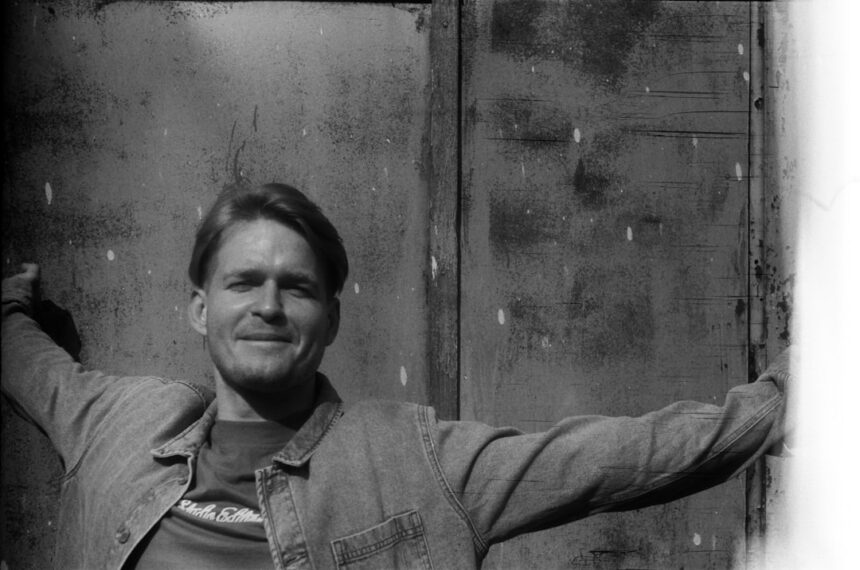
The Unabomber: Ted Kaczynski’s Harvard Years
The hallowed halls of Harvard University in the late 1950s were a crucible for intellectual giants, a place where nascent minds grappled with the grandest questions of existence. Into this prestigious environment stepped a young man named Theodore John Kaczynski, barely sixteen years old. His arrival was not that of a typical freshman; it was the arrival of a bona fide prodigy. Kaczynski’s exceptional intellect had been evident from a remarkably early age, a fact that foreshadowed both his later academic achievements and the dark trajectory his life would ultimately take.
Early Brilliance and Accelerated Education
The seeds of Kaczynski’s extraordinary mathematical aptitude were sown in his childhood. Even as a young boy, he displayed a profound ability to grasp complex concepts, often outpacing his peers and even his teachers. This precocious talent led to his skipping multiple grades throughout his schooling, culminating in his admission to Harvard at an age when most students were just beginning to consider college. His high school years were condensed, a testament to his accelerated learning capabilities. This early academic acceleration, while impressive, also meant that Kaczynski was considerably younger than his classmates, a factor that would contribute to his social isolation.
A World Apart: Social Integration at Harvard
Despite his undeniable intellectual prowess, Kaczynski’s experience at Harvard was marked by a pervasive sense of social disconnect. The sheer difference in his age, coupled with his intensely introverted nature, made it challenging for him to forge meaningful connections with his peers. He often found himself on the periphery of social interactions, observing rather than participating. This detachment was not a result of arrogance, but rather a deep-seated inability to navigate the social nuances of his fellow students.
The Loner in the Crimson Tide
Kaczynski’s Harvard years were characterized by a deliberate withdrawal from typical collegiate activities. While his classmates might have been engaging in parties, sporting events, or extracurricular clubs, Kaczynski was more likely to be found in the quiet solitude of the library or his dorm room, engrossed in his studies. This self-imposed isolation, while allowing him to focus on his academic pursuits, also exacerbated his feelings of being an outsider. He was a mind that soared, but a soul that struggled to connect.
A Mind Focused Inward
His internal world became increasingly rich and complex, a stark contrast to his limited engagement with the external social landscape. He developed intricate thought processes and a deep fascination with abstract ideas. This inward focus, while a hallmark of his genius, also meant that he was less attuned to the social cues and expectations that would help other students integrate more smoothly. The social fabric of Harvard, designed for the maturation of young adults, proved a difficult terrain for a young man already operating at a different intellectual and emotional frequency.
The documentary exploring Ted Kaczynski’s years at Harvard provides a fascinating insight into the early influences that shaped his radical ideologies. For those interested in delving deeper into the psychological aspects of his life and the impact of his education, a related article can be found at Unplugged Psychology, which discusses the complexities of genius and madness in the context of Kaczynski’s background.
The Academic Ascent: Mathematics as a Sanctuary
For Theodore Kaczynski, Harvard was not merely a place of learning; it was a sanctuary where his formidable intellect could truly flourish. Mathematics, in particular, became his primary refuge and his greatest passion. The logical structures and abstract beauty of mathematics offered a world of order and predictability that he found lacking in the messy, often irrational, realm of human interaction. His performance in mathematics was nothing short of stellar, a testament to his unique way of processing information and solving problems.
Exceptional Performance in a Rigorous Environment
Kaczynski’s academic record at Harvard was exceptional. He excelled in a curriculum designed to challenge the brightest minds, consistently demonstrating a profound understanding of complex mathematical concepts. His professors recognized his talent, often noting his ability to grasp abstract theories with remarkable speed and clarity. He wasn’t just a good student; he was a student who pushed the boundaries of his field, even at such a young age.
The Art of Problem Solving
His approach to mathematics was characterized by an almost intuitive understanding of underlying principles. He possessed a rare ability to dissect complex problems into their fundamental components and then reconstruct them with elegant solutions. This analytical prowess was not just about memorization or rote learning; it was about a deep, almost organic, connection with the subject matter. He found a profound satisfaction in the intellectual rigor of mathematics, a field where logical deduction reigned supreme.
Early Encounters with Advanced Theory
Even as an undergraduate, Kaczynski was delving into advanced mathematical theories that were typically reserved for graduate students. His intellectual curiosity was insatiable, and he eagerly pursued any opportunity to explore more challenging concepts. This early exposure to higher-level mathematics not only honed his skills but also further cemented his position as an intellectual outlier within his cohort. He was not content with the established curriculum; he sought to venture beyond it.
The Seeds of Discontent: Observing the “System”
While Kaczynski was immersed in the intellectual pursuits that defined his Harvard experience, his astute and critical mind was also observing the world around him with a growing sense of unease. The university, and by extension, the broader societal structures it represented, began to appear to him as flawed and increasingly problematic. These early observations, though not yet overtly hostile, sowed the seeds of the radical ideology he would later espouse.
Critiques of Modern Society
Even during his undergraduate years, Kaczynski demonstrated a keen critical faculty regarding the direction of modern society. He observed the increasing reliance on technology, the growing complexities of industrial systems, and what he perceived as a loss of individual autonomy. These observations, viewed through his analytical lens, began to form the nascent stages of his anti-technology and anti-industrial critique.
Intellectual Roots of a Future Ideology
His time at Harvard, with its exposure to diverse intellectual currents and the burgeoning technological advancements of the era, likely provided fertile ground for the development of his anti-modernist ideas. He was exposed to a world that was rapidly changing, a change that he would come to view with profound suspicion and ultimately, outright rejection. The intellectual environment, while nurturing his academic growth, also inadvertently provided him with the raw material for his future radicalization.
Intellectual Isolates: Navigating the Social Landscape

Theodore Kaczynski’s Harvard years were, by his own accounts and those of others, a period of profound social isolation. While his intellectual life was vibrant and dynamic, his social interactions were minimal. He was a young man who existed in his own intellectual universe, a universe that often felt disconnected from the shared experiences of his peers. This isolation was not a passive consequence of circumstance, but rather an active construction of his personality and worldview.
The Unassuming Scholar
Kaczynski was not a boisterous or attention-seeking student. His demeanor was often described as quiet, reserved, and somewhat aloof. He rarely participated in casual conversations or social gatherings. This lack of overt social engagement meant that many of his peers barely knew him, despite his presence in their classes and on campus. He was a figure in the background, an intellectual presence rather than a social one.
A Preference for Solitude
His preference for solitude was a defining characteristic of his Harvard experience. He actively sought out opportunities to be alone, finding solace and focus in his own company. This wasn’t necessarily a negative trait in itself, but in the context of a university environment designed for social development and peer interaction, it contributed to his profound sense of isolation.
Observing the “Normal”
From his isolated vantage point, Kaczynski observed the social dynamics of his fellow students with a detached curiosity. He saw their interactions, their relationships, and their modes of expression, but he struggled to find a place within these patterns. This observational stance, while intellectually interesting, further solidified his sense of otherness. He was an anthropologist of his own peer group, but an outsider to its rituals.
The Unabomber’s Early Intellectual Development
While the world would later know him as the Unabomber, the seeds of his radical ideology were beginning to germinate during his Harvard years, albeit in a nascent and unarticulated form. His intellectual explorations during this period were not solely focused on pure mathematics; they also encompassed a growing critique of the societal structures he was beginning to understand.
Engagement with Philosophical and Social Ideas
Beyond mathematics, Kaczynski engaged with philosophical and social texts. While his specific reading habits from this period are not always fully documented, it is understood that he was not solely confined to mathematical treatises. His analytical mind, already questioning the world, likely explored ideas that touched upon societal structures, human nature, and the impact of progress.
The Growing Disenchantment
This intellectual engagement, combined with his social isolation, likely fueled a growing disenchantment with the prevailing societal norms. The promise of progress and technological advancement, so celebrated in the post-war era, began to appear to him as a path leading towards alienation and societal decay. These were early, unformed criticisms that would later coalesce into a coherent, albeit terrifying, worldview.
The Departure from Harvard: A Prelude to Academia

Theodore Kaczynski’s time at Harvard concluded not with a triumphant graduation ceremony filled with accolades, but with a quiet departure, a transition that led him to the next stage of his academic journey. While his undergraduate years were marked by intellectual brilliance and social isolation, they were also a crucial period of development that shaped his subsequent academic and, ultimately, his life’s path.
Graduating into the Unknown
Upon completing his undergraduate studies, Kaczynski did not immediately seek employment in the burgeoning industrial or technological sectors. Instead, he continued his academic trajectory, a path that suggested a persistent belief in the pursuit of knowledge, even as his underlying critiques of the system were beginning to solidify. His decision to pursue further studies indicated a continued dedication to intellectual exploration, albeit one that was increasingly tinged with his developing disillusionment.
The Next Step: Graduate Studies
Kaczynski went on to pursue graduate studies in mathematics at the University of Michigan. This move represented a continuation of his academic ambitions, a desire to delve deeper into the abstract world of numbers and theories. His performance at Michigan would further solidify his reputation as a brilliant mathematician, a fact that would later make his descent into violence all the more shocking and perplexing to those who knew of his academic achievements.
The Academic World as a Continuing Refuge
The academic world, with its emphasis on intellectual pursuit and the relative detachment from the more chaotic aspects of everyday life, likely continued to serve as a refuge for Kaczynski. However, it was also a space where his critical observations of the industrial society were amplified, as he witnessed firsthand the increasing integration of technology and scientific advancement into all aspects of life.
The Seed of the Unabomber Manifesto: A Growing Discontent
While the full scope of Kaczynski’s radical ideology would not become apparent until years later, his Harvard years were a crucial period during which the foundational elements of his disillusionment were forming. His critical observations of society and his intellectual explorations began to converge, creating a fertile ground for the anti-modernist sentiments that would eventually define his infamous manifesto.
Early Formulations of Anti-Industrialism
It is during this period that Kaczynski’s skepticism towards the industrial revolution and its consequences began to take shape. He likely saw the increasing mechanization of society as a threat to human freedom and autonomy, a sentiment that would become a central tenet of his later writings. His intellectual journey at Harvard was not just about mastering mathematics; it was also about grappling with fundamental questions about the nature of progress and its impact on humanity.
The Internal Monologue of a Future Terrorist
While outwardly a prodigious student, Kaczynski’s internal world was undergoing a significant transformation. His isolation and his critical gaze at society were likely fostering a growing sense of alienation and a deep-seated resentment. The intellectual seeds of the Unabomber were being sown in the quiet solitude of his Harvard years, a testament to how profound intellectual brilliance can coexist with a profound and dangerous dissatisfaction.
The documentary exploring Ted Kaczynski’s years at Harvard provides a fascinating insight into the early influences that shaped his radical views. For those interested in delving deeper into the psychological aspects of his life, a related article can be found at Unplugged Psych, which discusses the impact of academic environments on individuals with extreme ideologies. This resource offers a broader context for understanding how Kaczynski’s experiences may have contributed to his later actions.
Legacy of a Prodigy: The Paradox of Ted Kaczynski’s Harvard Years
| Metrics | Data |
|---|---|
| Documentary Title | Ted Kaczynski Harvard Years |
| Release Year | 2021 |
| Director | Olly Lambert |
| Runtime | 60 minutes |
| Subject | Ted Kaczynski’s time at Harvard |
Theodore Kaczynski’s years at Harvard represent a profound paradox, a period where extraordinary intellectual promise intersected with a growing personal and ideological alienation. His time within the esteemed institution served as both a testament to his exceptional mind and a subtle foreshadowing of the dark path he would ultimately tread. Understanding these formative years is crucial to comprehending the complex and tragic figure that Ted Kaczynski became.
A Brilliant Mind on a Solitary Path
Kaczynski’s academic achievements at Harvard are undeniable. He arrived as a prodigy, and he left having demonstrated a remarkable mastery of advanced mathematics. His ability to excel in such a rigorous environment at such a young age set him apart from his peers and marked him as an individual of exceptional intellectual caliber. However, this brilliance was largely a solitary pursuit. His social isolation, a recurring theme, highlights the disconnect between his internal intellectual world and his engagement with the external, social world.
The Unforeseen Consequences of Intellectual Prowess
The profound intellect that allowed Kaczynski to excel academically also, in hindsight, seems to have contributed to his unique and ultimately destructive worldview. His analytical abilities, applied to societal structures, led him to conclusions that were antithetical to the very progress and interconnectedness that Harvard represented. The very tools that made him a brilliant mathematician also made him a formidable critic of modern civilization.
A Lost Potential: The What If
The Harvard years offer a poignant glimpse into the immense potential that was tragically unfulfilled. One can only speculate on the contributions Kaczynski might have made to the world of mathematics or other intellectual fields had his life taken a different turn. His time at Harvard stands as a stark reminder that intellectual genius, when divorced from emotional and social well-being, can lead to devastating outcomes.
The Harvard Years in the Shadow of the Unabomber
The legacy of Ted Kaczynski is irrevocably linked to his reign of terror as the Unabomber. Consequently, his Harvard years are often viewed through the prism of his later crimes. This perspective, while unavoidable, risks oversimplifying the complexities of his development. It is important to recognize that the intellectual and social environment of Harvard played a role, however unintentional, in shaping the mind that would later conceive of and execute such acts of violence.
The University’s Unwitting Role
Harvard University, in admitting and educating a young Theodore Kaczynski, provided the intellectual scaffolding for his burgeoning intellect. While the institution cannot be held responsible for his later actions, it is undeniable that the environment, the challenges, and the intellectual currents present during his tenure contributed to the development of his mind. The question of how an institution of such prestige could harbor an individual who would later become a domestic terrorist remains a subject of ongoing contemplation.
A Cautionary Tale for Academia and Society
Ted Kaczynski’s Harvard years serve as a cautionary tale. They highlight the importance of fostering not only intellectual growth but also emotional and social development. They underscore the potential for intellectual brilliance to be misdirected and the profound societal implications that can arise when brilliant minds become alienated and disillusioned. The paradox of Ted Kaczynski’s Harvard years remains a compelling and unsettling chapter in the history of both the individual and the institution.

What Did Harvard Do to Ted Kaczynski?
FAQs
1. Who is Ted Kaczynski?
Ted Kaczynski, also known as the “Unabomber,” is an American domestic terrorist and former mathematics professor. He gained notoriety for carrying out a nationwide bombing campaign from the late 1970s to the mid-1990s, targeting individuals involved with modern technology.
2. What is the Ted Kaczynski Harvard years documentary about?
The Ted Kaczynski Harvard years documentary explores Kaczynski’s time as a young mathematics prodigy at Harvard University, his academic achievements, and the events that led to his descent into radical anti-technology beliefs and ultimately, his acts of domestic terrorism.
3. When did Ted Kaczynski attend Harvard University?
Ted Kaczynski attended Harvard University as an undergraduate student from 1958 to 1962. He later returned to Harvard to pursue a doctoral degree in mathematics, which he completed in 1967.
4. What are some key events from Ted Kaczynski’s time at Harvard University?
During his time at Harvard, Kaczynski was known for his exceptional intellect and academic achievements. He was a participant in a controversial psychological experiment conducted by Dr. Henry Murray, which has been cited as a potential factor in his later radicalization.
5. Where can I watch the Ted Kaczynski Harvard years documentary?
The Ted Kaczynski Harvard years documentary may be available for streaming on various platforms, such as documentary-focused streaming services, or through purchase or rental on digital platforms. Check with your preferred streaming service or online retailer for availability.