You live in a world that whispers, no, shouts, about safety. You’ve internalized it, woven it into the fabric of your daily existence. But what happens when the feeling of needing to be safe outlasts the actual presence of danger? You’re experiencing hypervigilance, and its persistence in your pursuit of safety is a complex, often exhausting, phenomenon. It’s not just about avoiding immediate harm; it’s about a deeply ingrained state of heightened awareness that can become a constant companion, even when you’re ostensibly secure.
The Genesis of the Watchful Eye
You didn’t wake up one day deciding to be hypervigilant. It’s a sophisticated survival mechanism, honed over time by experiences that have taught your nervous system that vigilance is paramount.
When the Alarm Bells First Rang
Think back to the origins of this heightened state. Was it a specific event, a series of unsettling circumstances, or a general atmosphere of unease that permeated your upbringing? Understanding the initial triggers is like finding the root of a persistent weed. You might recall moments when your senses were on high alert, when a perceived threat, real or imagined, demanded your immediate and intense focus. This could have been a childhood fear, a traumatic event, a stressful period in your life, or even societal anxieties that you absorbed. The brain, in its remarkable capacity for adaptation, learned to operate in this heightened state as a protective measure. It was effective, for a time, in keeping you safe.
The Conditioning of Danger
Over time, this initial alert system became a conditioned response. Even when the external threat diminished or disappeared entirely, your internal alarm remained primed. This is akin to a smoke detector that continues to blare after the smoke has cleared. Your brain, having become accustomed to scanning for threats, struggles to disengage. This conditioning isn’t a conscious choice; it’s a deeply embedded neural pathway that your system relies on. Every perceived near-miss, every anxious thought, every news report about danger can reinforce this conditioning, solidifying the habit of constant vigilance.
Hypervigilance often persists even in safe environments due to the brain’s conditioning from past trauma, leading individuals to remain on high alert as a protective mechanism. This phenomenon can be further explored in the article titled “Understanding Hypervigilance: Why It Persists Even When You’re Safe,” which delves into the psychological underpinnings of this behavior. For more insights, you can read the article here: Understanding Hypervigilance.
The Subtle Erosion of Peace
The persistence of hypervigilance doesn’t just keep you safe; it subtly erodes your ability to experience genuine peace and relaxation. You find yourself perpetually on edge, even in moments of calm.
The Cost of Constant Scanning
Your mind is a tireless sentry, constantly scanning your environment for potential threats. This ceaseless activity comes at a significant cost. You might experience chronic fatigue, as your body and mind are in a perpetual state of readiness. Sleep can be disrupted, as your mind struggles to switch off and allow for rest. Concentration can become difficult, as your attention is constantly being pulled towards perceived dangers. This mental and physical exhaustion isn’t a sign of weakness; it’s a direct consequence of your system working overtime to keep you safe. You’re expending a tremendous amount of energy on a task that no longer requires it.
The Missed Joys of the Present Moment
When you’re constantly anticipating the worst, you miss out on the richness of the present. The simple pleasure of a quiet evening, the beauty of a sunset, the warmth of a conversation – these moments can be overshadowed by the gnawing anxiety that something is about to go wrong. Your hypervigilance acts as a veil, filtering out the positive and amplifying the negative. You are so focused on what might happen that you fail to appreciate what is happening. This can lead to a feeling of detachment from life, a sense that you’re always on the periphery, observing rather than fully participating.
The Manifestations in Your Daily Life
Hypervigilance isn’t an abstract concept; it shows up in concrete ways in your everyday interactions and routines. You might not even recognize it as such, but it’s there, shaping your decisions and your experiences.
Social Interactions Under Scrutiny
When you’re hypervigilant, social situations can feel like minefields. You might scrutinize the body language of others, searching for signs of hostility or disapproval. A casual comment can be interpreted as criticism, and a lack of immediate positive feedback can feel like rejection. You might find yourself overthinking conversations, replaying them in your mind and searching for hidden meanings. This can lead to social anxiety, avoidance of gatherings, and a general sense of discomfort around people. You are so worried about being perceived negatively or about potential conflict that you struggle to connect authentically.
Navigating Your Physical Space
Your home, your workplace, even familiar public spaces can become areas of heightened awareness. You might habitually check locks multiple times, scan crowds for potential threats, or feel uneasy in unfamiliar environments. The need to have escape routes planned, to know the exits, and to always be aware of who is around you can become second nature. This constant surveying of your surroundings, while seemingly practical, can create a sense of unease even in places where you should feel safe and secure. You might feel a constant urge to be in control of your environment, and any disruption to that control can trigger anxiety.
The Internal Landscape of Fear
Beyond the external world, your internal landscape is also a breeding ground for hypervigilance. Your thoughts can become a relentless stream of “what ifs.” You might dwell on worst-case scenarios, imagining improbable dangers and their devastating consequences. This internal narrative can be exhausting and deeply unsettling. Your mind is constantly running through potential threats, even when there’s no evidence to support them. This self-generated anxiety can be particularly insidious, as it’s harder to escape when the danger originates within your own mind.
Breaking the Cycle: Reclaiming Your Peace
The good news is that hypervigilance, while persistent, is not immutable. You have the power to gradually shift this ingrained pattern and reclaim your sense of peace.
The Power of Grounding and Mindfulness
One of the most effective strategies for counteracting hypervigilance is to cultivate present moment awareness through grounding and mindfulness techniques. These practices invite you to bring your attention back to the here and now, away from the anxieties of the past or the imagined dangers of the future.
Engaging Your Senses
Grounding involves deliberately bringing your awareness to your physical senses. What do you see, hear, smell, taste, and feel right now? Focus on the sensation of your feet on the floor, the texture of your clothes, the sounds in your environment. This anchors you to the present reality, reminding your nervous system that you are safe in this moment. It’s about deliberately directing your attention to tangible experiences, pulling yourself away from the abstract fears that can fuel hypervigilance.
Mindful Observation
Mindfulness is the practice of observing your thoughts and feelings without judgment. When a fearful thought arises, acknowledge it, label it as a “thought,” and then gently redirect your attention back to your breath or your senses. You are not your thoughts; you are the observer of your thoughts. This practice helps you to detach from the intensity of anxious thoughts and to recognize that they are not necessarily indicators of actual danger. It’s about learning to be with your experiences, both pleasant and unpleasant, without getting swept away by them.
Challenging Your Threat-Detection System
Your hypervigilant system is built on an assumption of constant danger. To dismantle this, you need to actively challenge that assumption and begin to retrain your brain to recognize safety.
Cognitive Restructuring
This involves identifying and challenging your automatic negative thoughts. When you find yourself thinking, “This situation is dangerous,” ask yourself: “What is the evidence for this? What is the evidence against it? What is a more balanced or realistic perspective?” This is not about dismissing your feelings, but about critically evaluating the thoughts that fuel them. You are learning to discern between rational assessment and anxious projection. It’s like having a lawyer in your head, cross-examining your own fears.
Gradual Exposure to Perceived Threats
In a safe and controlled manner, you can gradually expose yourself to situations that trigger your hypervigilance. This is not about throwing yourself into danger, but about slowly and incrementally increasing your tolerance for perceived risks. For example, if crowds make you anxious, start by spending short periods in less crowded areas, gradually increasing the duration and the density of people. The goal is to demonstrate to your nervous system, through repeated safe experiences, that these situations are not inherently dangerous. This is about building new, positive associations.
Hypervigilance can persist even in safe environments due to the brain’s learned responses to past trauma, which can create a heightened state of alertness that feels necessary for survival. This phenomenon is often discussed in various psychological contexts, highlighting how individuals may struggle to relax or feel secure despite their current circumstances. For a deeper understanding of this topic, you can explore the insights provided in the article on unpluggedpsych.com, which delves into the underlying mechanisms of hypervigilance and offers strategies for managing it effectively.
The Long Road to Lasting Security
Releasing the grip of persistent hypervigilance is not a quick fix; it’s a journey of ongoing practice and self-compassion.
Embracing Vulnerability as Strength
You’ve been conditioned to see vulnerability as weakness, a dangerous opening for threats. However, true strength often lies in your capacity for vulnerability. Allowing yourself to feel, to connect, and to be imperfect can be a powerful act of self-acceptance and a crucial step in overcoming hypervigilance. It’s about recognizing that you don’t always need to be on guard, that it’s okay to not have all the answers, and that asking for help is a sign of courage. This shift in perspective can be transformative.
Cultivating Self-Compassion and Patience
There will be days when the old patterns resurface. Instead of berating yourself, practice self-compassion. Acknowledge that this is a difficult process and that setbacks are a normal part of growth. Treat yourself with the same kindness and understanding that you would offer a friend. This journey requires patience. You are rewiring deeply ingrained neural pathways, and that takes time. Celebrate small victories and acknowledge your progress, no matter how incremental it may seem. It’s about being your own ally, understanding that healing is rarely linear.
The Ongoing Practice of Presence
Ultimately, the most powerful antidote to persistent hypervigilance is the ongoing practice of presence. By consciously choosing to engage with the here and now, you gradually diminish the power of the past and the imagined future. You are learning to live in the moment, to appreciate the safety you have, and to trust your ability to navigate whatever comes your way. This isn’t about eliminating all caution, but about finding a healthy balance between awareness and enjoyment, between preparedness and peace. You are reclaiming your life, one present moment at a time. You are learning to be truly present, not just in body, but in spirit.
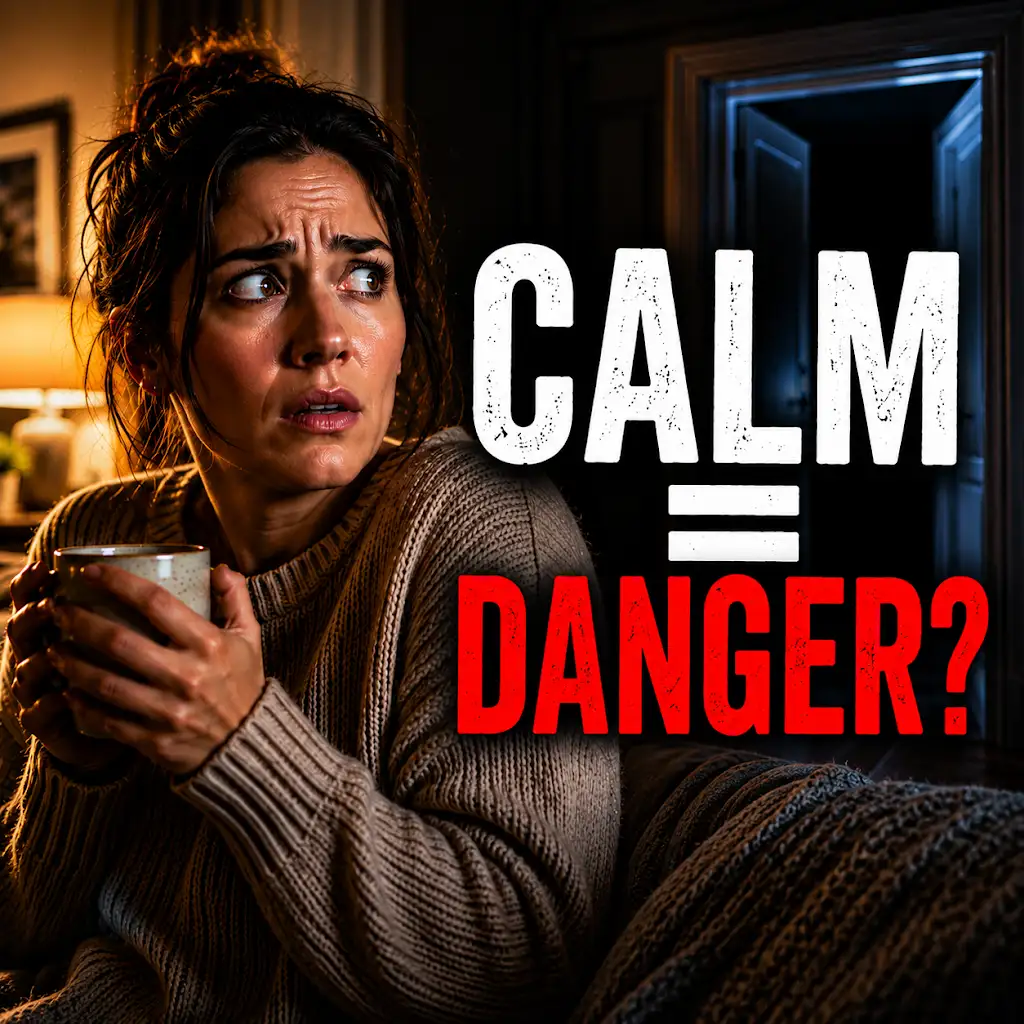
Your Life Is Safe. So Why Are You Still on Alert?
FAQs

What is hypervigilance?
Hypervigilance is a state of being constantly on high alert, often due to past trauma or anxiety. It can manifest as an intense awareness of potential threats, difficulty relaxing, and a heightened startle response.
Why does hypervigilance continue even when you are safe?
Hypervigilance can persist even when a person is in a safe environment because it is a learned response to past trauma or ongoing anxiety. The brain and body may still be on high alert, even when there is no immediate danger present.
What are the effects of hypervigilance on the body and mind?
Hypervigilance can lead to chronic stress, fatigue, difficulty concentrating, irritability, and disrupted sleep. It can also contribute to the development of anxiety disorders and other mental health issues.
How can hypervigilance be managed or treated?
Managing hypervigilance often involves a combination of therapy, medication, and self-care techniques. Cognitive-behavioral therapy (CBT), mindfulness practices, and relaxation exercises can be helpful in retraining the brain and body’s response to perceived threats.
What are some self-care strategies for coping with hypervigilance?
Self-care strategies for coping with hypervigilance may include regular exercise, adequate sleep, healthy eating, stress-reducing activities such as yoga or meditation, setting boundaries, and seeking support from friends, family, or support groups.