
You’ve felt it, haven’t you? That restless itch, that gnawing feeling that something isn’t quite right, even when everything seems perfectly fine. You scan your surroundings, your thoughts, your relationships, perpetually on the lookout for the next potential snag, the looming imperfection, the problem waiting to pounce. It’s as if your brain has a built-in problem-detection system, constantly running diagnostics and flagging even the slightest anomaly. You might even find yourself creating problems, conjuring scenarios that don’t exist or exaggerating minor issues into catastrophic events. So, why does your brain seem so intent on this perpetual quest for trouble?
The Evolutionary Imperative: Survival of the Fittest Mind
At its core, your brain’s inclination to search for problems is a deeply ingrained survival mechanism. Think about our ancestors. Their world was fraught with immediate dangers: predators, scarce resources, unpredictable weather, hostile tribes. A brain that could quickly identify and react to potential threats was a brain that was more likely to survive and reproduce. This wasn’t about finding happiness; it was about avoiding extinction.
The Threat Detection System
Imagine your brain as a sophisticated early warning system. Its primary directive is to keep you safe. This means it’s constantly scanning the environment, both external and internal, for anything that deviates from what it perceives as “normal” or “safe.”
The Amygdala’s Vigilance
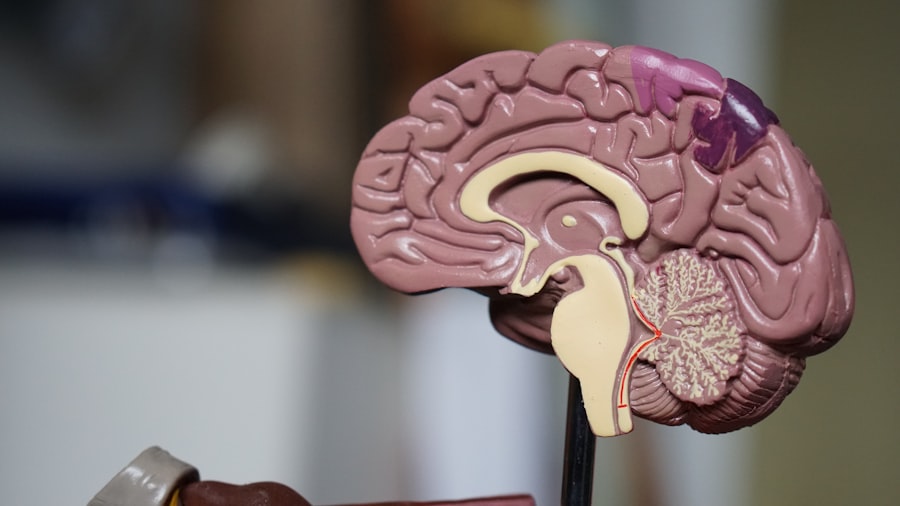
Deep within your brain lies the amygdala, a small but powerful almond-shaped structure that’s a key player in processing emotions, particularly fear. The amygdala is always on high alert, ready to sound the alarm at the first whiff of danger. This is why you might experience a surge of anxiety or a racing heart when you encounter something unfamiliar or potentially threatening, even if it turns out to be harmless. It’s your brain’s emergency response system kicking in.
The “Better Safe Than Sorry” Heuristic
Your brain operates on a set of mental shortcuts, or heuristics, to make quick decisions. One of the most potent is the “better safe than sorry” heuristic. When faced with uncertainty, your brain is more likely to err on the side of caution. It’s better to prepare for a threat that doesn’t materialize than to be caught off guard by one that does. This can manifest as overthinking, excessive worry, and a persistent search for potential downsides.
The Role of Negative Bias
Evolution has also equipped your brain with a negative bias. This means you tend to pay more attention to, and remember more vividly, negative experiences than positive ones. Think about it: a single negative encounter can teach you a valuable lesson that could prevent future harm, while a hundred positive encounters might not carry the same survival weight.
Learning from Danger
This negative bias is a powerful learning tool. If you once got stung by a bee, your brain is going to be acutely aware of buzzing sounds and yellow-and-black patterns in the future. This learned association helps you avoid future stings. While beneficial in the wild, this mechanism can be overactive in modern life, leading you to focus on the few negative aspects of an otherwise good situation.
The Spotlight on Flaws
Your brain, therefore, is naturally inclined to spotlight flaws and potential dangers. It’s like a spotlight that shines brightest on the dark spots. This isn’t necessarily a bad thing; it’s what has kept humanity alive. However, in the absence of immediate physical threats, this spotlight can turn inward, focusing on your own perceived inadequacies, or outward, scrutinizing your environment for any hint of imperfection.
Understanding why our brains are wired to search for problems can be fascinating, and it often relates to our evolutionary history and survival instincts. For a deeper exploration of this topic, you might find the article on Unplugged Psych insightful, as it delves into the psychological mechanisms behind our tendency to focus on challenges and threats. You can read more about it here: Unplugged Psych.
The Psychological Landscape: Seeking Control and Meaning
Beyond survival, your brain also searches for problems because it’s constantly trying to make sense of the world and exert a sense of control over it. Uncertainty can be deeply unsettling, and identifying a problem, even a manufactured one, can provide a sense of agency.
The Need for Certainty
Humans have a fundamental need for certainty and predictability. When things are ambiguous, your brain becomes uncomfortable. It craves answers, explanations, and resolutions. A problem, by its very nature, implies something that can be understood, analyzed, and potentially fixed, thus reducing uncertainty.
Filling the Void of Ambiguity
When faced with ambiguity, your brain will often try to fill the void. This can lead to overthinking and an almost compulsive need to find an explanation, even if it means fabricating one. You might replay conversations, dissect motivations, or invent worst-case scenarios to impose order on chaos. This is your brain’s attempt to create a narrative, to make the unpredictable predictable.
The Illusion of Control
Identifying a problem can also give you an illusion of control. If you can pinpoint what is wrong, you feel like you can do something about it. This sense of agency can be incredibly powerful, especially when you feel powerless in other areas of your life. It’s a way of saying, “I’m not just at the mercy of fate; I can influence what happens.”
The Pursuit of Meaning and Purpose
Your brain is also a meaning-making machine. It constantly seeks to understand its place in the world and to derive purpose from its experiences. Problems, in a strange way, can provide this sense of purpose.
The Hero’s Journey
Think about narratives that resonate with you. Many of them revolve around overcoming challenges, facing adversity, and solving problems. Your brain might subconsciously be seeking its own “hero’s journey.” Identifying and tackling problems, even small ones, can give you a sense of accomplishment and a feeling that you are contributing or making progress.
The Drive for Improvement
This drive for improvement is a fundamental human trait. We are wired to seek growth and development. When there are no obvious problems, your brain might look for areas where improvement is possible, even if those areas are perfectly acceptable as they are. This can lead to a constant striving for perfection, which, ironically, can create the very problems you’re trying to avoid.
Cognitive Biases and Mental Habits: The Architects of Your Problem-Solving Drive
Certain cognitive biases and ingrained mental habits can exacerbate your brain’s tendency to search for problems. These are the internal filters and patterns of thinking that shape how you perceive and interact with the world.
The Negativity Bias in Action
We touched on the evolutionary basis of the negativity bias, but it also manifests strongly in your everyday cognitive processes. Your brain is simply more attuned to negative information, making it easier to spot.
The “Spotlight Effect” on the Negative
Imagine a stage. Your brain, by default, shines a bright spotlight on anything that could be perceived as negative. A single criticism in a sea of praise, a minor inconvenience in a perfectly planned event, or a fleeting doubt amidst a strong conviction – these are the things that your brain is most likely to magnify. This is why you might dwell on a harsh comment for days while forgetting the dozen compliments you received.
Confirmation Bias Reinforcement
This negativity bias can also be reinforced by confirmation bias. If you believe something is wrong or about to go wrong, you will actively (and often unconsciously) seek out information that confirms your suspicions. This creates a self-fulfilling prophecy, where your focus on potential problems leads you to find them.
The Habit of Worrying
Worrying is a learned behavior that can become a deeply ingrained habit. For some, it’s a way of life, a constant internal dialogue of “what ifs” and “if onlys.”
The “Practice” of Worry
The more you worry, the more you practice worrying, and the stronger those neural pathways become. It’s like a muscle that gets stronger with use. Your brain becomes accustomed to operating in a state of heightened alert, and the absence of a problem can feel disorienting.
The False Sense of Preparedness
Many people believe that worrying makes them more prepared. They think that by anticipating every possible negative outcome, they can somehow ward it off or be better equipped to handle it. While some level of foresight is healthy, excessive worrying is often unproductive and can create a constant state of anxiety. Your brain is so busy anticipating problems that it has less capacity to actually solve them when they arise.
The Perfectionism Trap
Perfectionism, the relentless pursuit of flawlessness, is a significant driver of problem-seeking. If your standard is absolute perfection, then anything less than that is, by definition, a problem.
The Unattainable Ideal
Perfection is often an abstract and unattainable ideal. Your brain, in its quest for this impossible standard, will meticulously scan for any deviation, any imperfection, any area that falls short. This can lead to endless revisions, overthinking, and a constant state of dissatisfaction, as there will always be something to critique.
The Fear of Failure
Underlying perfectionism is often a deep-seated fear of failure. By identifying and magnifying potential problems, you can preemptively justify why something might not work or why you might not succeed. It’s a way of managing expectations, but it often leads to procrastination and an inability to take action for fear of not achieving perfection.
The Social and Cultural Influences: Learning from the World Around You
Your tendency to search for problems isn’t solely an internal affair. The social and cultural environments you inhabit play a significant role in shaping this behavior.
The “Problem-Focused” Culture
Many societies and cultures are inherently problem-focused. We celebrate those who solve difficult issues, we laud innovation that addresses societal challenges, and we often engage in discussions that revolve around what’s wrong and how to fix it.
Media’s Role in Highlighting Negativity
The media, for example, often thrives on sensationalism and reporting on negative events. While important for informing the public, the constant barrage of bad news can condition your brain to be more alert to threats and problems in your own life. It normalizes the idea that the world is a dangerous place full of issues that need constant attention.
The “Complainer” Archetype
In some social circles, complaining or pointing out flaws can be a way of bonding or establishing social status. The person who can identify the most problems or who has the most grievances might be seen as more insightful or more experienced. This can inadvertently teach you to adopt a similar approach.
The Impact of Your Upbringing
Your early experiences and the way you were raised can also significantly influence your problem-seeking tendencies.
Parental Modeling
If you grew up with parents who were constantly worried, anxious, or focused on potential problems, you likely absorbed those patterns of thinking. You learned that this is how one navigates the world – by being vigilant for what could go wrong.
Emphasis on Risk Aversion
Conversely, if your upbringing emphasized risk aversion and discouraged taking chances, your brain might have been conditioned to prioritize safety and avoid any situation that could lead to a problem, no matter how small. This can lead to an overactive search for potential pitfalls.
Many people often find themselves constantly searching for problems, a behavior that can be traced back to evolutionary instincts and psychological patterns. Understanding why our brains are wired this way can provide valuable insights into our thought processes and decision-making. For a deeper exploration of this phenomenon, you can read an insightful article on the topic at Unplugged Psych, which delves into the reasons behind our tendency to focus on challenges and how it affects our daily lives.
Reclaiming Your Mental Peace: Shifting Your Focus
While your brain’s inclination to search for problems is deeply rooted, it’s not an unchangeable destiny. You have the power to influence these patterns and cultivate a more balanced perspective.
Cultivating Gratitude
Gratitude is a powerful antidote to problem-seeking. By intentionally focusing on what you have, what is good, and what is working, you shift your brain’s attention away from what is lacking or wrong.
The Gratitude Journal
A simple yet effective practice is keeping a gratitude journal. Each day, write down a few things you are thankful for. This conscious act of acknowledging the positive forces in your life can retrain your brain to notice and appreciate the good, rather than solely focusing on the bad.
Practicing Mindful Appreciation
Beyond journaling, make a conscious effort to appreciate the small things throughout your day. The warmth of the sun on your skin, a delicious meal, a pleasant conversation – these are all opportunities to practice mindful appreciation and redirect your mental energy.
Embracing Imperfection
Accepting that imperfection is a natural part of life is crucial. Striving for flawlessness is a recipe for perpetual dissatisfaction.
The “Good Enough” Mindset
Adopt a “good enough” mindset. This doesn’t mean settling for mediocrity, but rather recognizing that perfection is often the enemy of progress. Focus on doing your best and accepting that “good enough” is often more than sufficient.
Learning from Mistakes Without Dwelling
View mistakes not as catastrophic failures but as learning opportunities. Everyone makes them. The key is to extract the lesson, adjust your approach, and move forward, rather than getting stuck in a cycle of self-criticism.
Practicing Mindfulness and Self-Awareness
Mindfulness is the practice of being present in the moment without judgment. It allows you to observe your thoughts, including your problem-seeking tendencies, without getting carried away by them.
Observing Your Thoughts
When you notice yourself starting to spiral into problem-searching, pause. Observe the thoughts that are arising. Are they realistic? Are they helpful? Simply acknowledging them as thoughts, rather than absolute truths, can create distance and reduce their power.
Challenging Your Assumptions
Use self-awareness to challenge your assumptions. Are you jumping to conclusions? Are you making assumptions about others’ intentions? By questioning your own thought processes, you can begin to dismantle the automatic problem-detection mode.
Focusing on Solutions
When you do encounter a genuine problem, shift your energy from dwelling on the issue to actively seeking solutions.
The Solution-Oriented Approach
Train yourself to move from problem identification to problem-solving. Instead of saying, “This is terrible,” ask, “What can I do to make this better?” This proactive approach empowers you and directs your mental energy constructively.
Breaking Down Challenges
Large problems can feel overwhelming. Break them down into smaller, more manageable steps. This makes them less daunting and provides a clear path forward, reducing the tendency to get bogged down in the sheer magnitude of the issue.
Your brain’s search for problems is a complex interplay of evolutionary programming, psychological needs, cognitive habits, and societal influences. While this tendency can be a double-edged sword, offering a degree of preparedness and a drive for improvement, it can also lead to unnecessary anxiety and a diminished appreciation for the good in your life. By understanding the roots of this behavior and consciously cultivating new habits of thought and perception, you can begin to reclaim your mental peace and foster a more balanced and fulfilling experience of the world. You don’t have to be perpetually on high alert. You can learn to trust that you are capable of handling challenges when they truly arise, and in the meantime, you can savor the moments of peace and contentment that life offers.

Your Life Is Safe. So Why Are You Still on Alert?
FAQs
What is the brain’s natural tendency to search for problems?
The brain has a natural negativity bias, which means it is more sensitive to and more likely to focus on negative experiences and information. This bias evolved as a survival mechanism to help humans anticipate and avoid potential threats.
How does the brain searching for problems affect mental health?
Constantly searching for problems can lead to increased stress, anxiety, and a pessimistic outlook on life. This can contribute to mental health issues such as depression and anxiety disorders.
Can the brain’s tendency to search for problems be changed?
Yes, the brain’s negativity bias can be changed through practices such as mindfulness, cognitive behavioral therapy, and positive psychology. By consciously focusing on positive experiences and reframing negative thoughts, individuals can rewire their brains to be more optimistic.
What are some strategies to counteract the brain’s tendency to search for problems?
Practicing gratitude, mindfulness, and positive affirmations can help counteract the brain’s natural tendency to focus on problems. Engaging in activities that bring joy and fulfillment can also shift the brain’s focus towards positivity.
How does the brain searching for problems impact decision-making and problem-solving?
While the brain’s tendency to search for problems can be helpful in identifying potential threats and challenges, it can also lead to overthinking and excessive worry. This can hinder effective decision-making and problem-solving by causing individuals to focus on worst-case scenarios rather than exploring potential solutions.