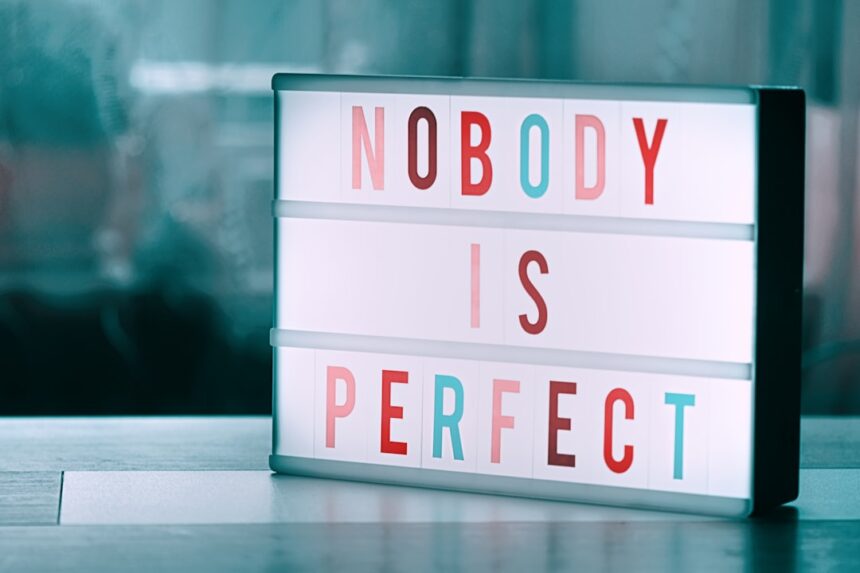
You stand at the precipice of a choice, a fork in the road that feels more like a chasm. The weight of the decision presses down, a tangible force making it hard to breathe. You’ve researched, you’ve deliberated, you’ve sought advice from friends and mentors. Yet, the nagging uncertainty remains, a persistent whisper that asks, “What if you’re wrong?” This, dear reader, is the familiar territory of decision-making, a landscape often littered with the ghosts of perfect outcomes that may never materialize. You crave certainty, a guarantee that your choice will lead to happiness, success, and an absence of regret. But what if the pursuit of perfect is precisely what’s holding you captive, preventing you from moving forward and, paradoxically, from finding peace?
The Illusion of Perfect Choices
You’ve likely been conditioned to believe in the existence of the “right” choice, the one singular path that will unlock a flawless future. This belief, however deeply ingrained, is a powerful illusion. Life is rarely so neatly packaged. It’s a chaotic, dynamic interplay of variables, many of which lie beyond your control. The circumstances surrounding any decision are fluid, and the consequences, even for the most carefully considered choices, are seldom entirely predictable.
The Myth of the Single Right Answer
Think about it: have you ever encountered a situation where there was only one objectively “correct” way to proceed, with all other options leading to guaranteed disaster? Probably not. More often than not, you’re faced with a spectrum of possibilities, each with its own set of potential benefits and drawbacks. You might choose a career path, and years later, a different one might have offered greater financial reward or personal fulfillment. But does that retroactively invalidate the choice you made? No. It simply highlights the ever-changing nature of life and your own growth.
The Pressure of External Validation
A significant part of why you chase perfection in your choices is the pressure, real or perceived, of external validation. You worry about what others will think if your decision doesn’t pan out as expected. You imagine the raised eyebrows, the hushed whispers, the subtle judgments. This fear of disapproval can paralyze you, making you overly cautious and reluctant to take any action that deviates from a perceived “safe” or “conventional” path. But whose life are you living? Yours, not theirs.
If you’re looking to embrace the idea of making imperfect decisions, a great resource is the article on the Unplugged Psych website that discusses the importance of self-compassion and acceptance in decision-making. This piece highlights how understanding that no choice is perfect can lead to greater peace of mind and personal growth. You can read more about it here: Unplugged Psych.
The Paralysis of Analysis: When Too Much Information Becomes a Hindrance
You’ve heard the adage, “knowledge is power.” And it is, to a degree. But in the realm of decision-making, too much knowledge, or rather, the obsessive pursuit of it, can become a formidable obstacle. You find yourself drowning in data, endlessly comparing options, and getting lost in hypothetical scenarios. This is the paralysis of analysis, and it’s a common trap that prevents you from actually making a decision.
The Infinite Rabbit Hole of “What Ifs”
You dive deep into every conceivable “what if.” What if this job offer doesn’t lead to a promotion? What if this relationship eventually ends? What if this investment doesn’t yield the desired returns? You construct elaborate narratives of potential negative outcomes, each one more detailed and terrifying than the last. This mental exercise, while seemingly productive, is often a form of procrastination, a way to avoid the discomfort of commitment and the inherent uncertainty of the future.
The Tyranny of the Ideal Outcome
You hold onto the idea of an ideal outcome, a perfect scenario where everything aligns flawlessly. This ideal, however, is often an unrealistic fantasy. By fixating on this unattainable perfection, you blind yourself to the good that imperfect choices can bring. You dismiss perfectly viable options because they don’t tick every single box on your meticulously crafted checklist.
Embracing Imperfection: A Shift in Perspective
The key to finding peace in decision-making lies not in eliminating uncertainty, but in learning to embrace imperfection. This requires a fundamental shift in your perspective, a willingness to let go of the illusion of control and accept the inherent messiness of life.
Redefining Success: Beyond Flawless Outcomes
You need to redefine what success means in the context of your choices. It’s not about achieving a perfect, unblemished outcome every single time. Instead, success can be found in the courage to choose, the willingness to learn and adapt, and the resilience to navigate challenges. Did you learn something valuable from a decision, even if it didn’t turn out exactly as you hoped? That’s success. Did you take a step forward, even if it wasn’t the most direct route? That’s also success.
The Power of “Good Enough”
You can release yourself from the relentless pressure of finding the “best” option by embracing the concept of “good enough.” This doesn’t mean settling for mediocrity. It means recognizing that a choice that meets your core needs and values, even if it’s not the most spectacular or theoretically optimal, can be a perfectly good and even excellent choice. It’s about practical wisdom, about making progress rather than striving for an unattainable ideal.
The Role of Intuition in Imperfect Choices
While logical analysis has its place, you shouldn’t underestimate the power of your intuition, especially when faced with seemingly equally valid, albeit imperfect, options. Your intuition is the culmination of your life experiences, your subconscious processing of information, and your innate wisdom. Learning to listen to it can be a powerful guide.
Taming the Inner Critic
Your inner critic is often the loudest voice against trusting your intuition. It’s the voice that shouts, “That’s irrational!” or “You’re being silly!” To embrace your intuition, you must learn to quiet this critical voice, to acknowledge its existence without letting it dictate your actions. Meditation, mindfulness, and journaling can be incredibly helpful tools for this.
Honoring Your Gut Feelings
You’ve likely experienced those moments when something just feels right, even if you can’t articulate why. Conversely, you’ve probably had that unsettling feeling about something that, on paper, seems like a good idea. Learning to honor these gut feelings, to give them weight in your decision-making process, can lead you to surprisingly accurate and fulfilling choices, even if they defy purely logical explanation.
Making imperfect decisions is a common struggle for many, but learning to embrace them can lead to personal growth and resilience. A helpful resource on this topic can be found in an insightful article that discusses the importance of accepting our choices and moving forward. By understanding that perfection is unattainable, we can cultivate a healthier mindset. For more tips on navigating this journey, you can check out the article here.
Moving Forward with Peace: Action and Acceptance
Ultimately, finding peace in decision-making is about taking action and then accepting the outcome. It’s about understanding that once a decision is made, the energy you spend on second-guessing can be better directed towards navigating the path ahead.
The Art of Commitment and Adaptability
Once you’ve made a choice, commit to it. This doesn’t mean you can’t adjust or change course if necessary. It means giving your chosen path a fair chance, investing your energy into making it work. Simultaneously, cultivate adaptability. Be prepared to pivot, to learn from new information, and to adjust your strategy as circumstances evolve. Life is a dance, not a rigid march.
Forgiveness for Past “Mistakes”
You will, inevitably, make choices that don’t pan out as you’d hoped. This is not a sign of your inadequacy, but a testament to your humanity. Practice self-compassion and forgiveness. Release yourself from the burden of past decisions. The lessons learned from those experiences are invaluable, shaping you into a wiser, more resilient individual. You are not defined by your past choices, but by how you learn from them and move forward.
Embracing imperfect choices is not about giving up on making good decisions. It’s about understanding that the pursuit of unattainable perfection is a recipe for anxiety and indecision. It’s about recognizing that growth, learning, and fulfillment often arise from the imperfect, the messy, and the uncertain. So, the next time you find yourself at a crossroads, take a deep breath. Acknowledge the uncertainty, listen to your intuition, and trust that whatever choice you make, you have the strength and wisdom to navigate the path ahead. You are capable of making good choices, even if they aren’t perfect. And in that acceptance, you will find a profound and lasting peace.

Why Tiny Decisions Feel So Serious
FAQs

What are imperfect decisions?
Imperfect decisions are choices or actions that are not flawless or ideal. They may not meet all the criteria for a perfect decision, but they are still made with the available information and resources at the time.
Why is it important to be okay with imperfect decisions?
Being okay with imperfect decisions is important because it allows for flexibility, growth, and learning. It can reduce stress and anxiety associated with striving for perfection and can lead to more efficient decision-making processes.
How can one become okay with imperfect decisions?
One can become okay with imperfect decisions by practicing self-compassion, reframing mistakes as learning opportunities, and focusing on the positive aspects of the decision. It can also be helpful to seek support from others and to remind oneself that perfection is not realistic.
What are the benefits of accepting imperfect decisions?
Accepting imperfect decisions can lead to reduced stress and anxiety, increased resilience, and improved decision-making skills. It can also foster a growth mindset and allow for more creativity and innovation.
How can imperfect decisions contribute to personal growth?
Imperfect decisions can contribute to personal growth by providing opportunities for learning, adaptation, and resilience. They can help individuals develop problem-solving skills, emotional intelligence, and a greater sense of self-awareness.