You hold the key to unlocking your peak performance, and it resides not in brute force or sheer luck, but within the intricate landscape of your own mind. You’ve likely heard whispers of “mental rehearsal,” “visualization,” or “imagery,” and perhaps dismissed them as New Age fluff. But what if I told you these are powerful, scientifically validated techniques that can fundamentally alter your trajectory towards success? This isn’t about wishful thinking; it’s about actively shaping your reality through the strategic deployment of your mental faculties. This is about mastering your mind through the psychology of mental rehearsal.
You understand the importance of physical training. You lift weights, you run miles, you push your body to its limits to build strength and endurance. But what about your mental muscles? Are you giving them the attention they deserve? Your brain, a marvel of biological engineering, is remarkably plastic. This means it can be rewired, strengthened, and optimized through practice, just like your biceps. Mental rehearsal is your brain’s personal trainer, a sophisticated tool that allows you to train your mind for specific outcomes without ever leaving your chair.
Understanding Neuroplasticity: Your Brain’s Malleable Nature
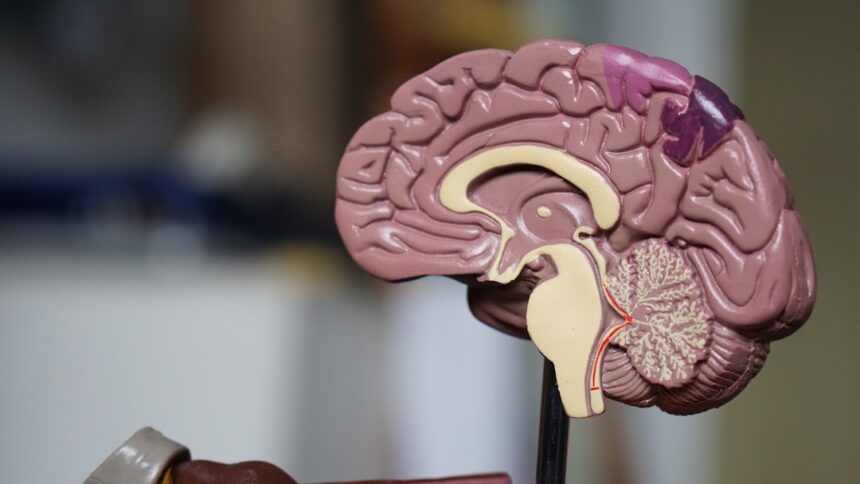
You might be tempted to believe that your abilities are fixed, that you’re either good at something or you’re not. This is a limiting belief that neuroplasticity directly challenges. Neuroplasticity, the brain’s ability to reorganize itself by forming new neural connections throughout life, is the fundamental principle that underpins mental rehearsal. When you engage in mental rehearsal, you are, in essence, creating and strengthening neural pathways associated with the actions and experiences you are imagining. Think of it like walking a familiar path in a dense forest: the more you traverse it, the clearer and easier it becomes. Similarly, the more you mentally rehearse a skill or scenario, the more ingrained and accessible those neural pathways become. This makes the actual execution in the real world feel more automatic, fluid, and effective. You’re not just thinking about doing something; you’re pre-executing it in your mind, laying the groundwork for effortless action.
The Power of Proprioception and Kinesthetic Imagery
You might assume mental rehearsal is purely a visual exercise. While vivid imagery is a crucial component, it’s only part of the picture. Proprioception, your body’s awareness of its own position and movement in space, plays a vital role. When you mentally rehearse, you’re not just seeing yourself perform a task; you’re also feeling it. You’re experiencing the subtle shifts in balance, the tension in your muscles, the rhythm of your movements. This kinesthetic imagery, the mental simulation of bodily sensations, is incredibly powerful. It engages the same motor areas of the brain that would be active if you were physically performing the action. This means your brain is essentially practicing the physical execution, making it more likely to translate into real-world proficiency. Imagine a musician mentally practicing a difficult passage. They don’t just see their fingers on the keys; they feel the movement, the pressure, the flow. This internal simulation is what allows them to perfect the execution before they even touch their instrument.
Mental rehearsal is a fascinating psychological technique that involves visualizing and mentally practicing a task before actually performing it. This method has been shown to enhance performance in various fields, from sports to public speaking. For further insights into the psychology behind mental rehearsal and its applications, you can read a related article on this topic at Unplugged Psychology. This resource delves into the cognitive processes involved in mental rehearsal and offers practical tips for incorporating it into daily life.
The Mechanics of Mental Rehearsal: Building Your Inner Blueprint
So, how do you actually do mental rehearsal? It’s not simply closing your eyes and wishing for the best. It’s a deliberate, structured process that requires focus and intentionality. You need to build a detailed, multi-sensory inner blueprint of your desired outcome.
Setting Your Intentions: What Do You Want to Achieve?
Before you embark on any mental rehearsal, you must have a clear objective. What specific skill are you trying to improve? What challenging situation are you preparing for? What outcome do you want to achieve? Vague intentions lead to vague results. Be precise. If you’re an athlete preparing for a race, your intention might be to execute your start perfectly, maintain a consistent pace, and finish strong. If you’re a public speaker, your intention might be to deliver your opening statement with confidence and connect with your audience. The more specific your intention, the more targeted your mental rehearsal can be.
Engaging All Your Senses: Beyond the Visual
As mentioned earlier, a rich sensory experience is key. Don’t limit yourself to just seeing.
- Visual: What do you see? The environment, your equipment, other people, your own body in motion.
- Auditory: What do you hear? The crowd cheering, the sound of your own breath, the subtle cues of your environment, the feedback from your senses.
- Kinesthetic: What do you feel? The texture of the ground, the grip of your instrument, the movement of your limbs, the subtle muscle engagements.
- Olfactory (Smell): Is there a distinct smell associated with the situation? The scent of grass, the ozone of a locker room, the aroma of your favorite coffee before a crucial meeting.
- Gustatory (Taste): While less common, in certain situations, the taste of something can be a powerful anchor. The metallic taste of adrenaline, the satisfying taste of a healthy meal after a strenuous activity.
The more senses you can engage, the more vivid and impactful your mental rehearsal will be. You are creating a complete, immersive experience for your brain.
Perfecting the Details: The Power of Micro-Skills
You’ve set your intentions and you’re engaging your senses. Now, it’s time to drill down into the specifics. Break down complex actions into smaller, manageable components. If you’re learning a new dance move, mentally rehearse each individual step, each hand gesture, each facial expression. If you’re preparing for a difficult conversation, mentally rehearse the opening lines, the anticipated objections, and your planned responses, focusing on your tone of voice and body language. By mastering these micro-skills in your mind, you build a solid foundation for seamless execution when the moment arrives. This meticulous attention to detail prevents errors and builds confidence.
The Psychological Underpinnings: Why It Actually Works

You might be asking, “This all sounds good, but why does it actually change anything?” The answer lies in the deep psychological and neurological processes that mental rehearsal taps into. It’s not magic; it’s sophisticated brain science.
The Role of the Subconscious Mind: Priming for Success
Your subconscious mind is a powerful force, influencing your actions, beliefs, and reactions more than you might realize. Mental rehearsal acts as a direct line to your subconscious, feeding it positive and successful experiences. By repeatedly simulating a desired outcome, you are programming your subconscious to expect and facilitate that outcome. When you encounter the real-life situation, your subconscious is already primed for success. It’s less likely to trigger anxieties or negative self-talk and more likely to guide you towards the practiced actions. Think of it as installing a new operating system on your internal computer – you’re updating your default settings to favor positive and effective responses.
Reducing Anxiety and Building Confidence: The Familiarity Effect
One of the biggest hurdles to peak performance is anxiety. When faced with a new or challenging situation, your brain can trigger a fear response, leading to self-doubt, hesitation, and poor decision-making. Mental rehearsal acts as a powerful antidote to this. By repeatedly experiencing the situation in a controlled, mental environment, you become familiar with it. This familiarity reduces the perceived threat and decreases anxiety. The more you mentally rehearse, the more confident you become in your ability to handle the situation, as you’ve already navigated it successfully countless times in your mind. This confidence is not arrogance; it’s a deep-seated belief in your preparedness.
Enhancing Skill Acquisition and Performance: The Practice Effect
The neurological benefits of mental rehearsal are undeniable. As we discussed with neuroplasticity, repeatedly imagining an action strengthens the neural pathways associated with that action. This leads to improved motor control, faster reaction times, and more efficient execution. For athletes, it means smoother swings, more accurate shots, and better endurance. For musicians, it means cleaner playing and more nuanced interpretations. For professionals, it means sharper presentations and more effective negotiations. You are essentially practicing the physical act without the physical exertion, accelerating your learning curve and elevating your performance.
Applications of Mental Rehearsal: Beyond the Sports Field

You might associate mental rehearsal primarily with athletes, but its applications are far broader than you might imagine. This powerful tool can be leveraged in virtually any area of your life where preparation and optimal performance are crucial.
Peak Performance in Sports and Athletics
This is perhaps the most well-known application. Athletes use mental rehearsal to:
- Practice complex techniques: Imagine a gymnast visualizing their perfect routine, or a golfer mentally seeing their swing before each shot.
- Prepare for specific opponents or conditions: A football team might mentally rehearse strategies against a particular defensive formation, or a skier might visualize navigating a challenging course in icy conditions.
- Overcome performance slumps or injuries: Mental rehearsal can help athletes maintain their skills and mental edge even when physically unable to train.
Enhancing Public Speaking and Presentations
You might feel a knot in your stomach at the mere thought of public speaking. Mental rehearsal can transform this anxiety into anticipation.
- Mastering your delivery: Visualize yourself speaking clearly, confidently, and engagingly. Practice your pacing, your tone, and your body language.
- Anticipating audience reactions: Mentally run through potential questions or feedback, and craft your responses.
- Connecting with your audience: Imagine making eye contact and feeling a genuine connection, fostering a sense of ease and authenticity.
Navigating Difficult Conversations and Negotiations
These situations can be fraught with tension and uncertainty. Mental rehearsal equips you with the tools to approach them with composure.
- Formulating your arguments: Visualize yourself articulating your points clearly and persuasively, anticipating counter-arguments.
- Managing your emotions: Practice remaining calm and centered, even when faced with challenging statements or emotional appeals.
- Achieving desired outcomes: Mentally rehearse successful resolutions, envisioning a mutually beneficial agreement.
Boosting Creativity and Problem-Solving
Mental rehearsal isn’t just about execution; it can also be a powerful tool for generating new ideas and finding innovative solutions.
- Exploring different scenarios: Imagine various approaches to a problem and their potential consequences.
- Brainstorming with yourself: Mentally “try on” different ideas and see how they feel, allowing for spontaneous insights.
- Overcoming creative blocks: Visualize yourself breaking through barriers and generating fresh perspectives.
Mental rehearsal is a fascinating concept in psychology that involves visualizing oneself performing a task or skill to enhance performance and build confidence. A related article that delves deeper into this topic can be found at Unplugged Psych, where the benefits of mental imagery in various fields, including sports and therapy, are explored. By engaging in mental rehearsal, individuals can improve their focus and reduce anxiety, ultimately leading to better outcomes in their endeavors.
Mastering the Art: Tips for Effective Mental Rehearsal
| Psychology of Mental Rehearsal Metrics | Definition |
|---|---|
| Visualization | The process of creating a mental image or intention of what you want to happen or feel in reality. |
| Self-Efficacy | The belief in one’s ability to succeed in specific situations or accomplish a task through mental rehearsal. |
| Performance Improvement | The measurable enhancement in skills or abilities as a result of consistent mental rehearsal and visualization. |
| Reduced Anxiety | The decrease in feelings of stress or worry through the use of mental rehearsal to prepare for challenging situations. |
You’re convinced of the power of mental rehearsal. Now, let’s ensure you’re using it to its full potential. Like any skill, it requires practice and refinement.
Consistency is Key: Make It a Habit
You wouldn’t expect to become an expert pianist by practicing only once a month. The same applies to mental rehearsal. Integrate it into your daily routine. Even a few minutes of focused mental rehearsal each day can yield significant results over time. Schedule it like any other important appointment. Make it a pre-activity ritual or a post-activity reflection tool.
Start Small and Build Up
Don’t try to mentally rehearse an entire marathon on your first attempt. Begin with short, focused sessions on specific skills or moments. As you become more adept, you can gradually increase the duration and complexity of your mental rehearsals. The goal is to build your mental stamina and the depth of your imagery.
Be Specific and Detailed in Your Imagery
The more detailed and vivid your mental rehearsal, the more effective it will be. Don’t just think “I’ll hit the ball.” Visualize the arc of the swing, the feel of the club, the sound of the contact, the trajectory of the ball. Immerse yourself in the experience.
Incorporate Feedback and Self-Correction
Mental rehearsal isn’t just about perfect execution. It’s also about identifying and correcting potential errors. Imagine making a mistake, and then mentally correct it. This teaches your brain how to recover and adapt, making you more resilient in real-time.
Combine with Physical Practice
While mental rehearsal can be incredibly potent on its own, it’s most powerful when it complements physical practice. Use mental rehearsal to refine techniques you’ve already learned or to prepare for upcoming physical challenges. This synergy amplifies the learning and performance benefits.
You now possess a profound understanding of the psychology behind mental rehearsal. You know it’s not just about wishful thinking, but a scientifically grounded method for shaping your mind and, consequently, your reality. By mastering this powerful technique, you are equipping yourself with an invaluable tool for achieving your goals, overcoming challenges, and ultimately, unlocking your full potential. Your mind is your ultimate gym; start training it with intention and watch yourself transform.
The Game Your Brain Plays Every Night
FAQs
What is mental rehearsal in psychology?
Mental rehearsal, also known as mental imagery or visualization, is a cognitive technique used in psychology to mentally practice or simulate a specific skill, task, or situation without physically performing it. It involves creating a detailed mental representation of the desired outcome and repeatedly rehearsing it in the mind.
How does mental rehearsal work in the brain?
Mental rehearsal works by activating similar neural pathways in the brain as actual physical practice. When individuals vividly imagine performing a task, the brain’s motor and sensory areas are activated, leading to the strengthening of neural connections associated with the skill being rehearsed. This can lead to improved performance when the task is actually performed.
What are the benefits of mental rehearsal?
Mental rehearsal has been shown to have several benefits, including improved performance, increased confidence, reduced anxiety, enhanced motivation, and accelerated learning. It can also be used to prepare for challenging or high-pressure situations, such as public speaking, sports competitions, or academic exams.
How is mental rehearsal used in therapy and treatment?
In therapy and treatment, mental rehearsal is used as a tool to help individuals overcome fears, phobias, and traumatic experiences. By repeatedly visualizing themselves successfully coping with the feared situation, individuals can desensitize themselves to the anxiety-provoking stimuli and develop a sense of mastery and control.
Are there any potential limitations or risks associated with mental rehearsal?
While mental rehearsal can be a powerful tool, it is not a substitute for actual physical practice and may not be effective for everyone. In some cases, excessively vivid mental rehearsal of negative or distressing scenarios can potentially exacerbate anxiety or stress. It is important for individuals to work with a qualified mental health professional when using mental rehearsal as part of therapy or treatment.