
You’ve felt it. That prickling sensation on your skin, the slight clench in your chest, the way your thoughts begin to race even as the external world seems to hold its breath. It’s the anxious silence, a phenomenon you’ve likely encountered more times than you’d care to admit. It’s not just the absence of noise; it’s the palpable presence of something else, something that festers and amplifies within the void. This isn’t the peaceful quiet of a deserted library or the tranquil hush of nature. This is a silence that hums with unvoiced worries, a quiet that demands your attention and often, your discomfort. You might find yourself in a waiting room, the only sound the tick of a clock, and suddenly every minor ailment you’ve ever experienced feels amplified. Or perhaps you’re alone in your apartment after a stressful day, the usual city hum muted, and your own internal monologue takes center stage, weaving narratives of dread. This exploration delves into the multifaceted impact of this anxious silence, dissecting its origins, its manifestations, and how you can navigate its unsettling terrain.
When the external world quiets down, your internal world often ramps up. This isn’t a coincidence; it’s a psychological phenomenon rooted in how your brain processes information and manages its own internal states. You might be accustomed to a certain level of auditory stimulation, a constant stream of background noise that acts as a buffer, a distraction from your own thoughts. When this buffer is removed, your attention naturally shifts inward.
The Brain’s Search for Input: Filling the Void
Your brain is a complex organ constantly seeking stimuli. When there’s a lack of external auditory input, it doesn’t simply go dormant. Instead, it actively searches for something to process. This can manifest in a few ways. Firstly, you might become hyper-aware of your own bodily sensations. The subtle rumble of your stomach, the faint thrum of your pulse, the creak of your joints – these previously unnoticed sounds are now amplified, often interpreted through a lens of anxiety. You might wonder if that stomach gurgle is a sign of illness, or if that joint pop is the beginning of a serious condition.
Secondly, your brain will turn to your thoughts. Without external distractions, your internal dialogue becomes the primary source of information. If you’re already prone to worry or rumination, this quiet space becomes fertile ground for those thoughts to blossom. You might find yourself replaying conversations, dissecting perceived slights, or conjuring up worst-case scenarios with alarming vividness. It’s as if your mind, deprived of external noise, begins to generate its own, often unsettling, soundtrack.
The Unsettled Subconscious: Whispers from Below
The anxious silence can also be a conduit for your subconscious to surface. Things you’ve pushed aside or haven’t had the mental space to confront can begin to bubble to the surface. These might be unresolved emotions, lingering fears, or buried anxieties. In the absence of external noise, these inner whispers become louder, more insistent. You might not be able to pinpoint exactly what’s bothering you, but you feel its presence, a gnawing unease that accompanies the quiet. This can be particularly potent when you’re trying to relax or fall asleep, as the usual mental distractions are absent.
The Power of Expectation: What You Think You’ll Hear
Sometimes, the anxiety in silence isn’t about what you actually hear, but about what you anticipate hearing. You might be expecting a phone call, a notification, or even a sound from another room that never comes. This expectation of sound, coupled with its absence, can create a state of heightened vigilance. Your brain is primed to detect a specific stimulus, and when it doesn’t arrive, it can lead to a sense of unease or disappointment, which can easily morph into anxiety. You might find yourself constantly checking your phone, not because you’ve heard it, but because you’re waiting for it to ring.
Many people experience anxiety in silence, as it can amplify thoughts and feelings that are often drowned out by noise. This phenomenon is explored in detail in an insightful article on the Unplugged Psych website, which discusses the psychological implications of silence and how it can trigger discomfort for some individuals. To learn more about the relationship between silence and anxiety, you can read the article here: Unplugged Psych.
The Shadow Self: How Silence Exposes Your Inner Critic
It’s in the quiet moments that your inner critic often finds its loudest voice. When the world outside demands less of your attention, your internal narrator steps in, and if that narrator is unkind, the silence can become a breeding ground for self-doubt and insecurity. You might find yourself scrutinizing your past actions, replaying mistakes, and engaging in a relentless cycle of self-recrimination.
The Magnifying Glass of Insecurity: Every Flaw Amplified
In the deafening quiet, your perceived flaws can feel magnified. That awkward thing you said yesterday? It suddenly feels like the most embarrassing moment of your life. That decision you made? It seems like a catastrophic error in judgment. The silence provides the perfect backdrop for your insecurities to play on repeat, each thought a brushstroke on a canvas of self-criticism. You might find yourself comparing yourself unfavorably to others, convinced of your own inadequacies. This is the shadow self, a part of you that often thrives in the absence of external validation or distraction.
The Fear of Being Found Out: Vulnerability in the Void
The anxious silence can also amplify the fear of being discovered, of your perceived weaknesses being exposed. When you’re alone and the only sound is your own breathing, you might feel acutely aware of your own vulnerability. This can manifest as a fear of judgment, even if there’s no one there to judge you. It’s an internal judgment that you’re projecting onto the empty space. You might feel a pressure to appear perfect, even when you’re alone, as if the silence itself is a judge.
The Overthinking Cycle: The Rabbit Hole of “What Ifs”
When your mind is left to its own devices in a silent environment, it can easily fall into the trap of overthinking. You start with a small concern, and the lack of external distraction allows it to balloon into a complex web of “what ifs.” You might find yourself spiraling down a rabbit hole of hypothetical scenarios, each one more anxiety-provoking than the last. This is particularly common when you’re trying to make a decision or process a difficult situation. The silence provides the uninterrupted mental space for this exhaustive, and often unproductive, mental exploration.
The Physical Manifestations: When Quiet Takes a Bodily Toll

The impact of anxious silence isn’t just psychological; it has tangible physical consequences. Your body often reacts to your mental state, and when you’re experiencing anxiety in silence, your physiology can change.
The Fight-or-Flight Response: A Silent Alarm System
Even in the absence of immediate danger, your body can interpret the anxious silence as a threat. This can trigger your fight-or-flight response, a primal survival mechanism. You might experience a racing heart, shallow breathing, tense muscles, and an increased heart rate. These physical sensations, amplified by the quiet, can further fuel your anxiety, creating a feedback loop of discomfort. You might feel a sense of unease or a phantom pressure in your chest, even though there’s no external cause.
Sleep Disturbances: The Battle for Rest
The anxious silence is a notorious enemy of sleep. When your mind is buzzing with worries and your body is on alert, it becomes incredibly difficult to drift off. You might lie awake for hours, acutely aware of every rustle, every distant siren, and the relentless turning of your own thoughts. This can lead to insomnia, fragmented sleep, and a general feeling of exhaustion, which in turn can exacerbate anxiety. The quiet of the night, which should be a balm, becomes a battleground.
Digestive Distress: The Gut-Brain Connection at Play
The gut-brain connection is powerful, and anxiety can manifest physically in your digestive system. When you’re experiencing anxious silence, you might notice symptoms like stomachaches, nausea, or a general feeling of unease in your abdomen. This is your body’s stress response, and the quiet allows these sensations to feel more prominent and alarming. You might find yourself constantly needing to use the restroom or experiencing indigestion.
Navigating the Uncharted Territory: Strategies for Taming the Silent Beast

The good news is that you don’t have to be a passive victim of the anxious silence. There are practical strategies you can employ to reclaim your peace and manage the discomfort it brings.
Reclaiming Your Auditory Space: Conscious Sound Choices
One of the most direct ways to combat anxious silence is to consciously introduce sound back into your environment. This doesn’t mean filling your space with constant noise, but rather making deliberate choices about what you listen to.
The Power of Music: A Calming Soundtrack
Music has a profound impact on our emotional state. Creating playlists of calming or uplifting music can be a powerful tool. Consider instrumental pieces, nature sounds, or music that evokes positive memories. The rhythm and melody can help to soothe your nervous system and drown out the anxious whispers. You might find that a particular genre or artist has a consistently calming effect for you. Experiment to discover what works best.
The Comfort of Spoken Word: Podcasts and Audiobooks
Podcasts and audiobooks can provide a welcome distraction and a sense of connection. Choose content that interests you and is not overly stimulating or anxiety-provoking. Engaging stories or informative discussions can help to redirect your attention away from your own worries. A lighthearted comedy podcast can be a particularly effective antidote to anxious rumination.
White Noise and Nature Sounds: Gentle Auditory Buffers
If you find even music too distracting, consider white noise or nature sound machines. These can provide a consistent, gentle auditory buffer that masks external disturbances and creates a more predictable sound environment. The gentle patter of rain or the steady hum of a fan can be surprisingly effective at creating a sense of calm.
Mindfulness and Meditation: Anchoring Yourself in the Present
When the anxious silence threatens to pull you into a spiral of worry, mindfulness and meditation practices can be invaluable. These techniques teach you to focus on the present moment, to observe your thoughts and feelings without judgment, and to develop a sense of inner calm.
Guided Meditations: A Gentle Hand to Hold
Guided meditations, available through apps or online resources, can be particularly helpful when you’re new to the practice. The soothing voice of the narrator can lead you through relaxation exercises, body scans, and breathing techniques, helping you to anchor yourself in the present and quiet the mental chatter.
Breath Awareness: Your Constant Companion
The simplest yet most profound mindfulness technique is breath awareness. Simply focusing on the sensation of your breath – the inhale, the exhale – can bring you back to the present moment. When your mind wanders to anxious thoughts, gently guide your attention back to your breath. This is a practice that you can do anywhere, anytime, even in the deepest silence.
Body Scans: Reconnecting with Your Physical Self
Body scans involve systematically bringing your attention to different parts of your body, noticing any sensations without trying to change them. This practice can help you to release physical tension and become more aware of your bodily responses to anxiety, empowering you to address them.
Setting Boundaries: Protecting Your Mental Space
Learning to set boundaries is crucial for managing the impact of anxious silence, especially in social or work environments.
The Power of Saying “No”: Protecting Your Energy
It’s okay to decline invitations or requests that you know will leave you feeling drained or overwhelmed. Protect your mental space by saying “no” when you need to. This might mean not attending a large social gathering that you anticipate will be too stimulating, or politely declining an extra task at work that will push you beyond your capacity.
Creating Personal Sanctuary: Dedicated Quiet Zones
Designate specific areas in your home as quiet zones, where you can retreat and recharge without interruption. This could be a reading nook, a quiet corner of your bedroom, or even a peaceful walk in nature. These sanctuaries provide a sense of control and predictability, allowing you to manage your exposure to silence.
Communicating Your Needs: Voicing Your Preferences
Don’t be afraid to communicate your needs to others. If you’re in a shared living space or working in an office, you can politely explain that you need some quiet time to focus or de-stress. Most people are understanding and willing to accommodate reasonable requests. You might say, “I’m going to put on some headphones for a bit to concentrate,” or “I need about 30 minutes of uninterrupted quiet time to finish this task.”
Silence can often evoke feelings of anxiety, as it leaves space for our thoughts to swirl and amplify worries that might otherwise remain subdued. This phenomenon is explored in depth in a related article on the Unplugged Psych website, which discusses how our minds react to quiet moments and the impact of silence on mental health. Understanding these dynamics can be crucial for those seeking to manage their anxiety levels more effectively. For further insights, you can read more about this topic here.
The Paradox of Quiet: Finding Strength in the Stillness
| Reasons Why Silence Makes Me Anxious |
|---|
| 1. It gives me too much time to overthink |
| 2. I feel like something is wrong or about to go wrong |
| 3. It can be a sign of disconnection or lack of communication |
| 4. I fear being alone with my thoughts |
| 5. It can trigger feelings of loneliness or isolation |
While the anxious silence can be a source of distress, there’s also a paradoxical strength to be found in embracing quiet. When you learn to navigate the discomfort, you can unlock a deeper understanding of yourself and cultivate a more resilient inner landscape.
The Opportunity for Self-Reflection: Deeper Understanding
The absence of external noise creates an unparalleled opportunity for self-reflection. In the quiet, you can truly listen to yourself, to your needs, your desires, and your fears. This introspection can lead to a profound understanding of your own patterns of thought and behavior, allowing you to make positive changes in your life. It’s in these quiet moments that you can truly hear your own inner wisdom.
Cultivating Resilience: Building Inner Strength
By learning to tolerate and even find comfort in periods of quiet, you build resilience. You become less reliant on external stimuli for your sense of well-being. You develop the capacity to sit with discomfort and emerge stronger on the other side. This is a skill that will serve you well in all aspects of your life. You are not a fragile reed, easily swayed by the absence of noise; you are capable of standing firm.
The Appreciation for Sound: A Renewed Perspective
When you’ve spent time in anxious silence, you often develop a newfound appreciation for the sounds that bring you joy and comfort. The gentle murmur of conversation, the laughter of loved ones, the vibrant symphony of nature – these sounds become even more precious when you’ve experienced their absence or their uneasy counterpart. You learn to savor the positive auditory experiences in your life.
The anxious silence is not an enemy to be feared, but rather a complex aspect of the human experience to be understood and navigated. By recognizing its origins, its manifestations, and by employing conscious strategies, you can transform it from a source of distress into an opportunity for growth, self-discovery, and ultimately, a deeper sense of peace. You hold the power to shape your relationship with silence, to find strength in its stillness, and to listen to the subtle, yet profound, whispers of your own being.
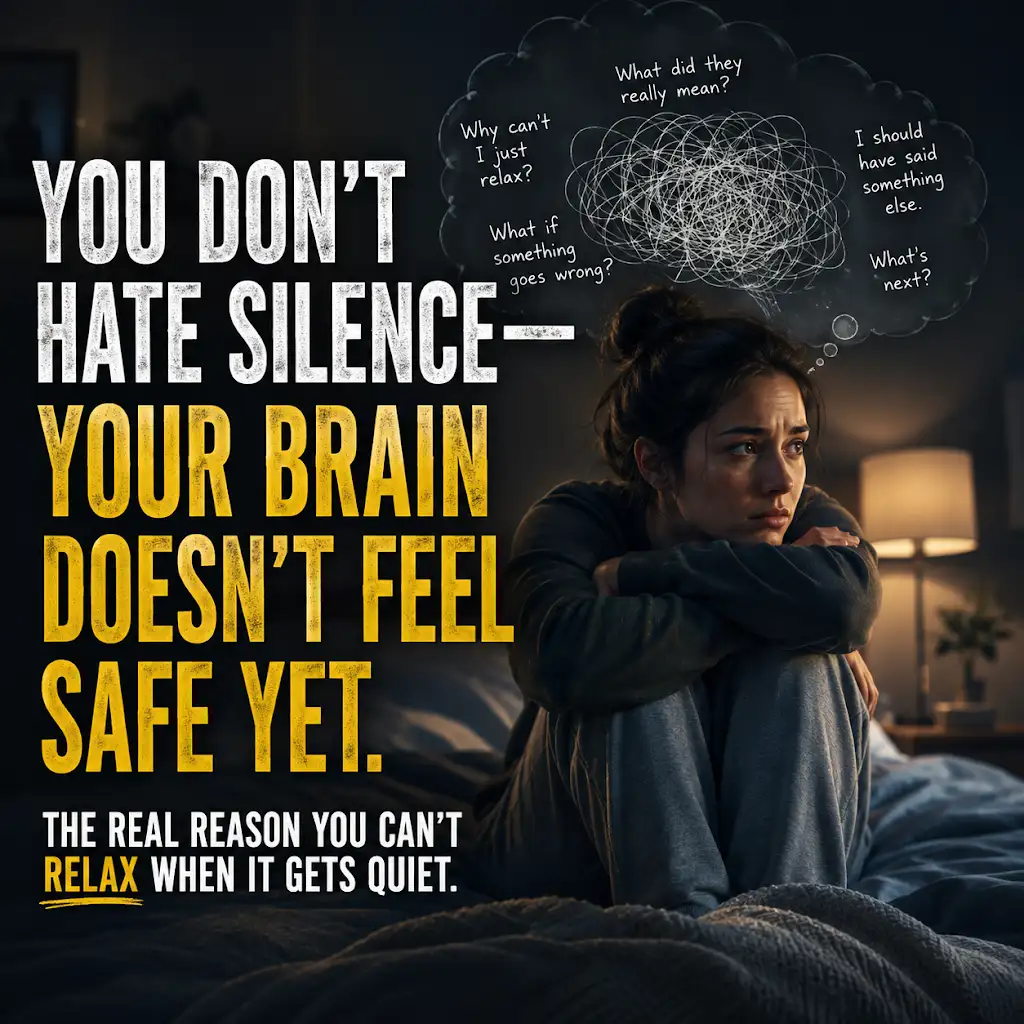
You Don’t Hate Silence—Your Brain Doesn’t Feel Safe Yet
FAQs
What is silence anxiety?
Silence anxiety, also known as sedatephobia, is the fear of silence or being in a quiet environment. It can cause feelings of unease, discomfort, and even panic in some individuals.
What are the symptoms of silence anxiety?
Symptoms of silence anxiety can include increased heart rate, sweating, trembling, difficulty breathing, and a sense of impending doom. Some individuals may also experience a strong urge to fill the silence with noise or conversation.
What causes silence anxiety?
Silence anxiety can be caused by a variety of factors, including past traumatic experiences, fear of the unknown, or a general discomfort with being alone with one’s thoughts. It can also be linked to underlying anxiety disorders or other mental health conditions.
How can silence anxiety be managed?
Managing silence anxiety may involve techniques such as deep breathing, mindfulness meditation, and cognitive behavioral therapy. Creating a comfortable and soothing environment, engaging in relaxation exercises, and gradually exposing oneself to periods of silence can also be helpful.
When should someone seek professional help for silence anxiety?
If silence anxiety significantly impacts an individual’s daily life, relationships, or overall well-being, it may be beneficial to seek professional help from a therapist or mental health professional. Additionally, if silence anxiety is accompanied by other mental health symptoms, such as depression or panic attacks, seeking professional help is recommended.