
You stand at the precipice of the unknown. The air crackles with a tension you can almost taste, a phantom chill despite the ambient temperature. This is the domain of fear and uncertainty, where your rational mind wrestles with ancient, primal instincts. You find yourself caught in a dance, a delicate and often terrifying pas de deux between what you know and what you dread, between the comfort of certainty and the gnawing unease of the undefined. Understanding this intricate interplay, the psychological underpinnings that govern your reactions, is not just an intellectual exercise; it’s a vital step towards navigating your own inner landscape and facing the world with greater resilience.
Your fear isn’t some arbitrary emotional glitch. It’s a deeply ingrained survival mechanism, a sophisticated evolutionary blueprint hardwired into your very being. For millennia, your ancestors faced immediate, life-threatening dangers: predators lurking in the shadows, treacherous terrain, scarcity of resources. Fear, in these contexts, was a critical survival tool. It triggered a cascade of physiological and psychological responses designed to prepare you for fight or flight, to maximize your chances of seeing another day.
The Amygdala: Your Internal Alarm System
At the core of your fear response lies a tiny, almond-shaped structure in your brain: the amygdala. This is your rapid-response unit, constantly scanning your environment for potential threats, both real and inferred. When it detects something perceived as dangerous, it fires off a signal, initiating a sophisticated chain reaction that ripples through your nervous system. This isn’t a conscious decision; the amygdala operates on instinct, bypasses your logical prefrontal cortex in critical moments, ensuring you react before you even have time to fully process what’s happening.
Identifying Danger: From Saber-Teeth to Sirens
Historically, the amygdala’s threats were overt and tangible: the rustle of leaves that sounded like a predator, the sudden appearance of an unfamiliar figure. Today, while those primal threats still exist, your amygdala is also triggered by more abstract and modern cues. A loud, sudden noise – a car backfiring, a siren wailing – can activate this ancient alarm system. Images of violence, even in fictional contexts, can send your amygdala into overdrive. It’s a testament to its efficiency that it can still recognize potential danger, even if the immediate context has evolved.
The Fight-or-Flight Response: Your Physiological Arsenal
When your amygdala sounds the alarm, your body mobilizes. This is the fight-or-flight response, a complex physiological ballet orchestrated by your sympathetic nervous system. Hormones like adrenaline and cortisol surge through your bloodstream, preparing your body for action. Your heart rate accelerates, pumping oxygenated blood to your muscles. Your breathing becomes shallow and rapid. Your pupils dilate, allowing more light to enter your eyes, enhancing your vision. Your digestive and reproductive systems, deemed non-essential in a crisis, temporarily shut down. This is your body’s primal declaration of war against perceived danger, a powerful if sometimes overwhelming surge of energy.
The “Freeze” Response: When Action Isn’t an Option
While fight or flight are the most commonly discussed responses, there’s also a third, equally important reaction your body can exhibit: the freeze response. When faced with a threat that feels overwhelming, or when escape seems impossible, your body might instinctively shut down. You become immobile, alert but unable to act. This can be a form of feigned death, a strategy to avoid detection by a predator. Psychologically, it can manifest as a feeling of paralysis, a profound inability to make decisions or take action when you most feel the need to.
In exploring the intricate relationship between fear and uncertainty, a fascinating article can be found at Unplugged Psychology, which delves into how individuals cope with the anxiety that arises from unpredictable situations. This piece provides valuable insights into the psychological mechanisms at play and offers strategies for managing the discomfort associated with uncertainty. For more information, you can read the article here: Unplugged Psychology.
The Unseen Grip of Uncertainty: Your Brain’s Need for Predictability
If fear is the reaction to a perceived threat, uncertainty is the fuel that often ignites it. Your brain is a magnificent prediction machine. It thrives on patterns, on predictability, on having a sense of what’s likely to happen next. Uncertainty, by its very nature, disrupts these predictions. It’s the absence of that comforting clarity, the void where your expectations should be. And for your brain, that void can feel as dangerous as a tangible foe.
The Brain’s Predictive Coding: Mapping the Future
At a fundamental level, your brain is constantly engaged in predictive coding. It uses past experiences and current sensory input to build a model of the world and anticipate what will happen. When these predictions are consistently met, you experience a sense of comfort and control. When predictions are violated, or when there’s simply no basis for a prediction, your brain flags this as an anomaly, a potential source of danger. This is why the unknown can be so unsettling; it invalidates your internal maps.
The Discomfort of Ambiguity: When Less Isn’t More
Ambiguity is the breeding ground of uncertainty. When you lack clear information, when the implications of a situation are unclear, your mind begins to fill in the blanks. Unfortunately, these blanks are often filled with worst-case scenarios, with the imagined dangers that your amygdala is attuned to detect. This isn’t a conscious act of self-sabotage; it’s your brain’s attempt to make sense of the inexplicable, to impose order on chaos, even if that order is laced with anxiety.
The Cost of Over-Predicting: The Burden of Constant Vigilance
While your brain’s predictive capabilities are essential, an overemphasis on predicting can also be detrimental. If your brain is constantly on high alert, trying to anticipate every possible outcome, it can lead to a state of chronic anxiety. You become so focused on preventing potential problems that you miss opportunities. Your mental energy is consumed by hypothetical threats, leaving you drained and less able to engage with the present moment. This is the paradox: in striving for certainty, you can create your own state of perpetual unease.
The Interconnectedness of Fear and Uncertainty: A Vicious Cycle
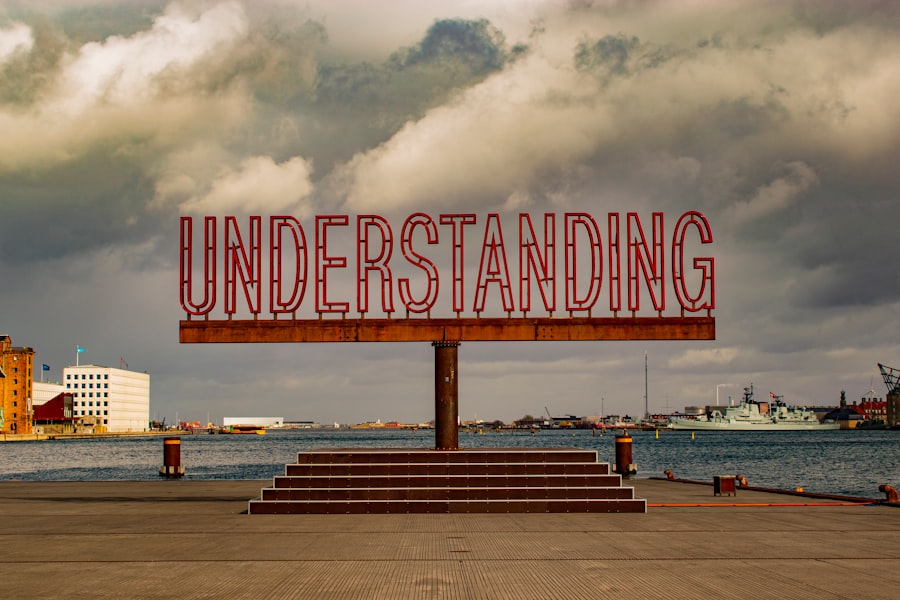
Fear and uncertainty are not isolated phenomena; they are deeply intertwined, forming a feedback loop that can escalate rapidly. Uncertainty breeds fear, and fear, in turn, intensifies your sensitivity to uncertainty. It’s a psychological ouroboros, where each component feeds and amplifies the other.
Uncertainty as a Threat Multiplier
When you are uncertain about a situation, your perception of its potential threat is amplified. A minor inconvenience can morph into a catastrophic event in your mind. The absence of clear information allows your imagination to run wild, conjuring up dangers that may not exist. This is why even seemingly minor changes in routine or unexpected obstacles can trigger disproportionate anxiety. The uncertainty about the outcome of these situations makes them feel innately threatening.
The Hallmarks of Escalation: Racing Thoughts and Physical Manifestations
The escalation of fear and uncertainty is often marked by a cluster of psychological and physical symptoms. Your thoughts begin to race, jumping from one anxious possibility to another. You might experience physical manifestations like a racing heart, shortness of breath, sweating, or muscle tension. These are your body’s signals that the perceived threat is growing, that the uncertainty is becoming overwhelming. It’s a visceral reminder that your internal state is out of balance.
The Role of Cognitive Biases: Distorting Your Perception
Your perception of fear and uncertainty is not always an objective reflection of reality. Cognitive biases, systematic patterns of deviation from norm or rationality in judgment, can significantly distort your thinking. These biases can amplify your fears and make uncertainty feel more profound than it might actually be.
Confirmation Bias: Seeking What You Already Believe
Confirmation bias is the tendency to search for, interpret, favor, and recall information in a way that confirms one’s pre-existing beliefs or hypotheses. If you are already feeling anxious about a situation, you are more likely to seek out and pay attention to information that supports your fears, while dismissing evidence that might alleviate them. This creates a self-fulfilling prophecy of dread.
Catastrophizing: Imagining the Worst
Catastrophizing is a cognitive distortion where you imagine the worst possible outcome for a situation, often without any evidence to support it. You blow minor setbacks out of proportion, viewing them as insurmountable disasters. This is a classic component of fear and uncertainty, where the open-ended nature of the unknown allows your mind to paint the darkest possible picture.
Navigating the Landscape of Fear: Strategies for Resilience

While fear and uncertainty are innate parts of the human experience, you are not powerless against them. By understanding their psychological roots and employing effective strategies, you can learn to manage your responses and cultivate greater resilience. This isn’t about eliminating fear entirely – a healthy dose of caution is essential – but about learning to coexist with it without letting it dictate your life.
Embracing Mindfulness: Anchoring Yourself in the Present
Mindfulness is the practice of paying attention to the present moment without judgment. When your mind is racing with anxious thoughts about the future or dwelling on past uncertainties, mindfulness can act as an anchor, bringing you back to what is actually happening right now. By focusing on your breath, your senses, or your immediate surroundings, you can interrupt the cycle of anxious rumination.
The Power of the Breath: A Simple Yet Profound Tool
Your breath is a readily available and remarkably powerful tool for managing fear and uncertainty. When you feel overwhelmed, consciously slowing down and deepening your breathing can signal to your nervous system that it’s safe to relax. Gentle, diaphragmatic breathing activates the parasympathetic nervous system, counteracting the fight-or-flight response and promoting a sense of calm.
Challenging Your Thoughts: Questioning Your Fears
Your thoughts are not facts. When you’re experiencing fear and uncertainty, it’s crucial to engage in a process of cognitive restructuring. This involves actively questioning the validity of your fears and challenging the assumptions that underlie them. Ask yourself: What is the evidence for this fear? What is the evidence against it? What is the most realistic outcome, not just the worst-case scenario?
Realistic Appraisal: Separating Fact from Fiction
A key part of challenging your thoughts is learning to perform a realistic appraisal of the situation. This means stepping back from your emotional reactions and evaluating the situation objectively. What are the actual risks involved? Are they truly as significant as your fear suggests? Often, a more grounded assessment reveals that the perceived threat is far less substantial than your anxiety leads you to believe.
The fear of uncertainty is a significant aspect of psychology that can deeply affect individuals’ mental health and decision-making processes. For those interested in exploring this topic further, a related article on the subject can be found at Unplugged Psych, which delves into the various ways uncertainty can manifest in our lives and offers strategies to cope with it effectively. Understanding how to manage this fear can lead to improved emotional resilience and a more fulfilling life.
The Transformative Power of Facing Uncertainty
| Metrics | Data |
|---|---|
| Number of people affected by fear of uncertainty | Approximately 29% of the population |
| Impact on mental health | Linked to anxiety disorders and depression |
| Common symptoms | Restlessness, difficulty concentrating, and irritability |
| Treatment options | Therapy, medication, and mindfulness practices |
The ultimate antidote to the suffocating grip of fear and uncertainty is often found not in avoiding them, but in learning to embrace them. This is not a call to recklessness, but a recognition that growth and meaningful experiences often lie just beyond the boundaries of your comfort zone. By actively choosing to step into the unknown, you can redefine your relationship with uncertainty and transform it from a source of dread into a space of possibility.
Building Tolerance for Ambiguity: Learning to Live with Not Knowing
Developing a tolerance for ambiguity is a lifelong practice. It involves accepting that not all questions have immediate answers, and that life is often messy and unpredictable. Instead of seeking immediate clarity, you learn to sit with the discomfort of not knowing, trusting that you have the internal resources to navigate whatever comes your way. This doesn’t mean you’ll enjoy every moment of not knowing, but you’ll be less paralyzed by it.
The Growth Mindset: Seeing Challenges as Opportunities
Adopting a growth mindset, the belief that your abilities and intelligence can be developed through dedication and hard work, is crucial for facing uncertainty. When you view challenges and ambiguities not as insurmountable obstacles but as opportunities for learning and development, you empower yourself to engage with them constructively. This shifts your focus from potential failure to the possibility of growth.
Embracing the Unknown: The Gateway to Discovery
The most profound discoveries, the most impactful personal growth, often occur when you venture into the unknown. It’s in the spaces where your predictions falter that you are forced to be creative, to adapt, and to learn. By actively choosing to explore the uncertain, you open yourself up to new experiences, new perspectives, and a deeper understanding of yourself and the world around you. You discover that the unknown, while initially daunting, can also be the most fertile ground for becoming who you are meant to be.

Why Waiting Feels Worse Than Bad News
FAQs
What is the fear of uncertainty in psychology?
The fear of uncertainty in psychology refers to the anxiety or distress that individuals experience when they are faced with situations that are unpredictable or when they lack information about the future. This fear can lead to a range of negative emotions and behaviors.
What are the symptoms of fear of uncertainty?
Symptoms of fear of uncertainty can include excessive worry, difficulty making decisions, feeling on edge or restless, physical symptoms such as muscle tension or headaches, and avoidance of situations that may trigger uncertainty.
How does fear of uncertainty impact mental health?
Fear of uncertainty can have a significant impact on mental health, leading to conditions such as generalized anxiety disorder, obsessive-compulsive disorder, and phobias. It can also contribute to depression and other mood disorders.
What are some strategies for coping with fear of uncertainty?
Coping strategies for fear of uncertainty may include mindfulness and relaxation techniques, cognitive-behavioral therapy, exposure therapy, and developing problem-solving skills. Seeking support from a mental health professional can also be beneficial.
When should someone seek professional help for fear of uncertainty?
Individuals should consider seeking professional help for fear of uncertainty if it significantly interferes with their daily functioning, relationships, or overall well-being. If the fear is causing distress or impacting quality of life, it is important to reach out to a mental health professional for support.