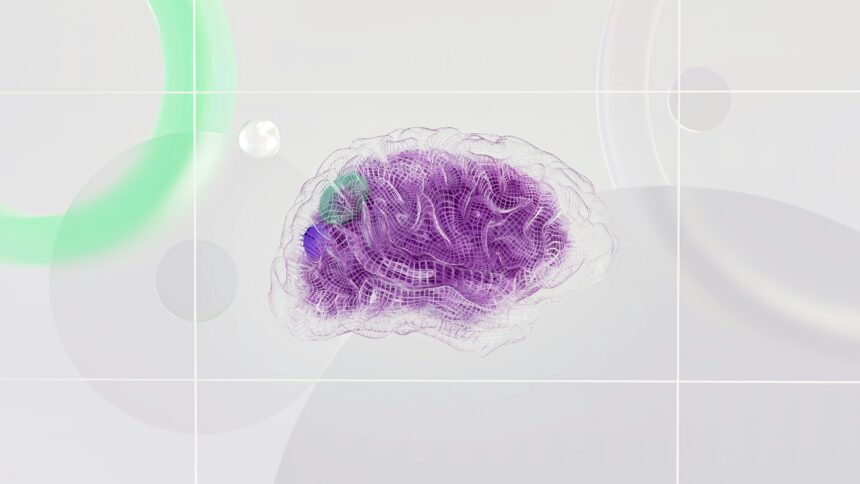
You’ve always known that thing about yourself. That humming undercurrent of thought, the one that kicks in when you’re not actively engaged with the world. The one that drifts to memories, worries about the future, or perhaps just wanders down a self-referential rabbit hole. This internal monologue, this constant replaying and projecting, is what neuroscientists are increasingly coming to understand as the product of your brain’s Default Mode Network (DMN). And this network, it turns out, is intricately woven with something you likely take for granted: your ego.
Understanding the Default Mode Network
Your brain, it’s a marvel of efficiency. It doesn’t dedicate all its processing power to the task at hand. Instead, a significant portion of its metabolic energy is consumed by a network that becomes active when you are not focused on external tasks. This is your brain’s baseline activity.
The Genesis of the DMN
The Default Mode Network was first identified through functional neuroimaging studies, primarily using fMRI. Researchers observed a consistent pattern of brain activity: certain regions showed decreased activity when subjects were engaged in demanding cognitive tasks, and conversely, these same regions exhibited heightened activity when subjects were at rest, simply letting their minds wander. This pattern suggested the existence of a distinct neural system operating in a passive state. Key brain regions consistently implicated in the DMN include the medial prefrontal cortex (mPFC), the posterior cingulate cortex (PCC)/precuneus, and the angular gyrus extending into the temporoparietal junction (TPJ).
Core Functions of the DMN
While its exact function is still being explored, the DMN is believed to be involved in several critical cognitive processes.
Self-Referential Processing
One of the most robustly identified functions of the DMN is self-referential processing. This involves thinking about yourself, your past experiences, your future aspirations, and your values. When you reflect on who you are, or contemplate your place in the world, your DMN is likely humming. This constant internal narrative helps to construct and maintain your sense of self.
Remembering and Future Planning
The DMN is also crucial for autobiographical memory recall and future thinking. It allows you to access past events, reconstruct narratives, and use that information to simulate potential future scenarios. This capacity for mental time travel is fundamental to our human experience, enabling us to learn from the past and prepare for what’s to come.
Social Cognition
Interestingly, the DMN also plays a role in social cognition, particularly in understanding the mental states of others (theory of mind). This may seem counterintuitive at first glance, as it’s often described as a network for internal thought. However, to understand another’s perspective, you often need to draw upon your own experiences and imagine yourself in their situation, which again involves self-referential processing.
Recent research has shed light on the intricate relationship between the default mode network (DMN) and the concept of ego in neuroscience. The DMN, which is active during rest and self-referential thought, plays a crucial role in how we perceive ourselves and our place in the world. For a deeper understanding of these connections, you can explore the article on the neuroscience of the default mode network and ego at Unplugged Psychology. This resource delves into the implications of DMN activity on self-identity and psychological well-being.
The Ego: A Psychological Construct and Its Neural Correlates
Your ego, for many, is that sense of ‘I’. It’s the part of you that believes it’s the agent of your actions, the experiencer of your sensations, and the possessor of your thoughts and beliefs. Psychologically, the ego has been conceptualized in various ways, from Freud’s dynamic mediator to more contemporary views of a unified sense of self.
Defining the Ego
In everyday language, the ego can be associated with self-esteem, pride, or even arrogance. However, from a psychological and neuroscientific perspective, it’s more about the coherence and continuity of your self-representation over time. It’s the framework that integrates your sensory input, memories, emotions, and thoughts into a unified experience of being you.
The Neural Basis of Selfhood
While there isn’t one single “ego center” in the brain, research suggests that various brain regions contribute to the construction of your ego. The DMN, as you’ll see, is a significant player. Other areas, like the insula (involved in interoception – sensing the body’s internal states), the anterior cingulate cortex (ACC) (involved in self-monitoring and error detection), and various parts of the prefrontal cortex (responsible for executive functions and decision-making), all contribute to this complex sense of self.
DMN and Ego: A Symbiotic Relationship
The connection between the Default Mode Network and your ego is not an abstract philosophical concern; it’s a demonstrable neural phenomenon. Think of the DMN as the engine room of your ego’s narrative.
The DMN as the Architect of Your Self-Narrative
When you are not actively engaged, your DMN springs into action, weaving together memories, reflections, and projections to form a continuous story about who you are. This story is the bedrock of your ego. The DMN is constantly updating and refining this narrative, ensuring that your sense of self remains relatively consistent, even as your experiences and circumstances change. This is why you can remember who you were yesterday and project who you might be tomorrow, all while maintaining a core sense of identity.
Constructing the Present Moment
The DMN’s involvement in self-referential processing means it’s constantly framing present experiences through the lens of your accumulated past and projected future. When something happens, your DMN helps you place it within the context of your life story, determining its significance and how it relates to your sense of self. This is not a passive registration of events; it’s an active interpretation.
Maintaining Continuity
The feeling of being the same person over time is largely an illusion, a skillful construction of the brain. The DMN plays a crucial role in weaving together disparate experiences and memories into a coherent tapestry that supports this illusion of continuity. Without this, your sense of self could fragment.
The Ego as the Director of DMN Activity
Conversely, your ego, or rather the underlying neural structures that give rise to it, can also influence the DMN. Your goals, your values, and your current sense of self can direct what kind of thoughts the DMN prioritizes.
Personal Relevance and Salience
The DMN is particularly attuned to information that is personally relevant. If a thought or memory pertains directly to your identity, your aspirations, or your relationships, it is more likely to engage DMN activity. This is the ego’s influence: it prioritizes information that reinforces or challenges its own narrative.
The “Me” Filter
Consider how you process information. A significant portion of what you encounter is filtered through the question: “How does this relate to me?” This “me” filter is a DMN-driven process, where the network assesses new information based on its potential impact on your self-concept.
When the DMN and Ego Function Differently
While the DMN and ego often work in concert, disruptions or alterations in their functioning can lead to significant psychological experiences.
The Impact of DMN Hyperactivity
In certain mental health conditions, the DMN appears to be excessively active. This can manifest as rumination, excessive worry, and a pervasive sense of self-concern. For example, in depression, individuals often get caught in cycles of negative self-talk, replaying past failures and anticipating future bleakness. This is a DMN running on overdrive, primarily generating negative self-referential content.
Rumination and Worry
When the DMN is hyperactive, it can lead to a relentless cycle of rumination (dwelling on past negative experiences) and worry (anticipating future negative outcomes). This constant self-examination, devoid of constructive problem-solving, can be exhausting and debilitating. It’s the ego fixated on perceived threats and failures, amplified by the DMN’s narrative-generating capacity.
Social Anxiety
Individuals with social anxiety often exhibit heightened DMN activity when anticipating or experiencing social situations. They tend to ruminate on potential social blunders and how they might be perceived negatively by others. This is the ego bracing itself for perceived threats to its social standing, a process heavily mediated by the DMN.
The Ego in Altered States of Consciousness
States of consciousness that differ from your typical waking experience can also reveal fascinating interactions between the DMN and ego.
Mindfulness and Meditation
One of the most well-studied phenomena in this regard is the effect of mindfulness and meditation. With consistent practice, individuals often report a reduced sense of self, a diminished ego, and a greater ability to be present. Neuroimaging studies have shown that experienced meditators exhibit decreased DMN activity. This suggests that through training, you can learn to quiet the incessant self-referential chatter, loosening the grip of the ego.
Quieting the Inner Narrator
Meditation, in essence, is a practice of observing your thoughts without judgment. By disengaging from the DMN’s tendency to constantly create and interpret a self-narrative, you can experience moments of disidentification from that narrative. This doesn’t mean your ego disappears, but its dominance can be significantly reduced.
Increased Present Moment Awareness
When the DMN activity decreases, there is often a corresponding increase in activity in other brain networks, such as the salience network, which is involved in detecting and responding to relevant stimuli in the environment. This allows for a greater capacity to engage with the present moment.
Psychedelics and Ego Dissolution
The use of psychedelic substances has been associated with profound alterations in consciousness, including the phenomenon of “ego dissolution.” Neuroimaging studies on psychedelics have consistently shown a decrease in DMN connectivity and activity. This is hypothesized to be a key mechanism behind the profound sense of interconnectedness and the dissolution of the ego boundary experienced by some users.
The Neural Basis of Ego Dissolution
The reduced integration within the DMN appears to be central to the experience of ego dissolution. When the network responsible for maintaining a coherent, bounded sense of self is disrupted, the subjective experience of a distinct “I” can dissolve into a more fluid and interconnected awareness.
Recent research into the neuroscience of the default mode network has shed light on how our sense of self, or ego, is intricately connected to brain activity during rest and introspection. This fascinating interplay suggests that the default mode network plays a crucial role in shaping our self-referential thoughts and personal narratives. For a deeper understanding of these concepts, you can explore a related article that delves into the implications of this research on our perception of identity and consciousness. To read more, visit this article.
Training Your DMN and Ego
The understanding of your DMN and ego is not just academic; it offers practical avenues for self-improvement and enhanced psychological well-being.
Cultivating Present Moment Awareness
Practices that intentionally draw your attention to the present moment can help regulate DMN activity and foster a more balanced relationship with your ego.
The Power of Observation
Simply consciously observing your surroundings, your breath, or your bodily sensations without judgment can pull your focus away from the DMN’s tendency to wander. This deliberate redirection of attention can be a powerful tool for managing intrusive thoughts.
Engaging Your Senses
Actively engaging your senses – truly tasting your food, feeling the texture of an object, or listening intently to sounds – grounds you in the present and reduces the cognitive resources available for DMN-driven rumination.
Challenging Self-Referential Biases
Recognizing and gently challenging the egocentric biases inherent in your DMN’s operations can lead to a more objective and less self-critical perspective.
Questioning Your Narratives
When you catch yourself spinning a familiar narrative about yourself, pause. Ask yourself if this narrative is truly accurate or if it’s a habitual projection influenced by past experiences or anxieties. You don’t need to forcefully reject it, but rather observe it with a degree of detachment.
Developing Self-Compassion
Understanding that your DMN is wired for self-preservation and can sometimes generate harsh self-evaluations is the first step towards cultivating self-compassion. Treat yourself with the same kindness and understanding you would offer a friend facing similar challenges.
Conclusion: Navigating Your Inner Landscape
Your Default Mode Network and your ego are not separate entities operating in isolation. They are dynamically interacting systems that form the very foundation of your subjective experience. By understanding this intricate dance, you gain a powerful tool for navigating your inner landscape. You can learn to recognize when your DMN is contributing to unhelpful patterns of thought and how your ego’s need for a consistent narrative might be influencing your perception of reality. This knowledge empowers you to cultivate a more balanced, present, and ultimately, a more examined sense of self, allowing you to engage with the world and your own internal experience with greater intention and clarity.
FAQs
What is the default mode network (DMN) in neuroscience?
The default mode network is a network of brain regions that are active when an individual is not focused on the outside world and the brain is at wakeful rest. It is involved in self-referential thinking, daydreaming, and mind-wandering.
What is the role of the default mode network in the brain?
The default mode network is thought to be involved in various cognitive processes such as introspection, self-referential thinking, and moral reasoning. It is also implicated in certain psychological disorders such as depression, anxiety, and Alzheimer’s disease.
How does the default mode network relate to the concept of ego?
The default mode network is believed to play a role in the construction and maintenance of the sense of self, which is closely related to the concept of ego. Studies have shown that activity in the default mode network is associated with self-referential thoughts and the processing of information related to one’s own experiences and perspectives.
What are some methods used to study the default mode network in neuroscience?
Researchers use various neuroimaging techniques such as functional magnetic resonance imaging (fMRI) and positron emission tomography (PET) to study the activity and connectivity of the default mode network in the brain. These techniques allow scientists to observe the network’s activity during different cognitive tasks and at rest.
How does an understanding of the default mode network contribute to our knowledge of the brain and behavior?
Studying the default mode network provides insights into the neural basis of complex cognitive processes such as self-referential thinking, mind-wandering, and social cognition. Understanding the functioning of the default mode network can also have implications for the treatment of various psychological and neurological disorders.