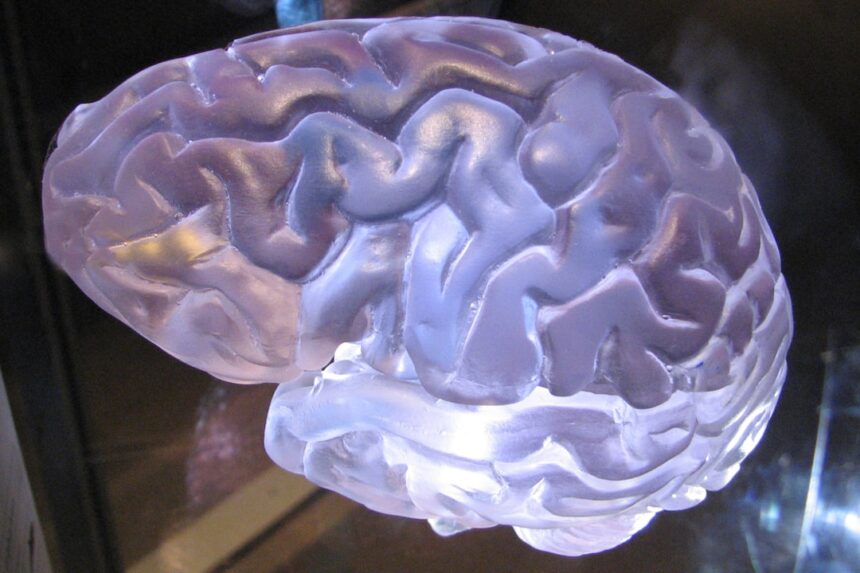
You engage in a constant internal dialogue, a stream of thoughts, memories, and future imaginings. This pervasive mental chatter is a hallmark of your conscious experience, and it’s orchestrated by a complex network of brain regions known as the Default Mode Network (DMN). Far from being a passive observer, the DMN is a dynamic system that activates when your mind is at rest, not engaged in external, goal-directed tasks. Understanding its neurobiology offers a profound insight into what makes you you, how you navigate your inner world, and how this network’s dysregulation can contribute to various mental health conditions.
Your brain, even when you perceive yourself as doing nothing, is remarkably active. The concept of a “resting brain” challenged earlier views that posited a quiescent state when not actively performing a task. Neuroscience revealed that a consistent pattern of brain activity emerges during these periods of repose, a pattern that is distinct from the activity seen during focused attention. This intrinsic activity forms the baseline upon which your more task-specific neural operations are built and modulated.
Spontaneous Neural Activity: The Unseen Engine
When you’re not consciously concentrating on a problem, a sensory input, or a physical action, your brain doesn’t simply switch off. Instead, a suite of interconnected brain regions exhibits synchronized, spontaneous activity. This intrinsic neural firing is not random; it’s organized and exhibits predictable patterns. Think of it as the background hum of your nervous system, present even when you’re not actively listening for a specific sound. This baseline activity is crucial, as it primes neural circuits for potential future engagement and plays a vital role in maintaining cognitive readiness.
The Emergence of the Default Mode Network
Through functional neuroimaging techniques, such as functional Magnetic Resonance Imaging (fMRI), researchers observed that a specific set of brain areas consistently increased their activity when participants were at rest, compared to when they were performing demanding cognitive tasks. This recurring pattern led to the identification of the Default Mode Network. It’s important to note that the term “default” doesn’t imply that this network is unimportant or secondary; rather, it signifies its preferential activation in the absence of explicit external demands. It’s the network that engages when you allow your mind to wander.
Key Anatomical Hubs of the DMN
The DMN is not a single, monolithic entity but rather a distributed network of interconnected brain regions. Several core areas are consistently implicated in its function.
Medial Prefrontal Cortex (mPFC): The Self-Referential Processing Center
The mPFC, located in the front of your brain, is a central hub of the DMN. It’s heavily involved in self-referential processing – thinking about yourself, your traits, your goals, and your past experiences. When you reflect on who you are, your hopes, or your regrets, the mPFC is likely a key player.
Self-Reflection and Identity
Your sense of self, your personal identity, is intimately tied to the activity within the mPFC. This region contributes to autobiographical memory retrieval and the construction of your personal narrative. It’s where you access and organize information relevant to your individual history and personality.
Social Cognition and Theory of Mind
Beyond introspection, the mPFC is also crucial for understanding others. It plays a role in social cognition, including evaluating social situations, inferring the mental states of others (i.e., theory of mind), and processing social information. This connection highlights how your internal world is often influenced by your understanding of the external social landscape.
Posterior Cingulate Cortex (PCC): The Memory and Emotion Integrator
The PCC, situated at the back of your brain, is another critical node in the DMN. It acts as a bridge between memory and emotion, playing a significant role in recalling past events and attaching emotional significance to them.
Autobiographical Memory Retrieval
When you recall a specific memory – a childhood vacation, a significant conversation, a past triumph or failure – the PCC is highly active. It facilitates the retrieval and consolidation of these personal experiences, painting the backdrop of your life story.
Emotional Salience and Connectivity
The PCC also helps to assign emotional weight to retrieved memories. It’s involved in processing the emotional aspects of your experiences, influencing how you feel about your past and how it shapes your present emotions. Its connectivity with other emotion-processing areas underscores this role.
Angular Gyrus and Supramarginal Gyrus: Language and Spatial Cognition
These areas, located in the parietal lobe, are also considered part of the DMN. They contribute to a range of cognitive functions, including language processing, numerical cognition, and spatial awareness, demonstrating the DMN’s involvement in more than just introspection.
Semantic Processing and Language Comprehension
The angular gyrus, in particular, is implicated in semantic processing – understanding the meaning of words and concepts. It helps you connect words to their meanings and integrate them into coherent thoughts, a process that occurs readily during unconstrained thinking.
Spatiotemporal Integration
These parietal regions also contribute to your ability to integrate spatial and temporal information. This allows you to construct mental maps of your environment and understand the sequence of events, skills essential for navigating both physical and conceptual spaces.
The neurobiology of the default mode network (DMN) has garnered significant attention in recent years, particularly in understanding its role in various cognitive processes and mental health conditions. For a deeper exploration of this topic, you can refer to a related article that discusses the implications of DMN activity in psychological well-being and cognitive function. To learn more, visit this article.
The Functional Role of the DMN: More Than Just Mind-Wandering
While commonly associated with mind-wandering, the DMN’s functional repertoire extends beyond this single manifestation. Its activation when your focus is not externally directed suggests a role in internally directed cognition, which is essential for a rich mental life.
Mind-Wandering and Present Moment Awareness
The association between DMN activity and mind-wandering is robust. When your attention drifts from the task at hand, your DMN becomes more active. This can lead to thoughts about the past, the future, or simply unrelated ideas. While sometimes seen as a distraction, mind-wandering can also be a source of creativity and problem-solving.
The Nature of “Task-Negative” Activity
The DMN is often characterized as “task-negative” because its activity typically decreases when you engage in demanding, externally focused tasks. This suggests a reciprocal relationship between the DMN and task-positive networks, meaning one tends to inhibit the other.
Implications for Creativity and Problem-Solving
Paradoxically, the state of mind-wandering facilitated by the DMN can be a fertile ground for creative insights. By allowing your mind to roam freely, you can connect disparate ideas and generate novel solutions that might not emerge from focused, linear thinking. This “unconstrained” processing is a hallmark of creative thought.
Autobiographical Memory and Future Thinking
The DMN is intrinsically linked to your ability to access and process your personal history and to project yourself into the future. This capacity for mental time travel is a powerful cognitive tool.
Constructing Personal Narratives
Your life is a story, and the DMN plays a crucial role in constructing and maintaining this narrative. By retrieving and integrating past experiences, you build a coherent sense of self and continuity over time. This autobiographical recall provides context for your present actions and future aspirations.
Prospection and Goal Setting
The DMN’s involvement in future thinking, or prospection, is equally vital. It allows you to imagine potential future scenarios, set goals, and plan for their achievement. This anticipatory cognition is fundamental for adaptive behavior and motivation.
Social Cognition and Empathy
The DMN’s engagement in self-referential processing extends to understanding others. Its role in social cognition highlights how your internal reflections inform your interactions with the external social world.
Theory of Mind and Perspective-Taking
The ability to attribute mental states – beliefs, intentions, emotions – to others, known as theory of mind, is significantly influenced by DMN activity. This allows you to understand why people act the way they do and to predict their behavior.
Empathy and Understanding Emotional States
The DMN’s involvement in processing emotional salience and its connection to social understanding contribute to empathy. By drawing on your own emotional experiences and understanding the emotional states of others, you can respond with compassion and connection.
DMN Connectivity: The Network’s Internal Communication

The functionality of the DMN is not solely dependent on the activation of its individual regions but also on the way these regions communicate with each other. Functional connectivity refers to the statistical dependencies between the activity of different brain areas over time.
Functional Connectivity Within the DMN
High functional connectivity is observed among the core nodes of the DMN, particularly between the mPFC and the PCC. This strong intrinsic coupling suggests that these regions work in concert, sharing information and coordinating their activity.
Core Network Synchronization
The synchronized firing of the mPFC, PCC, and other DMN regions indicates a tightly integrated system. This internal cohesion is crucial for the DMN’s ability to perform its various functions, such as coherent self-reflection and unified future planning.
Seed-Based Connectivity Analysis
A common research method involves identifying a “seed” region within the DMN (e.g., the PCC) and then examining which other brain areas show correlated activity with this seed. This approach consistently reveals the widespread interconnectedness of the DMN.
The DMN and Other Brain Networks: A Dynamic Dance
The DMN does not operate in isolation. It interacts with and, to some extent, opposes other brain networks, particularly those involved in task engagement. This dynamic relationship is crucial for your ability to shift your attention between your internal world and external demands.
Anti-Correlation with Task-Positive Networks
The DMN exhibits a notable anti-correlation with task-positive networks, such as the dorsal attention network and the executive control network. This means that as DMN activity increases, activity in these task-oriented networks tends to decrease, and vice-versa.
The Executive Control Network (ECN)
The ECN is responsible for goal-directed behavior, cognitive control, and decision-making. Its activation often coincides with a suppression of DMN activity, suggesting that you typically shift your focus from internal rumination to external task execution.
The Salience Network (SN)
The SN acts as a crucial intermediary, detecting salient stimuli in both the internal and external environments and facilitating the switching between the DMN and task-positive networks. It plays a role in determining what deserves your attention.
Cross-Network Interactions and Cognitive Flexibility
The ability to fluidly transition between DMN-dominated internal thought and task-focused external processing is a hallmark of cognitive flexibility. Disruptions in this interplay can lead to difficulties in shifting attention and adapting to changing demands.
DMN Dysregulation and Psychological Conditions: The Darker Side

The intricate machinery of the DMN, so vital for a healthy mental life, can also become disrupted, contributing to a range of psychological conditions. Understanding these alterations provides crucial insights into the neurobiological underpinnings of mental illness.
Depression: Rumination and Self-Focused Bias
In depression, the DMN often exhibits altered connectivity and increased activity, particularly in self-referential processing areas. This can manifest as excessive rumination on negative thoughts and a persistent focus on personal failings.
Hyperactivity in Self-Referential Regions
Individuals with depression often show heightened activity in the mPFC and PCC when contemplating negative self-relevant information. This overemphasis on internal negative states contributes to feelings of hopelessness and worthlessness.
Impaired Cognitive Reappraisal
The DMN’s dysregulation in depression can impair the ability to effectively reappraise negative thoughts. Instead of challenging negative interpretations, the network may reinforce them, perpetuating a cycle of distress.
Reduced Connectivity with Executive Control Regions
Furthermore, there may be reduced connectivity between the DMN and regions involved in executive control. This deficit can hinder the ability to disengage from negative thought patterns and to engage in more adaptive, problem-solving behaviors.
Anxiety Disorders: Worry and Future-Oriented Distress
Anxiety disorders are characterized by persistent worry and apprehension about future events. This future-oriented distress is closely linked to DMN overactivity, particularly in regions involved in future simulation and threat detection.
Excessive Future Simulation
The DMN’s inherent capacity for future thinking can become pathologically amplified in anxiety. This leads to the generation of a cascade of worst-case scenarios, fueling feelings of dread and unease.
Amplified Threat Monitoring
Areas within the DMN, particularly those connected to the amygdala, may become overly sensitive to potential threats. This heightened threat monitoring contributes to a state of hypervigilance and a constant sense of danger.
Difficulty in Present Moment Focus
Individuals with anxiety often struggle to remain grounded in the present moment, their minds perpetually pulled towards imagined future dangers. This difficulty in disengaging from future worries is a hallmark of the condition, supported by DMN activity.
Schizophrenia: Self-Disruption and Altered Self-Perception
Schizophrenia presents with a profound disruption of self-experience and altered perceptions of reality, and the DMN is implicated in these profound alterations.
Disrupted Self-Processing
The DMN’s role in constructing a coherent sense of self is significantly impaired in schizophrenia. This can lead to feelings of depersonalization and derealization, where individuals feel detached from themselves or their surroundings.
Aberrant Functional Connectivity
Studies have shown altered functional connectivity within the DMN and between the DMN and other brain regions in individuals with schizophrenia. These disruptions can impact self-monitoring, autobiographical memory, and social cognition.
Impacts on Theory of Mind
The breakdown in self-processing and altered connectivity can also affect the DMN’s contribution to theory of mind, leading to difficulties in understanding the mental states of others and contributing to social withdrawal and paranoia.
Recent research into the neurobiology of the default mode network has shed light on its role in various cognitive processes, including self-referential thought and memory retrieval. For a deeper understanding of how this network functions and its implications for mental health, you can explore a related article that discusses its significance in greater detail. This insightful piece can be found here, providing valuable information for those interested in the intricacies of brain activity during rest and introspection.
Targeting the DMN: Potential Therapeutic Avenues
| Study | Findings |
|---|---|
| Greicius et al. (2003) | Identified the default mode network (DMN) using fMRI and showed its involvement in self-referential mental activity. |
| Buckner et al. (2008) | Proposed that the DMN is involved in internally directed thoughts and mind-wandering. |
| Raichle et al. (2001) | Described the DMN as a set of brain regions that are more active at rest and decrease in activity during goal-directed tasks. |
| Shulman et al. (1997) | Identified the posterior cingulate cortex and precuneus as key nodes of the DMN. |
Given its significant role in both healthy cognition and various psychological disorders, the DMN has become a prominent target for therapeutic interventions. Modulating its activity and connectivity holds promise for alleviating symptoms and improving well-being.
Neuromodulation Techniques
Various neuromodulation techniques aim to directly influence the activity of specific brain regions or networks, including the DMN.
Transcranial Magnetic Stimulation (TMS)
TMS is a non-invasive brain stimulation technique that uses magnetic pulses to induce electrical activity in targeted brain areas. Low-frequency TMS applied to specific DMN regions has shown potential in reducing rumination in depression and anxiety.
Transcranial Direct Current Stimulation (tDCS)
tDCS uses a weak electrical current delivered through electrodes placed on the scalp to modulate neuronal excitability. Research is exploring its application in modulating DMN activity for therapeutic benefit in mood and anxiety disorders.
Cognitive Behavioral Therapies (CBT) and Mindfulness
While not directly manipulating brain regions, therapeutic approaches like CBT and mindfulness can indirectly influence DMN activity through their focus on thought patterns and present moment awareness.
Mindfulness-Based Interventions
Mindfulness practices, which emphasize focusing on the present moment without judgment, have been shown to reduce DMN activity and improve connectivity between the DMN and cognitive control networks. This can help individuals disengage from rumination and worry.
Cognitive Restructuring in CBT
CBT techniques that involve identifying and challenging negative thought patterns can also lead to changes in DMN activity. By learning to reframe maladaptive thoughts, individuals can reduce the DMN’s overemphasis on negative self-referential processing.
Pharmacological Interventions and Future Directions
While currently less specific in targeting the DMN, ongoing research into pharmacological interventions aims to develop treatments that can indirectly modulate network function. Future research will likely focus on more precise manipulation of DMN circuits for targeted therapeutic outcomes.
In conclusion, your internal world, with its ceaseless flow of thoughts, memories, and future projections, is intricately orchestrated by the Default Mode Network. This complex system, far from being a mere bystander, is a fundamental component of your cognitive architecture. By understanding its neurobiology, from its key anatomical hubs to its dynamic connectivity with other brain networks, you gain a profound appreciation for the intricate mechanisms that shape your sense of self, your interactions with the world, and your capacity for both introspection and external engagement. As research continues to unravel the complexities of the DMN, its potential as a therapeutic target for a range of psychological conditions becomes increasingly evident, offering hope for a deeper understanding and more effective treatment of the human mind.
FAQs
What is the default mode network (DMN) in neurobiology?
The default mode network is a network of brain regions that are active when an individual is not focused on the outside world and the brain is at wakeful rest. It is involved in self-referential thinking, daydreaming, and mind-wandering.
What are the key brain regions involved in the default mode network?
The key brain regions involved in the default mode network include the medial prefrontal cortex, posterior cingulate cortex, precuneus, and inferior parietal lobule. These regions are interconnected and work together to support the functions of the default mode network.
What functions does the default mode network serve in the brain?
The default mode network is involved in various cognitive functions such as introspection, self-referential thinking, autobiographical memory retrieval, envisioning the future, and social cognition. It also plays a role in maintaining a sense of self and understanding the mental states of others.
How is the default mode network studied in neurobiology?
Researchers study the default mode network using various neuroimaging techniques such as functional magnetic resonance imaging (fMRI), positron emission tomography (PET), and electroencephalography (EEG). These techniques allow scientists to observe the activity and connectivity of the default mode network in the brain.
What are the implications of understanding the default mode network in neurobiology?
Understanding the default mode network has implications for various neurological and psychiatric disorders such as Alzheimer’s disease, autism spectrum disorders, schizophrenia, and depression. It also provides insights into consciousness, self-awareness, and the nature of human cognition.