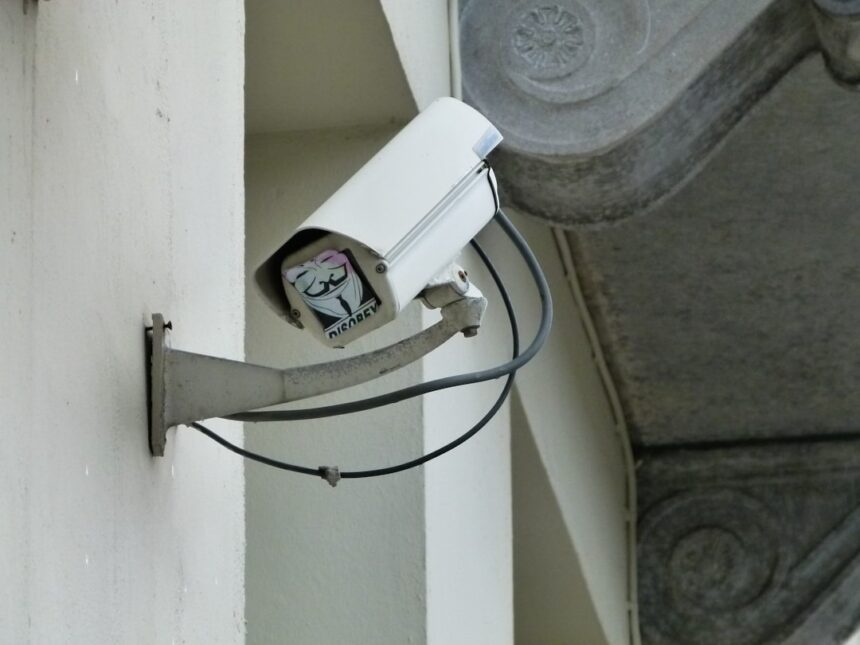
You navigate a world increasingly defined by data. From the moment you wake to the time you sleep, your actions are recorded, analyzed, and, in some cases, acted upon. This pervasive digital footprint brings with it a duality: the potential for genuine care and the ever-present shadow of surveillance. Understanding the contrast between these two forces is crucial for maintaining your autonomy and ensuring your well-being in this interconnected era.
The idea of “care” in this context transcends simple emotional support. It’s about the proactive application of knowledge to improve your life, anticipate your needs, and offer tangible assistance. When information is used for care, it is transparent, consensual, and always with your benefit as the primary objective.
Predictive Health Interventions
Imagine a wearable device that not only tracks your heart rate but also analyzes subtle shifts in your sleep patterns, activity levels, and even biometric markers to predict a potential health issue before you experience any symptoms. This isn’t science fiction; it’s the emerging reality of technology-driven care.
Early Disease Detection
Your health data, when analyzed by sophisticated algorithms and overseen by medical professionals, can flag deviations from your personal baseline. This allows for the early detection of chronic conditions, infectious diseases, or even the predisposition to certain genetic disorders. The system doesn’t just see that you’re unwell; it anticipates and warns, offering a window for intervention that could significantly alter your prognosis. You are not being singled out; you are being offered an opportunity to proactively manage your health.
Personalized Wellness Plans
Beyond disease, this data can inform personalized wellness strategies. Based on your activity logs, dietary input, and even environmental factors (like air quality), systems can suggest optimal exercise routines, nutrient-rich meal plans, or even stress-reduction techniques tailored to your specific lifestyle and physiological responses. This isn’t a generic health guru’s advice; it’s a data-driven roadmap to a healthier you.
Enhanced Safety and Security
The application of data for care extends to your personal safety, creating a network of invisible safeguards.
Proactive Emergency Response
In situations of distress, your location data, combined with information about your usual movements and potential vulnerabilities, can be invaluable. If your device detects an uncharacteristic cessation of movement or a fall, it can automatically alert emergency services and inform designated contacts with your precise location. This bypasses the need for you to manually make a call, a critical advantage during a medical emergency or an accident.
Contextual Assistance in Difficult Situations
Consider a scenario where you are traveling alone and your phone battery is critically low. If your location is being monitored with your consent for safety purposes, a system could proactively send you a low-battery alert with directions to the nearest charging station or offer to contact your accommodation. This contextual assistance, driven by data, anticipates a potential problem before it becomes a crisis.
Improved Accessibility and Inclusivity
Data, when used thoughtfully, can break down barriers and create more inclusive environments.
Tailored Educational Resources
For students with specific learning needs, data can identify areas of difficulty and adapt educational content accordingly. Interactive platforms can present information in different formats (visual, auditory, kinesthetic) based on your demonstrated preferences and learning speed. This ensures you receive the support you need to thrive, rather than being left behind by a one-size-fits-all approach.
Smart Home Environments for Independent Living
For individuals with mobility challenges or age-related limitations, smart home technology can be a powerful tool for maintaining independence. Voice-activated controls for lights, thermostats, and appliances, coupled with sensors that monitor for safety hazards like forgotten stoves or overflowing sinks, can significantly improve your quality of life and reduce reliance on external assistance. The system is designed to anticipate your needs and adapt to your environment.
In exploring the nuanced distinction between care and surveillance, it is essential to consider the insights presented in a related article that delves deeper into this topic. The article emphasizes how care is rooted in empathy and support, while surveillance often implies control and monitoring. For a more comprehensive understanding of these concepts and their implications in various contexts, you can read the full article here: Understanding Care vs. Surveillance.
The Unseen Observer: When Data Becomes Scrutiny
Surveillance, in stark contrast to care, is characterized by the collection and analysis of your data without explicit consent, for purposes that may not be aligned with your best interests, and often with the intention of control or exploitation. It’s about being watched, not to be helped, but to be managed, categorized, or even punished.
The Erosion of Privacy
The fundamental difference lies in the respect for your personal boundaries. Where care empowers you with information and support, surveillance seeks to gain power over you through its accumulation of your information.
Mass Data Collection and Profiling
Governments and corporations routinely collect vast amounts of data about your online activities, purchase histories, social interactions, and even your physical movements through CCTV and location tracking. This data is then used to build detailed profiles, infer your habits, preferences, and even your beliefs, often without your knowledge or explicit consent. You become a data point in a larger system, your individuality reduced to a collection of attributes.
Behavioral Manipulation
By understanding your patterns and vulnerabilities, those conducting surveillance can subtly influence your behavior. Targeted advertising, for instance, uses your online footprint to present you with products and services designed to trigger a purchase. This can extend to political discourse, where misinformation is strategically deployed to sway public opinion by exploiting individual biases. You are not being offered a choice; you are being nudged towards a predetermined outcome.
The Chilling Effect on Freedom
The awareness of being constantly watched can have a profound impact on your behavior, even if you have nothing to hide.
Self-Censorship and Conformity
The knowledge that your communications, searches, and discussions are being monitored can lead you to self-censor. You may hesitate to express dissenting opinions, explore unconventional ideas, or engage in activities that might be misconstrued. This stifles creativity, critical thinking, and the free exchange of ideas, leading to a more conformist and less dynamic society. The diversity of thought is sacrificed for the uniformity of observation.
The Weaponization of Data
Information collected under the guise of security or public interest can be weaponized. Past associations, online statements, or even innocent mistakes can be dredged up and used against you, impacting your career prospects, social standing, or even your legal rights. This creates an environment where every action carries a potential, hidden consequence.
Lack of Transparency and Accountability
A hallmark of surveillance is its often opaque nature. You rarely know who is collecting your data, why they are collecting it, or how it is being used.
Undisclosed Data Sharing
Your personal information may be shared with third parties without your knowledge or consent, often for commercial gain. This creates a web of interconnected entities with access to your most intimate details, increasing the risk of identity theft, fraud, and other forms of exploitation. You are unknowingly participating in a vast, unregulated data market.
Difficulty in Rectifying Errors
If your data is inaccurately recorded or misinterpreted by surveillance systems, correcting those errors can be an arduous and often impossible task. These systems operate on a scale that makes individual disputes difficult to address, leaving you unable to challenge the narrative being built about you. Your personal truth is secondary to the data’s alleged objectivity.
Defining the Boundaries: Consent and Transparency
The crucial differentiator between care and surveillance lies in your agency. Care operates within a framework of informed consent and transparency, while surveillance frequently operates outside of it.
The Primacy of Informed Consent
Genuine care requires your explicit permission. You must understand what data is being collected, how it will be used, who will have access to it, and what the potential benefits and risks are. This isn’t a pre-ticked box on a lengthy privacy policy; it’s a genuine understanding and voluntary agreement.
Active vs. Passive Consent
Active consent means you are deliberately choosing to share your data for a specific purpose. Passive consent, often employed in surveillance, relies on your inaction or a buried clause in a user agreement to imply agreement. The former empowers you; the latter erodes your control.
The Right to Withdraw Consent
Crucially, the ability to withdraw your consent at any time must be a fundamental aspect of any care-oriented data usage. If you decide that the benefits no longer outweigh the risks, or your circumstances change, you should be able to opt out without penalty.
The Imperative of Transparency
You have a right to know when you are being observed and why. This transparency is essential for building trust and ensuring that data is being used ethically.
Clear Data Usage Policies
Organizations employing data for care should have clear, accessible, and understandable policies outlining their data practices. These policies should explain the specific types of data collected, the precise purposes for which it is used, and the safeguards in place to protect your privacy.
Regular Audits and Independent Oversight
For any system that collects and uses personal data, especially for health or safety reasons, regular audits by independent bodies are essential. These audits should verify that data is being used in accordance with stated policies and ethical guidelines, and that your rights are being protected.
The Illusion of Control: When Surveillance Mimics Care
Sometimes, the lines blur, and surveillance can masquerade as care to gain your trust and access to your data. Recognizing these deceptive tactics is vital.
Personalized “Offers” Masking Data Harvesting
You might receive highly personalized advertisements or “recommendations” that seem incredibly helpful. While these can sometimes be genuinely beneficial, they are often the result of extensive data harvesting aimed at identifying your deepest desires and vulnerabilities for commercial exploitation. The “care” is merely a sophisticated sales pitch.
Micro-Targeting for Commercial Gain
The precision with which these offers are delivered—identifying your specific interests, your current mood, or even your recent online searches—highlights the depth of surveillance that underpins them. It’s not about helping you, but about profiting from your perceived needs.
“Smart” Devices with Hidden Agendas
Many “smart” devices, from virtual assistants to smart thermostats, collect a wealth of data about your daily life. While they offer convenience, they can also become conduits for surveillance.
Data Monetization and Third-Party Access
The data collected by these devices is frequently anonymized and sold to third parties for market research or further targeted advertising. The convenience you experience comes at the cost of your data’s privacy, and you are often not fully aware of the downstream uses of that information.
Weak Security Protocols
The proliferation of Internet of Things (IoT) devices has also led to a significant increase in security vulnerabilities. If these devices are not adequately secured, they can be easily compromised, turning your personal sanctuary into an entry point for malicious actors. The “smart” home can become a window for unwanted observers.
In exploring the nuanced distinction between care and surveillance, one can gain deeper insights by examining the article available at Unplugged Psych. This resource delves into how the intentions behind monitoring behaviors can shift from a supportive approach to one that feels invasive, highlighting the importance of understanding the motivations behind our actions. By reflecting on these concepts, we can better navigate the delicate balance between ensuring well-being and respecting personal autonomy.
Safeguarding Your Digital Self: Strategies for Autonomy
| Aspect | Care | Surveillance |
|---|---|---|
| Definition | Focuses on providing support and attention to someone’s well-being | Refers to the monitoring and observation of individuals or groups |
| Intent | To promote health, safety, and comfort | To gather information, maintain control, or prevent harm |
| Emotion | Often associated with empathy and compassion | May evoke feelings of distrust or invasion of privacy |
| Relationship | Establishes a connection based on support and understanding | Can create a sense of power dynamics and inequality |
Navigating this complex landscape requires a proactive approach to protecting your digital autonomy.
Understanding Your Digital Footprint
The first step is to become aware of the data you are generating and where it is going.
Reviewing Privacy Settings
Regularly review the privacy settings on all your online accounts, social media platforms, and mobile applications. Understand what information you are sharing by default and adjust these settings to limit unnecessary data collection.
Using Privacy-Enhancing Tools
Explore and utilize privacy-enhancing tools, such as Virtual Private Networks (VPNs), encrypted messaging apps, and privacy-focused browsers. These tools can help mask your online activity and reduce your exposure to surveillance.
Cultivating a Critical Perspective
Approach information and personalized services with a healthy degree of skepticism.
Questioning the Source of “Help”
When offered seemingly beneficial services or personalized content, ask yourself: Who is offering this? What might they gain from it? Is this genuine care, or a sophisticated form of data extraction?
Researching Data Practices
Before adopting new technologies or services, take the time to research their data collection and usage policies. Look for companies with a strong commitment to user privacy and ethical data handling.
Advocating for Your Rights
Your digital rights are not just abstract concepts; they have real-world implications.
Supporting Privacy Legislation
Stay informed about privacy legislation in your region and advocate for stronger protections for your personal data. Support organizations that champion digital rights and work to hold corporations and governments accountable for their data practices.
Demanding Transparency and Accountability
As a consumer and a digital citizen, you have the power to demand transparency and accountability from the platforms and services you use. Your engagement and vocalization can drive change.
The line between care and surveillance is not always clear-cut, and the technologies that enable both are constantly evolving. By understanding the fundamental differences – the presence or absence of your informed consent, the intent behind the data collection, and the transparency of the process – you can better navigate this digital age, ensuring that technology serves as a tool for your well-being, rather than a means of your continuous scrutiny. You have the power to choose which gaze you are under, and by understanding the contrast, you can actively steer towards genuine care.
FAQs
What is the difference between care and surveillance?
Care involves providing support, attention, and assistance to someone in need, while surveillance involves monitoring and observing someone’s actions, behaviors, or activities.
How does care differ from surveillance in terms of intention?
The intention of care is to promote well-being, safety, and comfort, while the intention of surveillance is to gather information, maintain control, or prevent potential harm.
What are some examples of care in a healthcare setting?
Examples of care in a healthcare setting include administering medication, providing emotional support, assisting with daily activities, and offering medical treatment.
What are some examples of surveillance in a security context?
Examples of surveillance in a security context include using security cameras to monitor a building, employing security guards to patrol an area, and using electronic monitoring systems to track movements.
How do care and surveillance differ in terms of impact on personal autonomy?
Care respects and promotes personal autonomy by empowering individuals to make their own choices, while surveillance can potentially infringe on personal autonomy by limiting freedom and privacy.