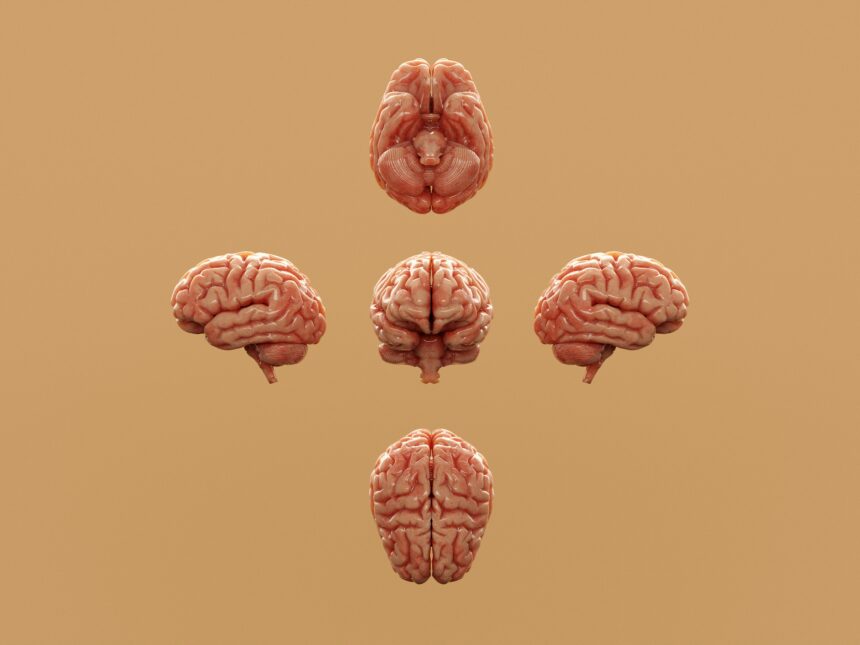
Your brain, an organ of paramount importance, often operates with a guiding principle that might surprise you: it prioritizes minimizing surprise over a relentless pursuit of absolute truth. This is not to say your brain is inherently dishonest or deliberately misleading. Instead, it’s a fundamental aspect of its design, a deeply ingrained evolutionary mechanism aimed at efficiency and survival. Imagine your brain as a master strategist, constantly working to conserve precious mental energy and navigate a complex world. Its primary directive is to maintain a sense of order and predictability, even if that order is an approximation of reality. This bias for minimizing surprise shapes how you perceive information, form beliefs, and make decisions.
Your brain is, fundamentally, a predictive engine. It’s not simply passively receiving sensory input; it’s actively generating predictions about what will happen next. This predictive capability is essential for functioning in the world. When you reach for a cup, your brain predicts the weight, the texture of the handle, and the trajectory of your hand. This constant forecasting allows for smooth, automatic actions.
The Model-Building Process
From the moment you are born, your brain begins constructing intricate internal models of the world. These models are built upon past experiences, sensory data, and learned associations. Think of these models as mental maps, constantly being updated and refined. They allow you to make sense of novel situations by comparing them to what you already know. If you encounter a new fruit, your brain will try to fit its characteristics into your existing categories of “edible,” “sweet,” or “sour” based on its color, shape, and smell.
The Role of Prior Information
Crucially, these existing models heavily influence your interpretation of new information. This means that what you already believe acts as a filter, shaping how you perceive and process incoming data. If your model strongly associates a particular noise with danger, your brain will be more attuned to that noise and more likely to interpret it as a threat, even if the actual stimulus is benign. This is akin to wearing a pair of tinted glasses; the world you see is colored by the tint of your pre-existing beliefs.
The Cost of Prediction Errors
When reality deviates significantly from your brain’s predictions, you experience surprise. This surprise is a metacognitive signal, indicating that your internal model needs adjustment. While surprise can be a catalyst for learning, it’s also an energetically costly state. It requires recalibrating your predictions, understanding the source of the error, and updating your internal representations. Your brain, ever the efficient manager, prefers to avoid these costly recalibrations whenever possible.
Our brains are wired to minimize surprise rather than actively seeking the truth, a phenomenon explored in depth in the article found at Unplugged Psychology. This tendency can be attributed to the brain’s preference for predictability, which helps us navigate the complexities of our environment more efficiently. By reducing uncertainty, we can conserve cognitive resources and maintain a sense of stability. However, this inclination can also lead to cognitive biases, where we may ignore or dismiss information that contradicts our existing beliefs. Understanding this aspect of our cognitive functioning is crucial for fostering critical thinking and open-mindedness in our pursuit of knowledge.
The Confirmation Bias: Seeking Evidence That Fits
One of the most prominent manifestations of your brain’s bias for minimizing surprise is the confirmation bias. This is the tendency to favor information that confirms your existing beliefs or hypotheses, and to disregard or downplay information that contradicts them. It’s as if your brain has a team of researchers constantly searching for evidence to support its current hypotheses, while giving short shrift to any evidence that might challenge them.
Selective Exposure
You actively seek out information sources that align with your viewpoints. If you hold a particular political belief, you’re more likely to consume news from outlets that espouse similar perspectives, and less likely to engage with opposing viewpoints. This creates echo chambers, reinforcing your existing beliefs and minimizing exposure to challenging ideas. Think of it as visiting only restaurants that serve your favorite cuisine, thereby never discovering new and potentially delightful culinary experiences.
Selective Interpretation
Even when presented with objective information, your brain will often interpret it in a way that supports its pre-existing notions. Ambiguous data can be twisted to fit your narrative. If you believe a certain stock is going to perform well, you might interpret a mixed earnings report as a sign of underlying strength, focusing on the positive aspects while overlooking the negative.
Selective Recall
Furthermore, you are more likely to remember information that confirms your beliefs and forget information that contradicts them. This means that over time, your memory can become a skewed archive, selectively preserving the “evidence” that supports your current understanding of the world.
The Power of Cognitive Ease: Effortless Processing
Your brain strongly favors cognitive ease, a state where information can be processed effortlessly and without significant mental exertion. When new information aligns with your existing mental frameworks, it’s easy to digest. This ease is a powerful signal to your brain that its current model is likely correct and that no adjustment is necessary.
Familiarity Breeds Comfort
Familiar information is inherently easier to process than unfamiliar information. Your brain has already established pathways and associations for it, making it readily accessible. This contributes to the human tendency to stick with what we know, even if it’s not optimal. A well-worn path through a forest is easier to navigate than forging a new one, even if the new path might lead to a more scenic destination.
The Illusion of Truth
Research has shown that repeated exposure to a piece of information, even if it’s false, can increase its perceived truthfulness. This phenomenon, known as the illusory truth effect, is a direct consequence of cognitive ease. The more you hear something, the more familiar it becomes, and the easier it is for your brain to accept it as true, regardless of its actual validity.
The Influence of Presentation
The way information is presented also impacts cognitive ease. Clearly structured, well-organized information is easier to process and therefore more likely to be accepted. Conversely, complex, jargon-filled, or poorly presented information can be mentally taxing and may be rejected more readily, not because it’s false, but because it’s difficult to understand.
Maintaining Cognitive Dissonance: The Uncomfortable Gap

Cognitive dissonance arises when you hold two or more conflicting beliefs, ideas, or values, or when your beliefs clash with your actions. This state of mental discomfort is a strong motivator for change, but your brain often seeks to reduce this discomfort by minimizing surprise and maintaining its existing worldview, even if it means distorting reality.
Dissonance Reduction Strategies
When faced with cognitive dissonance, you might engage in several strategies to alleviate the discomfort. These can include:
- Changing your behavior: This is often the most direct way to resolve dissonance, but it can be difficult, especially if the behavior is ingrained or provides some benefit.
- Changing your beliefs: This involves altering one of the conflicting cognitions to make them consistent. This can be challenging if the belief is deeply held.
- Adding new cognitions: You might introduce new beliefs or justifications that help bridge the gap between the conflicting ideas. For example, if you smoke despite knowing it’s unhealthy, you might tell yourself that the stress relief you experience outweighs the health risks.
- Trivializing the dissonance: You can downplay the importance of the conflicting beliefs or behaviors, thus reducing the perceived impact of the dissonance.
The Preference for Consistent Narratives
Your brain craves a coherent and consistent narrative of reality. When presented with information that creates a crack in this narrative, it’s more comfortable to patch over the crack with a plausible, albeit inaccurate, explanation than to dismantle the entire narrative and rebuild it. This is why you might rationalize poor decisions or overlook obvious flaws in arguments that support your pre-existing beliefs.
The Cost of Acknowledging Error
Acknowledging a significant error can be psychologically costly. It can undermine your sense of competence, intelligence, or moral standing. Therefore, your brain often finds ways to avoid this discomfort, even if it means clinging to a flawed understanding.
The human brain is wired to minimize surprise rather than actively seeking out the truth, a concept explored in depth in various psychological studies. This tendency can be linked to our evolutionary past, where predicting outcomes was crucial for survival. For a more comprehensive understanding of this phenomenon, you can read a related article that delves into the intricacies of how our cognitive processes prioritize familiarity over novelty. To explore this further, check out this insightful piece on psychological mechanisms that shape our perceptions and beliefs.
The Evolutionary Advantage of Predictive Certainty
| Metric | Description | Relevance to Minimizing Surprise | Example |
|---|---|---|---|
| Prediction Error | The difference between expected and actual sensory input | Brain aims to reduce prediction error to maintain stability and avoid unexpected outcomes | Expecting a phone to ring and it ringing as predicted |
| Energy Consumption | Amount of metabolic energy used by the brain | Minimizing surprise reduces cognitive load and conserves energy | Using familiar routes instead of exploring new paths |
| Neural Efficiency | Speed and accuracy of neural processing | Efficient processing favors predictable patterns over novel, surprising information | Quickly recognizing familiar faces vs. slower processing of unfamiliar ones |
| Stress Response Activation | Level of physiological stress markers (e.g., cortisol) | Surprise triggers stress responses; minimizing surprise reduces stress | Feeling anxious when encountering unexpected events |
| Learning Rate | Speed at which new information is integrated | Slower learning when information conflicts with existing beliefs to avoid surprise | Ignoring contradictory evidence to maintain current worldview |
In an evolutionary context, a brain that efficiently predicted its environment and minimized unexpected threats would have a distinct advantage. Imagine your early ancestors. A hunter who could reliably predict the behavior of prey, the weather patterns, and the safety of a certain path would have a higher chance of survival and reproduction than one who was constantly surprised by their surroundings.
Survival Through Prediction
The ability to anticipate danger, find food, and navigate safely without being overwhelmed by constant novelty would have been crucial. Your brain evolved to be a highly effective prediction machine, optimized for navigating a world where surprises could be fatal. This deep-seated bias for predictability is a legacy of these survival pressures.
Efficiency and Resource Conservation
Predictive certainty also leads to greater efficiency. When your brain can anticipate events, it can prepare and automate responses, conserving valuable neural resources. This allows for more complex cognitive functions to be performed. Think of a well-oiled machine; it operates smoothly and predictably, using less energy than a machine that is constantly sputtering and breaking down.
The Trade-off: Ignorance vs. Efficiency
This evolutionary advantage, however, comes with a trade-off. In a world where rapid change and novel information are increasingly common, a brain overly biased towards minimizing surprise might be slower to adapt and learn. The very mechanisms that once ensured survival can now hinder progress if they lead to an uncritical acceptance of the familiar.
Implications for Learning and Critical Thinking
Understanding your brain’s bias for minimizing surprise has profound implications for how you learn and engage in critical thinking. Recognizing this bias is the first step towards mitigating its influence and fostering a more objective and open-minded approach to information.
The Challenge of New Information
When encountering new information, especially if it challenges your deeply held beliefs, your brain will likely resist. It will try to find ways to fit the new information into existing frameworks, either by reinterpreting it or by dismissing its validity. This resistance is not a sign of stubbornness but a reflection of your brain’s fundamental operating principles.
Cultivating Intellectual Humility
To counter this bias, you need to cultivate intellectual humility. This involves acknowledging the possibility that your current beliefs might be flawed and being open to revising them in light of new evidence. It means actively seeking out diverse perspectives and engaging with ideas that make you uncomfortable.
The Discipline of Critical Evaluation
Critical thinking is not just about analyzing information; it’s also about understanding the biases that shape how you receive and interpret that information. This requires a conscious effort to:
- Question your assumptions: Constantly examine the underlying beliefs that inform your understanding.
- Seek out contradictory evidence: Actively look for information that challenges your current viewpoint.
- Evaluate the source of information: Consider the potential biases of the information provider.
- Be aware of emotional responses: Recognize when your emotions are influencing your judgment of information.
- Engage in structured reasoning: Employ logical frameworks and evidence-based analysis.
The Continuous Journey of Learning
Your brain is a dynamic entity, capable of learning and adaptation. While the bias for minimizing surprise is deeply ingrained, it is not insurmountable. By understanding its mechanics and actively employing strategies to foster open-mindedness and critical evaluation, you can learn more effectively, make more informed decisions, and navigate the complexities of the world with a greater degree of accuracy and understanding. The pursuit of truth, while perhaps more effortful, ultimately leads to a richer and more accurate understanding of yourself and the world around you.
FAQs
1. Why does the brain minimize surprise instead of always seeking the truth?
The brain minimizes surprise because it aims to maintain a stable and predictable internal model of the world. By reducing unexpected events, the brain can efficiently process information and make better predictions, which is crucial for survival. Seeking absolute truth is less prioritized than avoiding surprises that could signal potential threats or errors in understanding.
2. How does minimizing surprise benefit cognitive function?
Minimizing surprise helps the brain conserve energy and focus on relevant information. When the brain encounters predictable patterns, it can allocate resources to other tasks rather than constantly updating its model of reality. This process enhances learning, decision-making, and overall cognitive efficiency.
3. What mechanisms does the brain use to minimize surprise?
The brain uses predictive coding and Bayesian inference to minimize surprise. It continuously generates predictions about incoming sensory information and compares them to actual inputs. When there is a mismatch (prediction error), the brain updates its internal model to reduce future surprises.
4. Does minimizing surprise mean the brain ignores new information?
No, minimizing surprise does not mean ignoring new information. Instead, the brain selectively updates its beliefs when new information significantly deviates from expectations. This balance allows the brain to remain adaptable while maintaining a coherent understanding of the environment.
5. How does this concept affect our perception of reality?
Since the brain prioritizes minimizing surprise, our perception of reality is shaped by expectations and prior knowledge. This means we may sometimes overlook or reinterpret information to fit our existing models, which can lead to biases but also helps create a stable and manageable experience of the world.