You’ve likely considered it, a fleeting thought late at night, or perhaps a persistent gnawing sensation in the back of your mind: “Am I living in a simulation?” This isn’t a new concept, but in an age of increasingly sophisticated technology and expanding digital realities, the question gains a renewed urgency. You are about to embark on an exploration of this existential doubt, examining the philosophical, scientific, and even cultural underpinnings of why you might feel this way. This isn’t about proving or disproving the simulation hypothesis; rather, it’s about understanding the landscape of your own questioning.
Your journey into the simulation hypothesis often begins with philosophy, a field that has long grappled with the nature of reality.
Ancient Skepticism and the Veil of Perception
You might think advanced computing is necessary for this thought experiment, but the seeds of simulation theory were sown centuries ago.
- Plato’s Allegory of the Cave: Imagine yourself chained in a cave, seeing only shadows projected on a wall, believing them to be reality. How would you know if this wasn’t your reality, an analogy for your current existence? You perceive the world through your senses, but are those senses truly giving you direct access to reality, or merely a filtered, simulated version?
- Descartes’ Evil Demon: Fast forward to René Descartes, who famously posited an “evil demon” or “malicious genius” capable of deceiving you about everything, including the very existence of the external world. If such a powerful deceiver existed, how could you ever be certain of anything? This thought experiment forces you to confront the limitations of your own subjective experience.
Modern Philosophical Arguments: The Simulation Hypothesis
The modern iteration of this doubt coalesced into a more formal argument, often attributed to Nick Bostrom.
- The Trilemma: Bostrom presents a trilemma, suggesting that at least one of these three propositions must be true:
- Civilizations almost never reach a technological stage where they are able to run vast numbers of ancestor simulations.
- Civilizations that do reach such a stage almost never bother to run ancestor simulations.
- You are almost certainly living in a simulation.
He argues that if advanced civilizations can and would run such simulations, and if the number of simulated realities could vastly outnumber base realities, then the probability of you existing in a simulated reality becomes astronomically high. You are then faced with a probabilistic argument, a mathematical nudge towards uncertainty.
- The “Plausible Fiction” Nature: For you, the simulation hypothesis might feel like plausible fiction because it aligns with your understanding of technological progress. You see virtual reality evolving, artificial intelligence becoming more sophisticated. It’s not a leap to imagine a future where these technologies are indistinguishable from your current reality.
I often find myself contemplating the idea that I might be living in a simulation, a notion that has gained traction in both philosophical discussions and popular culture. This feeling is echoed in an insightful article I came across, which delves into the psychological implications of our increasingly digital lives and how they might contribute to this sense of unreality. The article, found at Unplugged Psych, explores the intersection of technology and perception, offering a thought-provoking perspective on why many of us feel disconnected from the world around us.
Scientific Musings and Theoretical Physics
While philosophy lays the groundwork, contemporary science, particularly theoretical physics, occasionally stumbles upon concepts that seem to lend weight to your simulated suspicions.
The Quantized Universe and Information Theory
Some aspects of physics can be interpreted through a computational lens.
- Discrete Reality: You’re accustomed to a seemingly smooth, continuous reality. However, quantum mechanics suggests that at the fundamental level, reality might be “quantized”—meaning it exists in discrete packets, like pixels on a screen. If space, time, and energy are not infinitely divisible but come in distinct units, this could be construed as evidence of a programmed structure.
- Information as Fundamental: Some physicists, like John Wheeler, proposed that “it from bit,” implying that information, not matter or energy, is the fundamental building block of the universe. If reality is, at its core, information, then the idea of it being processed or simulated becomes less abstract. You, as a conscious entity, are processing information; perhaps the universe itself is doing the same.
Anomalies and Glitches in the Matrix
While often anecdotal or subject to alternative explanations, certain observed phenomena and theoretical considerations sometimes spark a “glitch in the Matrix” feeling for you.
- Fine-Tuning of Constants: You’ve learned about the fundamental constants of the universe – gravity, electromagnetism, the strong and weak nuclear forces. If these constants were even slightly different, life as you know it wouldn’t exist. This “fine-tuning” can be interpreted as either the result of an incredibly improbable cosmic accident, evidence of a multiverse (where all possible constants exist), or indeed, the carefully selected parameters of a simulation.
- The “Observer Effect” in Quantum Mechanics: You’ve heard that observing a quantum particle can change its behavior. Some interpret this as the universe “rendering” reality only when necessary, much like a video game engine optimizes resource allocation by only rendering what the player is actively looking at. This isn’t a mainstream scientific consensus for the observer effect, but it’s a compelling metaphor for your simulated doubts.
Psychological Echoes of Simulation
Beyond grand theories, your own psychological makeup and cognitive biases can contribute to the feeling that you are living in a simulation.
The Human Need for Narrative and Meaning
You are a creature that craves understanding and purpose.
- Pattern Recognition: Your brain is a powerful pattern-recognition machine. You seek connections, even where none exist. The intricate order of the universe, the coincidences you experience, or even the repetition of numbers in your daily life can be interpreted as intentional design rather than random occurrence. This extends to the simulation hypothesis: it offers a grand narrative, a “why” behind your existence.
- Existential Angst and Control: The simulation hypothesis, while unsettling, can also provide a strange sense of comfort. If you are in a simulation, there might be a “programmer,” a higher intelligence, which can be less terrifying than a universe governed purely by indifferent physical laws. It offers a potential for meaning, even if that meaning is external to your own creation.
The Uncanniness of Digital Life
Your increasing immersion in digital environments blurs the lines between the real and the virtual.
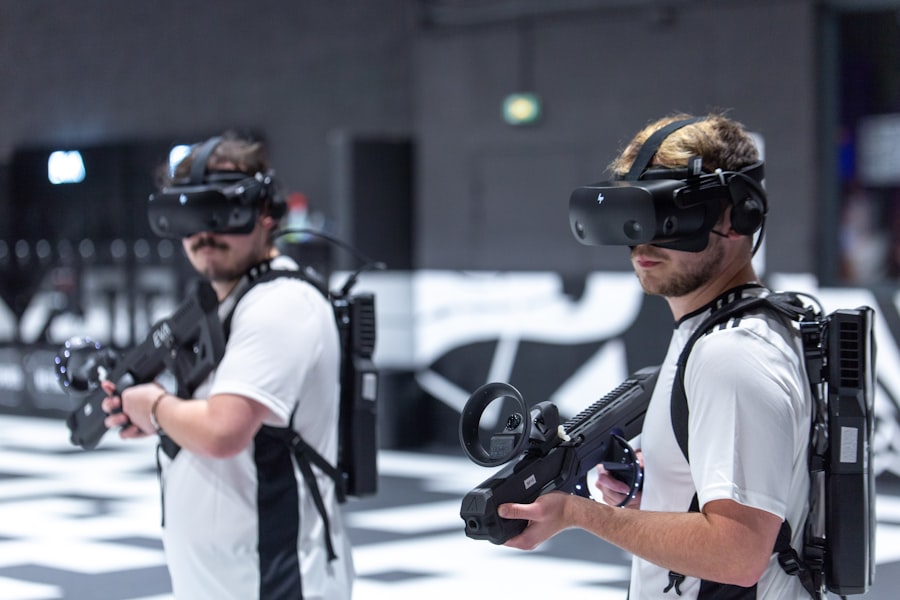
- Virtual Reality and AI: You regularly interact with virtual worlds that grow more realistic by the day. Your immersion in online games, social media, and AI-driven conversations can make you question the boundaries of your own reality. If you can create convincing simulated worlds, why couldn’t a more advanced civilization do the same for you?
- Déjà Vu and Familiarity: The experience of déjà vu, that fleeting sensation that you’ve lived a moment before, can be a minor “glitch in the Matrix” for you, a momentary misfiring of your brain that your simulation-aware mind might interpret as a reloaded scene.
Cultural Reflections and Popular Imagination

The simulation hypothesis has transcended academic discourse and deeply embedded itself in popular culture, shaping the way you perceive your world.
The Matrix and its Legacy
For many, The Matrix films provided a visual, visceral representation of what it might mean to live in a simulation.
- Widespread Awareness: The iconic premise of individuals unknowingly living in a computer-generated reality captured the public imagination. It made the philosophical concept accessible and presented compelling visual metaphors that resonated with your growing understanding of technology.
- “Red Pill” Metaphor: The “red pill” and “blue pill” choice became a cultural shorthand for confronting uncomfortable truths or remaining in blissful ignorance, directly tying into the choice you face when considering the simulation hypothesis. Are you willing to question your reality, even if the answer is unsettling?
Video Games and Simulated Lives
Your own experience with video games helps you understand the concept of a simulated reality from the “inside.”
- NPCs and Player Characters: In games, you control a player character, while non-player characters (NPCs) operate on algorithms. This experience makes it easier for you to imagine yourself as a character within a larger game, perhaps even discerning patterns in others’ behavior that you might attribute to programming.
- “Open World” Simulations: The rise of vast, open-world games with intricate ecosystems and emergent behaviors mirrors your understanding of your own complex reality, making the jump to a larger, more sophisticated simulation less abstract. You witness the creation of worlds, and you are positioned to understand the possibility of being in a world that was created.
Lately, I’ve been grappling with the unsettling notion that I might be living in a simulation, a feeling that resonates with many in today’s digital age. This idea is not just a fleeting thought; it has been explored in depth in various articles and discussions. One such article that caught my attention delves into the psychological implications of this phenomenon and offers insights into why so many people feel disconnected from reality. You can read more about it in this fascinating piece on unplugged psychology, which examines the intersection of technology and our perception of existence.
Living with the Doubt
| Metric | Description | Example/Observation |
|---|---|---|
| Déjà Vu Frequency | How often one experiences the sensation of having already lived through the present situation | Occurs 3-4 times per week |
| Perceived Glitches | Instances where reality seems to momentarily “malfunction” or behave unexpectedly | Noticing repeated patterns or time loops in daily events |
| Unexplained Coincidences | Frequency of highly improbable events that seem orchestrated | Experiencing multiple meaningful coincidences in a single day |
| Reality Consistency | Degree to which the environment and people behave predictably and logically | Occasional inconsistencies in memory or environment noticed |
| Awareness of Simulation Hypothesis | Level of knowledge and belief in the idea that reality might be a simulation | High interest and research into simulation theory concepts |
| Emotional Response | Feelings of detachment, confusion, or curiosity related to simulation thoughts | Mixed feelings of fascination and existential questioning |
So, where does this leave you? Are you living in a simulation? The enduring answer is: you don’t know.
The Practical Irrelevance (for now)
For your daily life, the answer often makes little practical difference.
- The Experience of Reality: Regardless of its ultimate nature, your subjective experience of reality remains just that: your reality. Your joys, sorrows, triumphs, and struggles are real to you, in this moment. The taste of your coffee, the warmth of the sun, the laughter of a friend—these experiences hold meaning regardless of whether the underlying code is base reality or simulated.
- Focus on the Present: The simulation hypothesis, while intriguing, doesn’t inherently change the actions you take, the relationships you cultivate, or the goals you pursue. You are still inhabiting this reality, and the choices you make within it still have consequences within its framework.
The Value of the Question Itself
The true value of asking “Am I living in a simulation?” lies not in finding a definitive answer, but in the questions it inspires.
- Promoting Critical Thinking: This question forces you to engage in critical thinking about the nature of existence, consciousness, and perception. It encourages you to question assumptions and consider alternative explanations for what you take for granted.
- Inspiring Exploration: It pushes the boundaries of scientific and philosophical inquiry, encouraging advancements in fields like AI, virtual reality, and fundamental physics. It’s a thought experiment that drives genuine scientific and philosophical exploration.
- A Deeper Appreciation of Reality: Paradoxically, by questioning the reality of your world, you might develop a deeper appreciation for the beauty and complexity of your perceived existence. Even if it’s a simulation, it’s an incredibly well-designed and intricate one. You are, in essence, enjoying the ride, regardless of who is driving or how the vehicle was built.
You’ve journeyed through philosophical landscapes, touched upon scientific conjectures, explored psychological triggers, and recognized cultural reflections. The question “Am I living in a simulation?” remains open, a tantalizing mystery at the heart of your existence. But in asking it, you affirm your own capacity for wonder, for doubt, and for the relentless pursuit of understanding, regardless of the ultimate nature of the reality you inhabit.
FAQs
What does it mean to feel like you are living in a simulation?
Feeling like you are living in a simulation refers to the sensation or belief that reality as we experience it might be an artificial construct, similar to a computer-generated environment, rather than a naturally occurring universe.
What are some common reasons people feel like they are living in a simulation?
Common reasons include experiencing déjà vu, noticing inconsistencies or glitches in reality, philosophical contemplation about the nature of existence, exposure to simulation theory in media, and feelings of detachment or unreality.
Is there scientific evidence supporting the idea that we live in a simulation?
Currently, there is no conclusive scientific evidence proving that we live in a simulation. The simulation hypothesis remains a philosophical and theoretical concept rather than an empirically verified fact.
Can psychological factors cause someone to feel like they are living in a simulation?
Yes, psychological factors such as dissociation, depersonalization, anxiety, or certain neurological conditions can lead to feelings of unreality or the sensation that life is simulated.
How can someone cope with the feeling that they are living in a simulation?
Coping strategies include grounding techniques, mindfulness practices, seeking social support, consulting mental health professionals if the feeling causes distress, and engaging in activities that reinforce a sense of reality and presence.