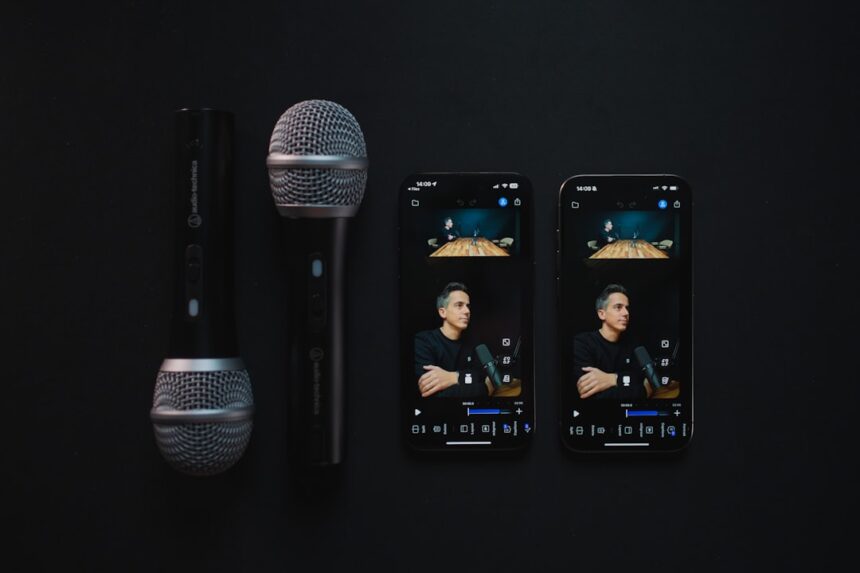
You might be experiencing the unsettling sensation of your voice sounding like a recording, a phenomenon that can range from a mild curiosity to a source of significant concern. This auditory disconnect, where the sound you perceive as your own voice carries an artificial or detached quality, is often referred to as the “alien voice effect” or “delayed auditory feedback” in academic circles. It’s as if the familiar instrument of your vocal cords has suddenly shifted its tuning, producing a melody that, while technically yours, feels foreign. This article will explore the multifaceted reasons behind this peculiar audial experience, delving into the physiological, psychological, and environmental factors that can contribute to your voice sounding like a recording.
The way you hear your own voice is a complex interplay of internal and external acoustic pathways. When you speak, sound waves travel from your vocal cords outward through the air to your ears. This is the airborne sound, the same way others perceive your voice. However, another crucial component of your self-perception comes from bone conduction. Vibrations from your vocal cords travel directly through the bones of your skull to your inner ear. This internal transmission is typically perceived as being richer, deeper, and more resonant than the airborne sound. It’s as if each word you utter sends a miniature earthquake through your skeletal structure, informing your auditory system from the inside out.
The Role of Bone Conduction
Bone conduction is a significant factor in how you internalize your voice. Imagine your skull as a natural resonator, amplifying and altering the sonic frequencies as they travel. The specific densities and structures of your skull bones cause these vibrations to be perceived differently than airborne sound. This is why recordings of your voice, which only capture the airborne component, often sound higher-pitched and less full than what you experience internally. When your voice starts to sound like a recording, it can sometimes mean that the balance between these two pathways has shifted, or that the clarity of one pathway is being compromised.
The Inner Ear and Vibrational Processing
Your inner ear, specifically the cochlea, is the marvel of biological engineering responsible for translating these vibrations into neural signals that your brain interprets as sound. The fluid-filled chambers and the delicate hair cells within the cochlea are exquisitely sensitive to even minute fluctuations in pressure and vibration. Any disruption or alteration in this delicate machinery can lead to distorted auditory perception. The brain then acts as the master conductor, piecing together these signals to construct the complete auditory picture of your voice.
If you’ve ever wondered why your voice sounds different when recorded, you might find the article on Unplugged Psych insightful. It delves into the science behind voice perception, explaining how the vibrations in our skulls alter our self-perception of our voice compared to how others hear it. For more information, you can read the full article here: Unplugged Psych.
Psychological Factors: The Mind-Voice Connection
The mind plays an undeniably significant role in how we perceive our own voice. When you feel your voice sounds like a recording, it can often be a manifestation of psychological states or cognitive processes. Your internal monologue, your self-awareness, and even your anxieties can subtly, and sometimes not so subtly, alter your vocal production and your perception of it. Think of your mind as a filter, subtly adjusting the output of your vocal instrument for your own ears.
Self-Consciousness and Anxiety
A heightened sense of self-consciousness or anxiety can be a common culprit. When you are overly aware of yourself, particularly your voice, you can become hyper-vigilant to its nuances. This heightened awareness can lead you to scrutinize every syllable, every inflection, creating a sense of distance from your own natural vocal output. It’s like being a meticulous editor of your own speech, constantly second-guessing every word and sound. This can lead to a feeling of artificiality, as if you are performing rather than simply speaking.
The “Observer Effect” on Your Voice
In a similar vein to how observing a quantum particle can alter its behavior, your conscious observation of your own voice can subtly change its characteristics. When you focus intently on how you sound, you might unconsciously alter your speaking rate, your volume, or your vocal quality. This conscious effort to control or monitor your voice can result in a less spontaneous and therefore more “recorded”-sounding output.
Preoccupation and Dissociation
Being preoccupied with a particular thought or emotion can also impact your voice. If your mind is engaged in a complex problem or a strong emotional rumination, your vocal production might become less fluid or expressive. This can lead to a flatter, more monotone delivery that you might perceive as being akin to a recording. In more extreme cases, a feeling of dissociation, where you feel detached from your own body or experiences, can extend to your voice, making it feel alien and pre-recorded.
Environmental and External Influences

The world around you also has a tangible impact on how you perceive your voice. External acoustic conditions can create echoes or dampen sounds in ways that alter your auditory feedback. These external influences can trick your brain into believing your voice is behaving differently. Consider how a room’s acoustics can make a whispered secret sound like a thunderous declaration, or how a soundproof booth renders even a shout almost silent.
Room Acoustics and Echoes
The architecture of the space you are in is a powerful determinant of how your voice reverberates. In large, empty rooms with hard surfaces, sound waves bounce around extensively, creating echoes and reverberations that can distort your perception of your own voice. You might hear your voice returning to you amplified and with a noticeable delay, creating a sense of being in an auditorium, even when you are just speaking in a small space that has unusual acoustic properties. This can make your voice sound fuller, but also potentially less immediate or clear, leading to that “recording” sensation.
The “Hall Effect” on Your Vocal Clarity
The “hall effect” refers to the tendency for sound to echo and reverberate in large, open spaces. When you speak in such an environment, the echoes combine with your direct voice, creating a layered soundscape. Your brain then has to work harder to disentangle these various auditory inputs, and this processing can lead to a perception that your voice is less crisp and more diffused, resembling the less defined sound of certain audio recordings.
Noise Levels and Masking
High ambient noise levels can also influence your vocal output and your perception. To be heard above background noise, you might consciously or unconsciously increase your vocal volume or alter your pitch. This forced adjustment can lead to a less natural speaking style. Furthermore, the background noise itself can mask certain frequencies of your voice, leading to an incomplete or altered perception. It’s like trying to hear a delicate melody played against the roar of a busy street; the subtler notes are lost.
The “Cocktail Party Effect” and Vocal Strain
The “cocktail party effect” describes the brain’s ability to focus on one sound source amidst a cacophony of noise. However, when you are the source of the sound and you are struggling to be heard in a noisy environment, your vocal mechanism might experience strain. This strain can alter the timbre and resonance of your voice, making it sound less natural and potentially more artificial.
Auditory Processing Disorders and Neurological Factors
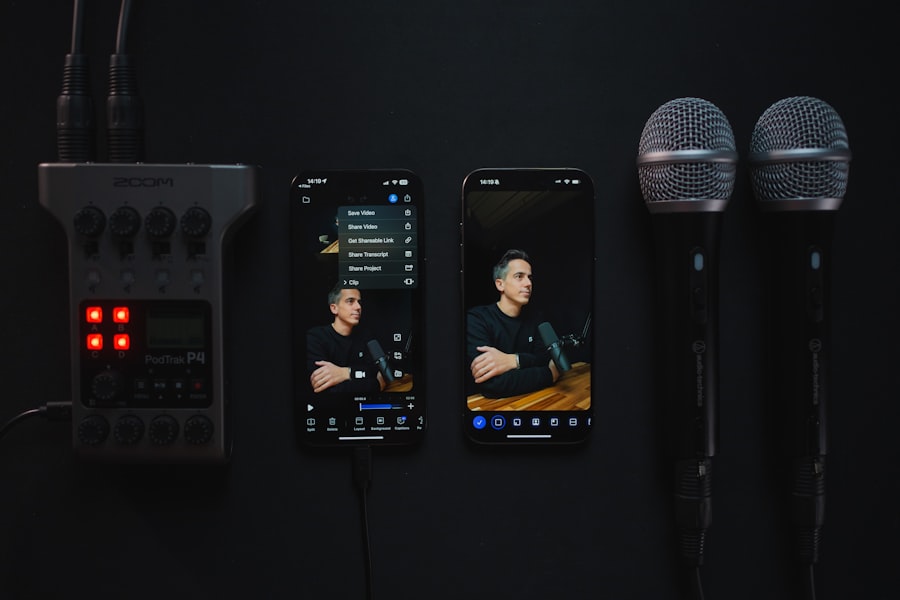
In some instances, the sensation of your voice sounding like a recording may be linked to underlying auditory processing disorders or subtle neurological variations. These conditions can affect how your brain interprets the sounds it receives, including the complex signal of your own voice. These are less common reasons, but they are important to acknowledge as potential contributors.
Auditory Processing Disorder (APD)
Auditory Processing Disorder (APD) is a condition where the brain has difficulty processing auditory information, even though hearing itself is normal. Individuals with APD may struggle to distinguish between similar-sounding words, identify the direction of sounds, or filter out background noise. When it comes to self-perception, APD can manifest as an inability to accurately process the nuances of one’s own voice, leading to that “recorded” or distorted feeling. It’s like having a faulty sound mixer in your head, where the levels and frequencies aren’t being balanced correctly.
Differential Auditory Processing
A key aspect of APD can be differential auditory processing, where the brain processes sounds differently based on their origin (e.g., external speech versus internal speech). This disparity can lead to a marked difference between how you hear yourself and how others hear you, potentially culminating in the feeling of your voice being like a recording.
Subtle Neurological Variations
Subtle variations in brain structure or function, even those not amounting to a diagnosed disorder, can also influence auditory perception. The neural pathways that process sound are incredibly intricate. Any slight deviation in their wiring or their efficient functioning can lead to altered experiences of sound. This is not necessarily indicative of a serious problem, but rather a testament to the remarkable diversity of human neurological makeup.
If you’ve ever wondered why your voice sounds different when you hear it recorded, you’re not alone. Many people experience this phenomenon due to the way sound travels and is perceived by our ears. When we speak, we hear our voice through vibrations in our skull, which creates a fuller sound than what a recording captures. For a deeper understanding of this topic, you might find this article on voice perception interesting. It explains the science behind why our recorded voices can seem unfamiliar. You can read more about it here.
Speech and Vocal Production Issues
| Reason | Description | Effect on Voice Perception | Possible Solution |
|---|---|---|---|
| Bone Conduction vs Air Conduction | When speaking, you hear your voice through both air conduction and bone conduction; recordings capture only air conduction. | Recorded voice sounds higher pitched and unfamiliar compared to what you hear internally. | Understand this difference; listen to recordings regularly to get accustomed. |
| Microphone Quality | Low-quality microphones may distort or alter the sound of your voice. | Voice may sound muffled, tinny, or unnatural in recordings. | Use a good quality microphone for clearer recordings. |
| Recording Environment | Background noise, echo, and room acoustics affect recording quality. | Voice may sound distant, echoey, or unclear. | Record in a quiet, acoustically treated space. |
| Playback Device | Speakers or headphones with poor frequency response can alter voice sound. | Voice may sound different than expected during playback. | Use quality playback devices for accurate sound reproduction. |
| Psychological Factors | Self-perception and expectations influence how you perceive your recorded voice. | Discomfort or surprise when hearing your recorded voice. | Repeated exposure to recordings to reduce discomfort. |
Sometimes, the issue lies not solely in perception, but in the actual production of your voice. If there are subtle alterations in how your vocal cords vibrate, how your articulators move, or how air is expelled, the resulting sound can be perceived as different, and perhaps artificial.
Vocal Cord Function and Resonance
The sound of your voice is primarily generated by the vibration of your vocal cords. Any changes in their tension, thickness, or mode of vibration can alter the fundamental frequency and timbre of your voice. Similarly, the resonance cavities in your pharynx, mouth, and nasal passages shape the sound. If these cavities are not functioning in their usual way, the resulting sound can be perceived as different. It’s as if the instrument itself has developed a unique, perhaps unintentional, playing style.
Changes in Vocal Fold Vibration
Even minor changes in how your vocal folds come together to vibrate can have a noticeable impact. For example, you might be speaking with a slightly different level of vocal fold closure than usual, leading to a breathier or tighter sound that contributes to the “recorded” perception.
Articulation and Diction
The way you move your tongue, lips, and jaw to form words – your articulation – also plays a crucial role. If you are speaking with less precise articulation, your words might blend together, creating a less crisp sound. This can be exacerbated by stress, fatigue, or a conscious effort to speak in a particular way, leading to a perceived lack of clarity that mimics the sometimes imprecise nature of audio recordings.
The “Mouth-Motion Sync” Discrepancy
Occasionally, there can be a subtle mismatch between the visual cues of your mouth moving and the sound you produce. While this is more often noticeable when watching yourself on video, a heightened awareness of this sync can also contribute to the feeling of your voice sounding unnatural or like a recording.
In conclusion, the sensation of your voice sounding like a recording is a complex phenomenon with roots in physiology, psychology, and environmental factors. By understanding the intricate ways you produce and perceive sound, you can begin to unravel the reasons behind this unusual auditory experience. It is often a subtle interplay of how your brain processes auditory information, how your vocal apparatus functions, and the environment in which you are speaking. If this sensation is persistent and causes you distress, consulting with a medical professional, such as an audiologist or a speech-language pathologist, can provide further insights and guidance.
FAQs
Why does my voice sound different when I hear a recording?
When you hear your recorded voice, it sounds different because you normally hear your voice through both air conduction and bone conduction. Bone conduction transmits lower frequencies directly through your skull, making your voice sound deeper to yourself. Recordings capture only air conduction, so your voice may sound higher-pitched or unfamiliar.
Is it normal to dislike the sound of my recorded voice?
Yes, it is very common to dislike or feel uncomfortable with the sound of your recorded voice. This reaction happens because the recorded voice lacks the bone conduction component you are used to, making it sound different and sometimes less flattering.
Can I change how my recorded voice sounds?
While you cannot change the fundamental qualities of your voice, you can improve how your recorded voice sounds by practicing good speaking techniques, such as proper breathing, clear articulation, and maintaining a steady pitch. Using quality recording equipment and minimizing background noise also helps.
Why do some people’s recorded voices sound deeper or higher than expected?
Variations in recorded voice pitch can be due to individual vocal tract anatomy, speaking habits, and the recording environment. Additionally, the absence of bone conduction in recordings can make voices sound higher-pitched than they do in person.
Does hearing my recorded voice help improve my speaking skills?
Yes, listening to recordings of your voice can be a useful tool for self-assessment and improvement. It allows you to identify areas such as pronunciation, tone, and pacing that may need adjustment, helping you become a more effective communicator.