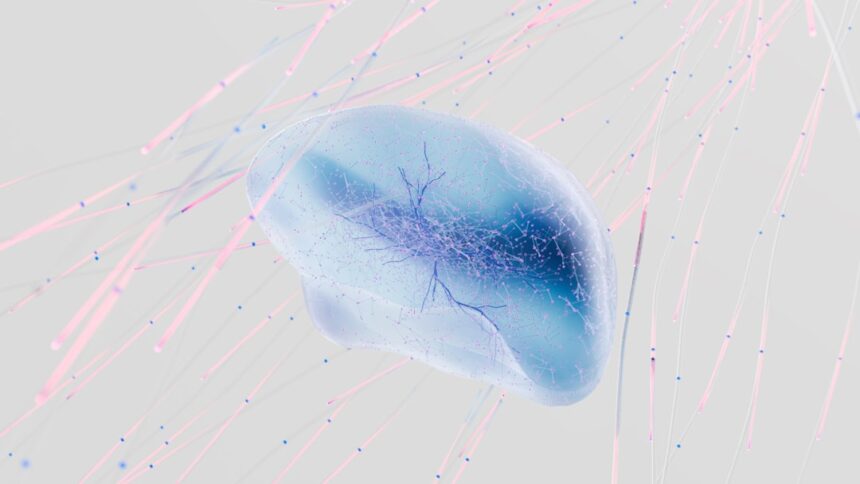
You stand at a fascinating juncture in the human understanding of consciousness. For centuries, the realms of spirituality and scientific inquiry have largely operated in separate, often seemingly antagonistic, spheres. Neuroscience, focused on the tangible mechanisms of the brain, and spiritual traditions, exploring the ephemeral landscapes of meaning, purpose, and transcende, are now beginning to find common ground. This emerging field, broadly termed “neuroscience and spiritual integration,” investigates the intricate relationship between your brain’s biological processes and your subjective spiritual experiences, offering a more holistic understanding of the human condition. You are not merely a collection of neurons or a vessel for spirit; you are an intricate tapestry woven from both.
This exploration invites you to consider how your brain, the organ of your mind, facilitates or is influenced by your spiritual journey. It asks: Can we bridge the chasm between the subjective experience of the sacred and the objective analysis of neural activity? Can understanding the brain illuminate spiritual practices, and can spiritual insights inform our understanding of the brain?
The Neural Substrates of Spiritual Experience
You might wonder how something as intangible as a spiritual experience could have a physical basis in the brain. However, recent advancements in neuroimaging technologies, such as fMRI and EEG, have allowed researchers to observe your brain in real-time as you engage in various spiritual practices.
Investigating the “God Spot” Hypothesis
Early research, often sensationalized in popular media, occasionally led to the concept of a “God Spot”—a specific brain region solely responsible for religious or spiritual experiences. You should approach this idea with healthy skepticism. While some studies identified activity in specific areas during mystical experiences, the consensus among neuroscientists is far more nuanced.
- Parietal Lobe Activity: Several studies, including those on Tibetan Buddhist meditators and Franciscan nuns, have demonstrated altered activity in the parietal lobes during intense spiritual states. This region is crucial for your sense of self and your orientation in space. Reduced activity here might contribute to feelings of dissolved boundaries and ego attenuation, common features of mystical experiences, where you feel a sense of oneness with the universe. Imagine your sense of self, usually a sturdy anchor, momentarily dissolving into the vast ocean of consciousness.
- Temporal Lobe Involvement: The temporal lobes, particularly the anterior cingulate cortex and amygdala, have also been implicated. These areas are involved in emotion regulation, memory, and salience attribution (determining what is important). Some researchers have suggested that heightened temporal lobe activity, particularly during certain types of epileptic seizures, can induce profound spiritual or mystical experiences. However, you must differentiate between naturally occurring spiritual states and those induced by pathological conditions.
- Frontal Lobe Engagement: Your prefrontal cortex, the executive control center of your brain, plays a critical role in attention, focus, and cognitive control. Practices like meditation and prayer explicitly engage these regions, helping you sustain attention and regulate your thoughts and emotions. This is where your conscious effort in spiritual practice manifests neurologically.
The Role of Neurotransmitters
Beyond specific brain regions, the intricate dance of neurotransmitters within your brain significantly influences your mood, perception, and emotional states, all of which are inextricably linked to spiritual experiences.
- Dopamine and Reward: Dopamine, often associated with pleasure and reward, is active in the ventral striatum during experiences perceived as meaningful or spiritually uplifting. This suggests that spiritual experiences can activate your brain’s reward system, reinforcing practices that lead to such states. You might experience the “runner’s high” of transcendence, driven by the brain’s natural reward system.
- Serotonin and Mood Regulation: Serotonin, a key neurotransmitter for mood regulation, sleep, and well-being, is also thought to play a role. Some hallucinogenic substances, known to induce mystical-like states, primarily affect serotonin receptors, suggesting a potential pathway for altering consciousness in ways that mirror spiritual experiences. However, correlating externally induced states with naturally arising ones requires careful consideration.
- Oxytocin and Social Bonding: Oxytocin, often called the “love hormone,” is associated with trust, empathy, and social bonding. In communal spiritual practices, such as congregational singing or prayer, the release of oxytocin may contribute to feelings of interconnectedness and belonging. This highlights the social dimension of many spiritual traditions and its neurological underpinnings.
The Impact of Spiritual Practices on Brain Structure and Function
You are not a static entity; your brain is constantly adapting and changing based on your experiences, a phenomenon known as neuroplasticity. Spiritual practices are not simply passive experiences; they are active mental training regimens that can – and do – reshape your brain.
Meditation’s Influence on Neural Networks
Meditation, a cornerstone of many spiritual traditions, has been extensively studied for its profound effects on the brain. You are actively training your attention and emotional regulation when you meditate.
- Increased Grey Matter Density: Studies have shown that regular meditation practice can lead to increased grey matter density in regions associated with attention, self-awareness, and emotional regulation, such as the prefrontal cortex and insula. It’s as if you are strengthening the neural pathways of mindfulness.
- Reduced Amygdala Activity: The amygdala, your brain’s fear center, tends to show reduced activity in experienced meditators. This translates to a decreased stress response and greater emotional resilience. You are effectively quieting the brain’s alarm system.
- Enhanced Connectivity: Meditation can also alter the functional connectivity between different brain regions, particularly enhancing the default mode network (DMN), a network active during mind-wandering and self-referential thought. Experienced meditators show greater ability to switch out of the DMN, allowing for greater present-moment awareness.
The Neurobiology of Prayer
Prayer, a diverse practice ranging from contemplative contemplation to communal supplication, also leaves its mark on your brain. While less extensively studied than meditation, emerging research offers insights.
- Similarities to Meditation: Contemplative prayer often shares neurological similarities with mindfulness meditation, engaging similar brain regions involved in attention and emotional regulation.
- Social and Emotional Processing: Communal prayer, as mentioned earlier, can activate areas related to social bonding and emotional empathy. The shared intention and collective focus can create a powerful group dynamic, reinforced by neurochemical releases.
- The Power of Belief: The act of praying, regardless of its specific form, often involves strong belief and expectation. These cognitive factors can influence your brain’s activity, potentially activating reward pathways and stress-reducing mechanisms, even if the “answer” to prayer is not externally evident.
The Therapeutic Potential of Spiritual Integration
You might consider how these scientific insights into spiritual experiences could be harnessed for practical benefits. The convergence of neuroscience and spirituality opens new avenues for therapeutic interventions and well-being.
Adjunctive Therapies for Mental Health
Traditional psychotherapies and pharmacological treatments often benefit from spiritual integration, particularly for individuals who identify as spiritual or religious.
- Treating Depression and Anxiety: Practices like mindfulness meditation, derived from spiritual traditions, are now evidence-based treatments for depression and anxiety. By affecting neural circuits involved in mood and stress, these practices offer tangible relief.
- Coping with Trauma: Spiritual frameworks can provide individuals with meaning and resilience in the face of trauma. Understanding the neural basis of trauma responses, combined with spiritual coping mechanisms, can enhance therapeutic outcomes.
- Addiction Recovery: For many, addiction involves a profound spiritual vacuum. Incorporating spiritual principles and practices, often seen in programs like Alcoholics Anonymous, can provide purpose, community, and neurological pathways for recovery.
Enhancing Well-being and Resilience
Beyond addressing pathology, spiritual integration can proactively enhance your overall well-being and resilience. You are not just mending what is broken; you are building what is strong.
- Meaning and Purpose: Neuroscience suggests that having a sense of meaning and purpose, often derived from spiritual or existential perspectives, activates reward pathways in the brain and can contribute to overall life satisfaction.
- Social Connection: Spiritual communities often foster strong social bonds, which are crucial for mental and physical health. The oxytocin-mediated effects of communal activities demonstrate the neural underpinnings of this benefit.
- Stress Reduction: Practices like prayer, meditation, and spiritual contemplation can significantly reduce physiological stress responses, leading to lower cortisol levels and improved cardiovascular health. You are tuning your nervous system to a calmer frequency.
Ethical Considerations and Future Directions
As you navigate this integrative landscape, you must acknowledge the ethical complexities and vast open questions that remain. You are crossing traditional boundaries, and careful consideration is paramount.
Avoiding Reductionism and Determinism
One of the primary ethical challenges is to avoid reducing complex spiritual phenomena solely to their neurological correlates. You must resist the temptation to declare that a spiritual experience “is nothing but” brain activity.
- The “Hard Problem” of Consciousness: Neuroscience can describe the neural mechanisms coinciding with consciousness, but it cannot fully explain the subjective nature of experience itself. The “hard problem”—how physical processes give rise to subjective awareness—remains a profound philosophical and scientific challenge.
- The Limits of Scientific Inquiry: While invaluable, science operates within a framework of observability and measurability. Aspects of spiritual experience, such as the perceived presence of a divine entity or the nature of ultimate reality, may extend beyond the current reach of scientific instrumentation.
- Individual Variability: Your spiritual experiences are deeply personal and unique. While common neural patterns emerge, individual differences in brain structure, genetics, and life history significantly shape these experiences.
The Interplay of Culture and Spirituality
Your cultural environment profoundly shapes your spiritual beliefs and practices, which in turn influence your brain’s development and responses.
- Cultural Specificity: The expression of spirituality varies dramatically across cultures, from animistic traditions to organized religions. Neurological studies must account for these diverse cultural contexts to avoid universalizing findings based on a narrow sample.
- Enculturation and Brain Development: The spiritual narratives and practices you encounter from childhood actively sculpt your brain, creating neural pathways aligned with your cultural and religious upbringing. This highlights the dynamic interplay between nature and nurture.
Future Research Avenues
The field of neuroscience and spiritual integration is still in its infancy, offering exciting avenues for future research. You are at the beginning of a long and fruitful journey.
- Longitudinal Studies: You need more longitudinal studies to track the long-term effects of sustained spiritual practices on brain structure and function, moving beyond cross-sectional comparisons.
- Personalized Neuro-Spirituality: As technology advances, understanding individual neural profiles might allow for personalized spiritual practices tailored to optimize specific brain functions.
- Bridging the Explanatory Gap: Future research will continue to strive to bridge the explanatory gap between subjective spiritual experience and objective neural activity, perhaps through novel conceptual frameworks and interdisciplinary collaboration.
Conclusion
You are part of a compelling narrative where the ancient wisdom of spiritual traditions meets the cutting-edge insights of modern neuroscience. The mind-body connection, once a philosophical concept, is increasingly illuminated by empirical data. Your brain is not merely a biological machine; it is an incredibly complex, adaptable organ that facilitates your deepest experiences of meaning, transcendence, and connection. By integrating these two powerful lenses—the scientific and the spiritual—you gain a richer, more comprehensive understanding of who you are: a being capable of both intricate biological processes and profound spiritual journeys. This journey of integration is not about reducing spirit to matter, but about recognizing the dynamic, reciprocal relationship between them, ultimately leading to a more complete picture of the human experience.

WATCH NOW ▶️ SHOCKING: Why Your World Suddenly Feels Like a Set
FAQs
What is the neuroscience of spiritual integration?
The neuroscience of spiritual integration studies how brain functions and neural mechanisms relate to spiritual experiences and practices, exploring how spirituality influences mental health, cognition, and emotional well-being.
Which brain areas are involved in spiritual experiences?
Key brain regions involved in spiritual experiences include the prefrontal cortex, which governs attention and self-awareness; the parietal lobe, associated with spatial orientation and sense of self; and the limbic system, which regulates emotions.
How does spiritual integration affect mental health according to neuroscience?
Neuroscientific research suggests that spiritual integration can enhance mental health by reducing stress, improving emotional regulation, increasing feelings of connectedness, and promoting resilience through changes in brain activity and neurochemical balance.
Can meditation and prayer change the brain?
Yes, studies show that regular meditation and prayer can lead to neuroplastic changes, such as increased gray matter density in areas related to attention and emotional regulation, as well as altered activity in brain networks linked to self-awareness and compassion.
Is there scientific evidence supporting the benefits of spiritual practices?
Numerous scientific studies provide evidence that spiritual practices can positively impact brain function, reduce symptoms of anxiety and depression, and improve overall psychological well-being, although the exact mechanisms continue to be researched.