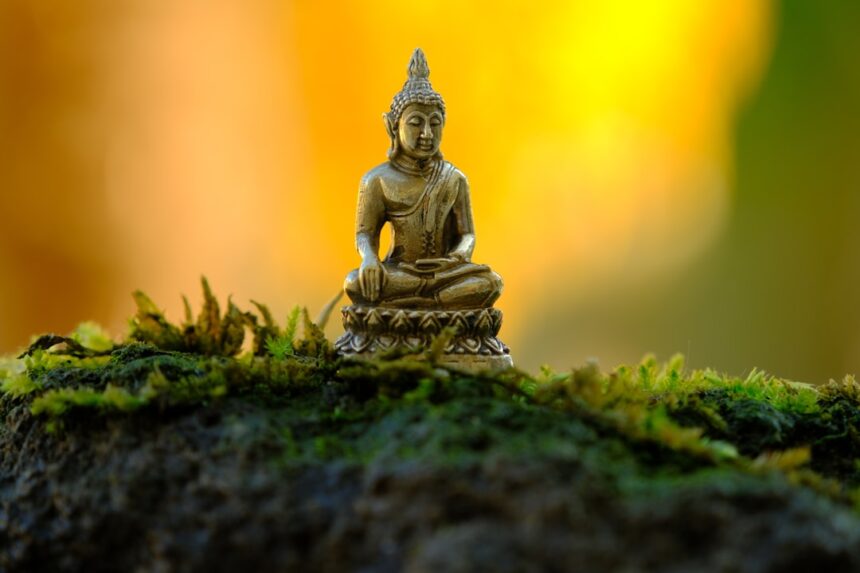
Embarking on the path of spiritual awakening is not a destination, but a continuous unfolding. It is a journey of self-discovery, a profound reorientation of your inner compass towards a deeper understanding of yourself and the universe around you. This process can feel both exhilarating and disorienting, like navigating uncharted waters without a map. Yet, with mindful intention and a commitment to inner exploration, you can cultivate a more fulfilling and meaningful existence. This article offers five practical tips to guide you through your spiritual awakening, transforming it from a chaotic storm into a gentle, flowing river.
In the relentless hum of modern life, finding stillness might seem like an impossible feat. You are constantly bombarded with information, demands, and distractions, creating a cacophony that drowns out the subtler whispers of your inner self. This external noise acts like a thick fog, obscuring your vision and making it difficult to discern the true north of your spiritual path. Cultivating stillness is the process of voluntarily stepping away from this external chaos to create space for internal reflection. It’s about silencing the incessant chatter of the ego and opening yourself to a deeper, more profound form of communication.
The Practice of Meditation
Meditation is not about emptying your mind, a common misconception that often leads to frustration. Instead, it is about observing your thoughts without judgment, allowing them to arise and pass like clouds in the sky.
Finding Your Anchor
Your anchor in meditation is often your breath. The simple, rhythmic in-and-out of your respiration serves as a constant focal point, grounding you in the present moment.
Basic Breath Awareness
Sit comfortably with your spine erect but not rigid. Close your eyes gently. Bring your attention to the sensation of your breath entering and leaving your nostrils or the rise and fall of your abdomen. When your mind wanders, and it will, gently guide your attention back to your breath without self-recrimination.
Body Scan Meditation
This technique involves systematically bringing your awareness to different parts of your body, noticing any sensations without trying to change them. It increases your interoceptive awareness, fostering a deeper connection with your physical self.
The Role of Mindfulness in Daily Life
Mindfulness extends beyond formal meditation sessions. It is the practice of bringing your full attention to whatever you are doing in the present moment, without judgment.
Mindful Eating
Engage all your senses when you eat. Notice the colors, textures, aromas, and tastes of your food. Chew slowly and savor each bite, appreciating the nourishment it provides.
Mindful Walking
As you walk, pay attention to the sensation of your feet on the ground, the movement of your legs, and the feeling of the air on your skin. Observe your surroundings without getting lost in thought.
The Benefits of Solitude
Solitude can be a powerful catalyst for spiritual growth. It provides an environment free from external pressures and opinions, allowing you to connect with your own inner wisdom.
Embracing Alone Time
Schedule regular periods of solitude, even if they are short. During this time, engage in activities that nourish your soul, such as reading, journaling, or simply being in nature.
Disconnecting from Technology
In our hyper-connected world, regular digital detoxes are crucial. Limit your screen time, especially before bed, to allow your mind to rest and your inner voice to emerge.
If you’re seeking guidance on your journey towards spiritual awakening, you might find valuable insights in the article available at this link. It offers practical tips and techniques to help you connect with your inner self and enhance your spiritual practice. For more information, check out the article here: Spiritual Awakening Tips.
Embrace Self-Inquiry and Reflection
Spiritual awakening necessitates a deep dive into the core of your being. It requires you to question deeply held beliefs, assumptions, and patterns of thought that have shaped your perception of reality. This process is akin to peeling back the layers of an onion, progressively uncovering the true essence beneath the superficial. Without this honest and courageous self-inquiry, you risk remaining tethered to illusions and limitations that prevent genuine growth.
Journaling as a Tool for Insight
Journaling is an invaluable practice for externalizing your internal landscape. It allows you to process complex emotions, clarify thoughts, and gain perspective on your experiences.
Free-Writing Prompts
Start with open-ended prompts that encourage uninhibited expression.
“What am I afraid of right now, and why?”
This question can uncover underlying anxieties and limiting beliefs that are holding you back.
“What brings me a sense of joy and peace?”
Identifying sources of genuine happiness can guide you towards activities and relationships that foster well-being.
Reflective Journaling
Once you have a flow of thoughts, engage in more structured reflection.
“How does this thought/feeling serve me?”
This prompt encourages you to examine the utility of your mental patterns.
“If I were to let go of this belief, what would be possible?”
This exercise opens up new avenues of thought and potential.
Questioning Your Beliefs
Many of our beliefs are inherited, either from our upbringing, culture, or societal norms. Spiritual awakening involves discerning which of these beliefs align with your authentic self and which are simply borrowed clothing.
Identifying Limiting Beliefs
Pay attention to recurring negative self-talk or assumptions that seem to hinder your progress.
“I am not good enough.”
This is a classic limiting belief that many individuals carry.
“It’s too late for me to change.”
This belief stems from a fixed mindset and can prevent you from pursuing new paths.
Investigating Their Origins
Once identified, explore where these beliefs originated. Were they instilled by parents, teachers, or societal pressures?
Childhood Experiences
Consider how early life events might have shaped your core beliefs about yourself and the world.
Societal Conditioning
Analyze the messages you have received from media, education, and culture that might have influenced your worldview.
Seeking Wisdom from Diverse Sources
Spiritual wisdom is not confined to a single tradition or dogma. Explore various philosophical texts, spiritual teachings, and the experiences of others.
Reading Spiritual and Philosophical Texts
Examine works that resonate with your burgeoning sense of inquiry.
Classic philosophical dialogues.
Socratic questioning can be a powerful model for self-inquiry.
Religious and mystical writings.
Different traditions offer unique perspectives on the nature of reality and human consciousness.
Learning from Mentors and Teachers
Guidance from experienced individuals can illuminate your path, but always maintain your discernment.
Spiritual teachers.
Seek out those who embody wisdom and provide practical guidance.
Therapists and counselors.
These professionals can offer valuable insights into your psychological patterns.
Practice Compassion, Both for Yourself and Others

A vital component of spiritual awakening is the softening of the heart. This involves extending genuine kindness and understanding, first and foremost to yourself, and then outward to all beings. Judgment, criticism, and a harsh inner dialogue are like thorns that prick and wound, hindering your growth and creating a closed-off emotional state. Compassion, conversely, is a balm that soothes, heals, and fosters connection, opening you up to a more expansive and loving experience of life.
Cultivating Self-Compassion
The relentless internal critic is often the loudest voice during spiritual awakening. Learning to silence this voice and replace it with kindness is paramount.
Acknowledging Your Imperfections
Recognize that making mistakes is an inherent part of the human experience. It is through these imperfections that you learn and grow.
“I am struggling right now.”
This is a powerful statement of acknowledgment, inviting you to be gentle with yourself.
“I did the best I could with what I knew at the time.”
This phrase offers forgiveness and understanding for past actions.
Practicing Self-Kindness
Treat yourself as you would a dear friend who is going through a difficult time.
Offering comforting self-talk.
Replace harsh critiques with words of encouragement and support.
Engaging in self-care activities.
Prioritize activities that replenish your energy and bring you joy.
Extending Compassion to Others
As your capacity for self-compassion grows, so too will your ability to extend it to others. You will begin to see the shared humanity in everyone, recognizing that all beings are navigating their own complex journeys.
Understanding the Interconnectedness of All Beings
Recognize that you are not an isolated entity but part of a vast and intricate web of life.
The concept of “oneness.”
Many spiritual traditions speak of an underlying unity that connects all things.
Empathy as a bridge.
When you can step into another’s shoes, judgment often dissolves.
Practicing Forgiveness
Holding onto grudges or resentment is like carrying a heavy anchor that drags you down. Forgiveness, both of yourself and others, is essential for emotional liberation.
Forgiving yourself for past mistakes.
This is often the most challenging form of forgiveness, but it is crucial for moving forward.
Forgiving those who have caused you harm.
This does not mean condoning their actions, but rather releasing yourself from the burden of anger.
The Role of Active Listening
Listening with genuine presence and empathy is a profound act of compassion. It allows others to feel seen and heard, fostering deeper connections.
Listening Without Interruption
Give the speaker your undivided attention. Avoid formulating your response while they are still speaking.
Seeking to Understand, Not Just Respond
Your goal is to grasp the speaker’s perspective, not necessarily to agree with it.
Embrace Vulnerability and Authenticity
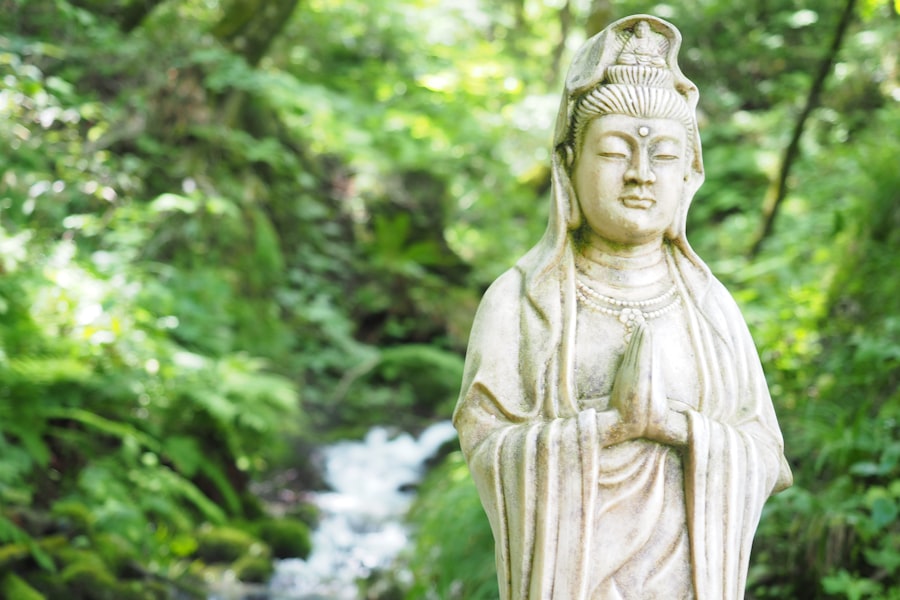
Spiritual awakening often involves shedding the protective layers, the masks you wear to navigate the world. This can be a frightening prospect, as it exposes your true self, with all its perceived flaws and vulnerabilities. However, it is precisely in this exposed state that genuine connection and profound growth occur. Like a seed breaking through the soil, vulnerability is the necessary precursor to blossoming.
Allowing Yourself to Be Seen
Authenticity is the courage to be imperfect, openly and honestly. It is about aligning your inner world with your outer expression.
Sharing Your True Feelings
Resist the urge to suppress or disguise your emotions, especially difficult ones.
Expressing sadness, anger, or fear.
Allowing these emotions to be felt without judgment is a form of self-acceptance.
Sharing moments of joy and gratitude.
Authenticity also involves sharing your positive experiences openly.
Honoring Your Boundaries
While vulnerability is important, it must be balanced with healthy boundaries. Authenticity does not mean oversharing or allowing yourself to be harmed.
Setting clear limits in relationships.
Communicate what is and is not acceptable behavior.
Saying “no” when necessary.
Protecting your energy and well-being is a sign of self-respect.
The Power of Letting Go
As you embrace vulnerability, you will realize the need to release attachments that no longer serve you. This includes attachments to outcomes, expectations, and even your sense of self.
Releasing the Need for Control
Much of our anxiety stems from a desire to control situations and people. Spiritual awakening involves surrendering this illusion of control.
Accepting the impermanence of all things.
Everything is in constant flux; resisting this truth leads to suffering.
Trusting the unfolding of life.
There is a natural intelligence to the universe; learn to surrender and allow.
Letting Go of Past Hurts
Holding onto past grievances is like trying to steer a ship while constantly looking backward. Forgiveness and acceptance are key to moving forward.
Reframing past experiences.
Seek the lessons learned rather than the pain inflicted.
Releasing the stories you tell yourself about the past.
These narratives often reinforce limiting beliefs and prevent healing.
If you’re seeking guidance on your journey towards spiritual awakening, you might find it helpful to explore additional resources that offer insightful tips and practices. One such article that delves into various techniques for enhancing your spiritual growth can be found at Unplugged Psych. This resource provides valuable information that can complement your understanding and help you navigate the transformative process of awakening.
Integrate Your Spiritual Insights into Daily Life
| Tip | Description | Recommended Duration | Expected Benefit |
|---|---|---|---|
| Meditation | Practice mindfulness meditation to increase self-awareness and inner peace. | 10-30 minutes daily | Improved focus, reduced stress, enhanced spiritual connection |
| Journaling | Write down thoughts and feelings to explore inner beliefs and emotions. | 5-15 minutes daily | Greater self-understanding and emotional clarity |
| Gratitude Practice | List things you are grateful for to cultivate a positive mindset. | 5 minutes daily | Increased happiness and appreciation for life |
| Nature Walks | Spend time in nature to connect with the earth and find calmness. | 30 minutes to 1 hour weekly | Reduced anxiety and enhanced sense of belonging |
| Breathwork | Practice deep breathing exercises to center the mind and body. | 5-10 minutes daily | Lowered stress levels and increased energy flow |
| Reading Spiritual Texts | Read books or scriptures that inspire spiritual growth. | 15-30 minutes daily | Expanded perspective and deeper understanding of spirituality |
| Mindful Eating | Eat slowly and with awareness to nourish body and soul. | During meals | Improved digestion and mindful living |
The ultimate aim of spiritual awakening is not to live in a state of perpetual transcendence, but to bring the wisdom and insights gained into the fabric of your everyday existence. It is about allowing your spiritual practice to inform your actions, your relationships, and your overall approach to life. Without this integration, your spiritual journey can become an abstract pursuit, disconnected from the practical realities of your world. It’s the difference between reading a profound book and living its teachings.
Living with Purpose and Intention
As you gain clarity on your values and inner calling, you can begin to align your actions with a greater sense of purpose.
Identifying Your Passions and Gifts
What activities ignite your soul and utilize your unique talents?
Following your curiosity.
Where does your attention naturally gravitate?
Recognizing your innate strengths.
What do you do easily that others find challenging?
Setting Meaningful Goals
Goals that are aligned with your values are more likely to be fulfilling and sustainable.
Creating goals that serve others.
Contribution often leads to profound satisfaction.
Setting process-oriented goals.
Focus on the journey, not just the destination.
Making Conscious Choices
With newfound awareness, you can make more intentional decisions in all aspects of your life.
Mindful decision-making.
Consider the impact of your choices on yourself and others.
Aligning your choices with your values.
Does this decision reflect who you are becoming?
Trusting your intuition.
Your inner knowing is a powerful guide.
Contributing to the World
Spiritual awakening often fosters a desire to contribute positively to the world around you.
Engaging in acts of service.
Find ways to give back to your community or beyond.
Volunteering your time and skills.
Every contribution, no matter how small, makes a difference.
Supporting causes you believe in.
Direct your resources towards positive change.
Inspiring Others Through Your Example
Your own journey of awakening can be a beacon of hope for others who are seeking their own path. Live your truth with integrity and grace, and allow your authenticity to ripple outwards.
Embarking on your spiritual awakening is a courageous and profound undertaking. By cultivating stillness, embracing self-inquiry, practicing compassion, allowing for vulnerability, and integrating your insights, you can navigate this transformative journey with grace and intentionality. Remember, this is your unique path, a unfolding masterpiece painted with the vibrant colors of your evolving consciousness. Embrace the process, trust the unfolding, and may your journey be one of profound fulfillment.
FAQs
What is a spiritual awakening?
A spiritual awakening is a profound shift in consciousness where an individual becomes more aware of their inner self, the interconnectedness of life, and often experiences a deeper sense of purpose and meaning.
What are common signs of a spiritual awakening?
Common signs include increased self-awareness, a desire for personal growth, feeling more connected to others and nature, questioning previously held beliefs, and experiencing heightened intuition or inner peace.
How can meditation help in a spiritual awakening?
Meditation helps quiet the mind, allowing individuals to connect with their inner self, gain clarity, and develop mindfulness, which are essential components in facilitating a spiritual awakening.
Are there any practical tips to support a spiritual awakening?
Yes, practical tips include practicing mindfulness, journaling thoughts and feelings, spending time in nature, seeking knowledge through spiritual texts, and surrounding oneself with supportive and like-minded individuals.
Is a spiritual awakening a one-time event or a continuous process?
A spiritual awakening is often a continuous process rather than a single event. It involves ongoing self-discovery, growth, and evolving awareness throughout one’s life.