
You are stepping into a complex arena when you consider gratitude not merely as an emotion, but as a strategic instrument of influence. This is not about the warm glow you feel when someone helps you, nor the simple act of saying “thank you.” Instead, you are examining gratitude through a different lens: one that views it as a calculated maneuver, a psychological lever, and ultimately, a means to establish or re-establish control within various human interactions. This perspective challenges conventional notions of gratitude, moving it from the realm of altruism into the colder, more utilitarian sphere of power dynamics.
You understand that at its core, gratitude is intertwined with the principle of reciprocity. This is not a quaint notion but a fundamental element of human social structures. From ancient gift economies to modern transactional relationships, the expectation of “give and take” forms the bedrock of cooperation and mutual benefit.
The Debt Implication: A Burden or an Opportunity?
When someone extends a kindness, whether solicited or unsolicited, you intrinsically recognize the creation of a social debt. This debt is not always explicit; it’s often a subtle, unspoken understanding that permeates the interaction. You are now beholden, however slightly, to the giver. This perceived obligation can be viewed as either a burden, something to be discharged as quickly as possible, or an opportunity, a chance to reciprocate and strengthen the relationship. The perception often depends on the power differential between you and the giver. If you are in a subordinate position, the debt might feel heavier, almost like a command.
Ingroup/Outgroup Dynamics: The Tribal Calculus of Favors
The creation of this social debt often reinforces existing ingroup/outgroup boundaries. You are more likely to feel a stronger sense of obligation to those within your immediate social circle, your “ingroup.” Favors exchanged among ingroup members solidify loyalty and cooperation. Conversely, a kindness extended by an “outsider” can be a powerful tool for assimilation or can be viewed with suspicion, an attempt to gain leverage or information. Your interpretation of the gesture is heavily influenced by your existing biases and affiliations.
The Evolutionary Advantage: Survival Through Mutual Aid
From an evolutionary standpoint, you can see how reciprocity, fueled by gratitude, played a crucial role in the survival of early human communities. Individuals who remembered and reciprocated favors were more likely to receive aid themselves in times of need, enhancing their chances of survival and reproduction. This ingrained tendency to acknowledge and respond to acts of generosity is not an arbitrary cultural construct but a deeply wired, adaptive mechanism. You are, in essence, operating within a system honed by millennia of social evolution.
In exploring the complex dynamics of gratitude and its potential manipulation, the article “The Weaponization of Gratitude: How It Can Be Used for Control” delves into how expressions of thankfulness can be strategically employed to influence behavior and foster dependency. This phenomenon is particularly evident in various social and commercial contexts, where gratitude is leveraged to create a sense of obligation, ultimately leading to a cycle of control over individuals. For a deeper understanding of this topic, you can read more in the article available at this link.
Strategic Deployment: Weaving the Web of Obligation
You are observing that while gratitude can arise spontaneously, its strategic deployment involves a conscious manipulation of social cues and expectations. This is where you move beyond simple appreciation and into the realm of calculated influence.
Unsolicited Acts of Kindness: The Trojan Horse Maneuver
Consider the unsolicited act of kindness. Someone offers you assistance, a gift, or a valuable piece of information without you ever requesting it. On the surface, this appears to be pure altruism. However, you are now placed in a position of receiving. This creates a psychological obligation that can be leveraged later. It’s a “Trojan horse” maneuver: a seemingly benign offering that, once accepted, opens the gates for future influence. You may feel compelled to return a favor, even if the initial gift was not something you particularly needed or desired.
Public Displays of Gratitude: The Social Reinforcer
When you express gratitude publicly, you are not just acknowledging the giver; you are also broadcasting the giver’s generosity to a wider audience. This can serve several purposes. It publicly validates the giver’s status and reinforces their positive image, encouraging further acts of generosity. It also subtly pressures others to acknowledge their own debts or to reciprocate in kind. You are essentially using the social spotlight to magnify the impact of the initial act and subsequently, your own influence.
Future-Pacing Reciprocity: The Pre-Emptive Strike
You might also observe instances where gratitude is expressed not for a past favor, but for an anticipated one. This is a subtle yet powerful form of manipulation. By expressing gratitude in advance, you are effectively framing a future request as a given and subtly obligating the other party to fulfill it. You are, in effect, planting a seed of expectation that they will act in a certain way, and failure to do so might be perceived as a betrayal of your trust. This pre-emptive strike effectively reduces the recipient’s agency in the interaction.
The Architecture of Control: From Benevolence to Influence
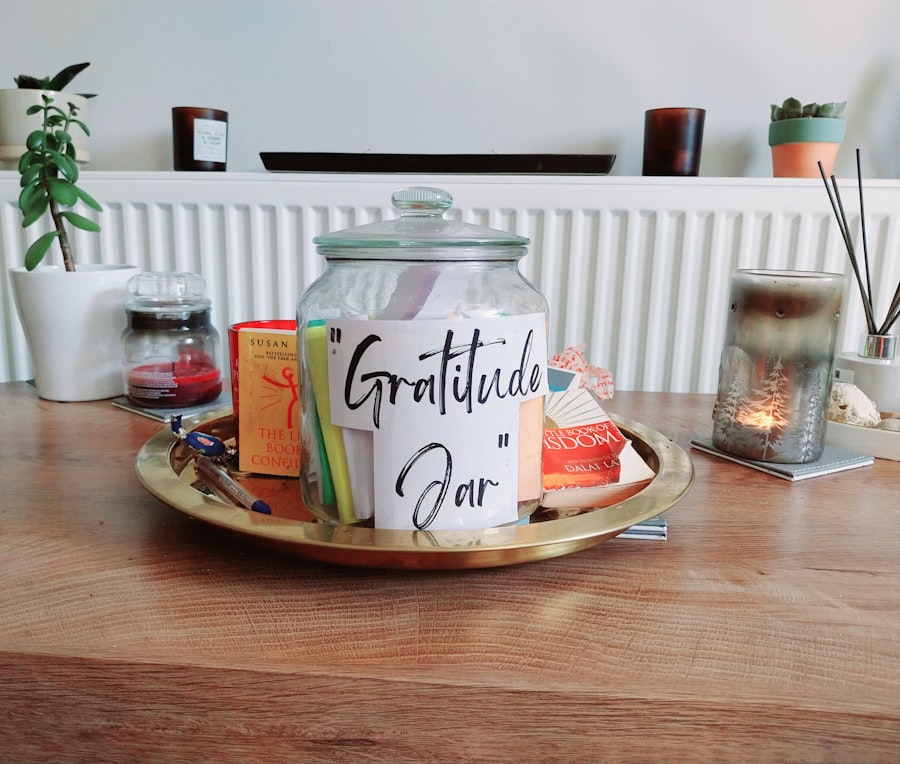
You are now examining how these various applications of gratitude culminate in the establishment or re-establishment of control. The feeling of being beholden, while often subconscious, significantly alters the power dynamic.
Reciprocity as a Command: The Subtle Demand
When you are deeply indebted to someone, their requests, even if phrased as suggestions, can take on the weight of a command. You may feel a heightened sense of urgency or compulsion to comply, even if it goes against your immediate inclinations or interests. The underlying message is clear: “I did something for you, and now it’s your turn.” This subtle demand bypasses direct confrontation and instead utilizes a pre-existing social contract. Your free will is subtly curtailed by the historical ledger of favors exchanged.
Diminished Autonomy: The Erosion of Independent Action
The more you consistently receive favors and express gratitude, the more your autonomy can be subtly eroded. You may find yourself less inclined to make independent decisions, fearing that doing so might somehow disrespect or displease the individual to whom you feel indebted. This can manifest in agreeing to uncomfortable requests, stifling dissenting opinions, or even altering your personal trajectory to align with the expectations of the giver. You are gradually ceding control over your choices.
The Inversion of Power: From Giver to Taker
In extreme cases, the strategic use of gratitude can lead to an inversion of power dynamics. An individual who consistently positions themselves as the benefactor, eliciting gratitude from others, can accumulate significant influence. Those who receive become the perpetual “takers,” subtly dependent on the giver’s continued generosity. The giver, through their calculated acts, becomes the unseen puppeteer, guiding the actions and decisions of those in their debt. You might find yourself in a position where you are compelled to act in ways that benefit the “giver,” even if it doesn’t directly benefit you, simply to maintain the perceived balance of the relationship.
Recognizing the Threads of Manipulation: A Shield Against Subjugation

You must develop a keen awareness to differentiate genuine gratitude from its strategic counterpart. This is your primary defense against unconscious subjugation.
Deconstructing the Motive: Unmasking the Underlying Agenda
When someone extends an unsolicited favor or expresses exaggerated gratitude, you must pause and actively deconstruct their motive. Ask yourself: What does this person gain from this interaction? Is their generosity truly altruistic, or is there a hidden agenda? This critical analysis allows you to see beyond the superficial pleasantries and identify the potential strings attached. You are, in essence, performing a psychological autopsy on the gesture.
Setting Boundaries: Reasserting Your Autonomy
Learning to decline unsolicited favors or to express gratitude without necessarily incurring a social debt is crucial. You must establish clear boundaries, indicating that your actions are driven by your own volition, not by a sense of obligation. This might involve politely declining gifts that feel like a burden, or explicitly stating that your reciprocation is based on genuine desire rather than perceived debt. You are drawing a line in the sand, safeguarding your independent decision-making.
The Power of Non-Reciprocation: A Calculated Resistance
In certain situations, the conscious decision not to reciprocate can be a powerful act of resistance. While it might initially create a degree of social discomfort, it also sends a clear message that you are not easily manipulated by the subtle pressures of obligation. This is not about being ungrateful, but about refusing to be controlled. You are demonstrating that your actions will be driven by your own judgment, not by the strategic maneuvers of others. This can be a challenging path, as it goes against deeply ingrained social norms, but it is a necessary one for reclaiming your agency.
In today’s consumer-driven society, the concept of gratitude is often manipulated to create a sense of obligation, leading individuals to make purchases they might not otherwise consider. This phenomenon is explored in depth in a related article that discusses how marketers leverage emotional triggers to foster a sense of indebtedness among consumers. By understanding the psychological underpinnings of gratitude, businesses can effectively wield it as a tool for purchasing control. For more insights on this topic, you can read the article here.
The Ethical Implications: A Double-Edged Sword
| Metric | Description | Example | Impact on Control |
|---|---|---|---|
| Frequency of Gift Giving | Number of times gratitude is expressed through gifts or favors | Weekly gifts from a manager to an employee | Creates a sense of obligation, increasing compliance |
| Reciprocity Expectation | Degree to which gratitude is expected to be returned | Implied need to support a colleague after receiving help | Leverages social norms to influence behavior |
| Emotional Debt Perception | Level of perceived indebtedness after receiving gratitude | Feeling obliged to agree with a friend’s request after a favor | Increases susceptibility to manipulation |
| Power Imbalance | Difference in status between giver and receiver of gratitude | Boss giving praise to employee | Amplifies control through gratitude-induced loyalty |
| Duration of Influence | Time period over which gratitude affects decision-making | Long-term favors leading to ongoing compliance | Establishes sustained control mechanisms |
You acknowledge that while gratitude as a strategic tool can be highly effective, its ethical implications are profound and worthy of your careful consideration.
The Fine Line Between Influence and Manipulation
The distinction between legitimate influence and unethical manipulation often lies in the intent and transparency of the actor. When you use gratitude to guide someone towards a mutually beneficial outcome, it can be viewed as positive influence. However, when you exploit someone’s inherent desire to reciprocate for your sole gain, without their knowledge or genuine consent, it crosses into the realm of manipulation. You are dealing with a double-edged sword, capable of both social cohesion and individual exploitation.
Long-Term Relationship Impact: The Cost of Control
While short-term gains can be achieved through the strategic deployment of gratitude, its consistent use for manipulative purposes can severely damage long-term relationships. Once others perceive your gratitude as a calculated tactic rather than genuine appreciation, trust erodes, and genuine connection becomes impossible. People will begin to view your gestures with suspicion, leading to a breakdown in communication and an inability to form authentic bonds. You are trading genuine connection for momentary control, a trade that often proves costly in the long run.
Self-Reflection: Your Role as Giver and Receiver
You must constantly engage in self-reflection regarding both your own expressions of gratitude and your responses to it. Are you genuinely grateful, or are you hoping to elicit a specific response? Are you allowing yourself to be controlled by the subtle pressures of social debt? This introspection is critical for maintaining your own ethical compass and for recognizing when you are either being manipulative or are being manipulated. You are navigating a complex social landscape, and self-awareness is your most reliable compass.
In conclusion, you have explored gratitude not as an instinctual outpouring of appreciation, but as a sophisticated mechanism of social control. From the foundational principles of reciprocity to its strategic deployment and the architecture of influence it constructs, you have seen how this powerful emotion can be harnessed to shape behavior and maintain power differentials. By understanding both its utility and its ethical pitfalls, you are better equipped to navigate the intricate web of human interaction, recognizing the subtle threads of manipulation and asserting your own autonomy in a world where even the purest of emotions can be weaponized.
WARNING: Your Empathy Is a Biological Glitch (And They Know It)
FAQs
What does it mean to say gratitude is weaponized?
Weaponizing gratitude refers to the manipulation of someone’s feelings of thankfulness to gain control or influence over their decisions and actions, often in a way that benefits the manipulator rather than the person expressing gratitude.
How can gratitude be used to purchase control in relationships?
Gratitude can be exploited in relationships by creating a sense of obligation or indebtedness, where one party expects compliance or favors in return for past kindnesses, thereby controlling the other’s behavior through emotional leverage.
Is weaponizing gratitude always intentional?
Not necessarily. Sometimes people may unconsciously use gratitude to influence others, but in many cases, it is a deliberate tactic to establish power dynamics or maintain control.
What are some signs that gratitude is being weaponized?
Signs include feeling pressured to reciprocate beyond one’s comfort, experiencing guilt when not complying, or noticing that expressions of thanks are used to justify demands or control decisions.
How can individuals protect themselves from having their gratitude weaponized?
Setting clear boundaries, recognizing when gratitude is being used manipulatively, communicating openly about feelings, and understanding that genuine gratitude should not come with strings attached can help prevent exploitation.