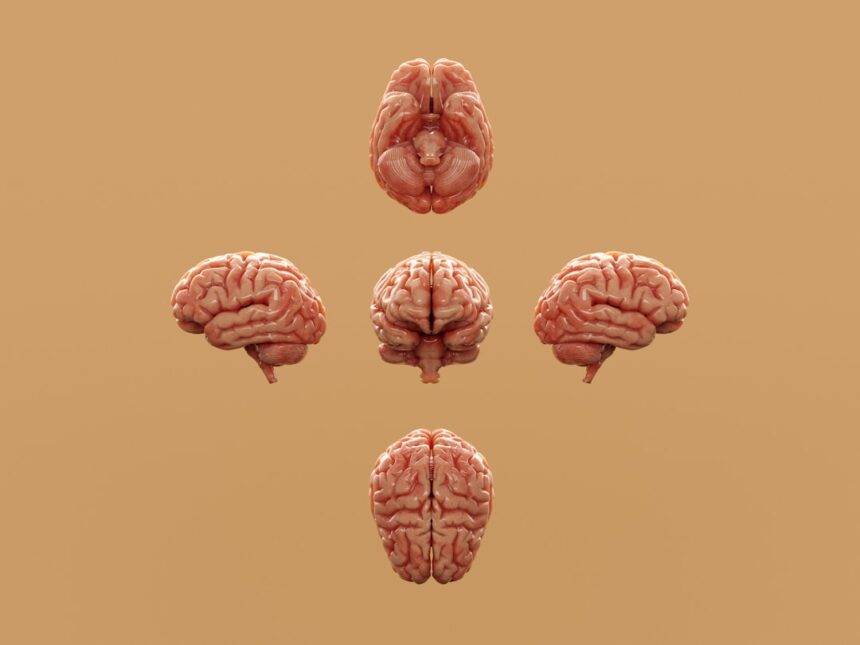
Your brain, a three-pound organ nestled within your skull, is not merely a data processor; it is the architect of your reality. While you interact with the world through your senses, it is your brain that interprets these raw signals, constructing the intricate tapestry of your conscious experience. You are not passively observing reality but actively participating in its creation, a dynamic interplay between external stimuli and internal processing. This article invites you to explore the fascinating mechanisms by which your brain orchestrates this profound illusion.
Your journey into perceiving reality begins with your senses. You possess a remarkable array of sensory organs designed to detect various forms of energy and chemical signals in your environment. These organs act as your primary interface with the external world, but their input is merely the raw material for your brain’s elaborate construction project.
Transduction: The Language of the Brain
Every sensory organ, from your eyes detecting light waves to your ears processing sound vibrations, employs a process called transduction. This is where physical stimuli are converted into electrochemical signals – the universal language of your neurons. Think of it as your brain’s Rosetta Stone, translating the diverse cacophony of the world into a coherent neural symphony. Without transduction, the world would remain an unintelligible blur, an orchestra of sounds and sights with no conductor to bring them into harmony.
Sensory Pathways: The Information Superhighway
Once transduced, these signals embark on a rapid journey along intricate neural pathways. Each sense has dedicated routes, funneling information to specific processing centers in your brain. For instance, visual information travels along the optic nerve to your occipital lobe, while auditory signals journey to your temporal lobe. These pathways are not simply passive conduits; they are selectively filtering and prioritizing information, ensuring that only the most relevant data reaches higher-level processing. You are constantly being bombarded with sensory input, and your brain efficiently manages this deluge, filtering out the constant hum of the air conditioner or the feel of your clothing against your skin, allowing you to focus on what truly matters.
Beyond the Five Senses: Vestibular and Proprioceptive Systems
While you commonly refer to five senses, your brain integrates information from several other crucial systems. Your vestibular system, located in your inner ear, provides you with a sense of balance and spatial orientation. It’s what allows you to walk upright without constantly falling over. Your proprioceptive system, on the other hand, constantly informs your brain about the position and movement of your body parts. Without these often-unconscious senses, your ability to navigate the world and interact with objects would be severely compromised. Imagine trying to walk without knowing where your legs are in space; the world would become a jumbled, disorienting mess.
The perception of reality can often feel distorted, leading individuals to question the authenticity of their experiences. A related article that delves into this phenomenon is available at Unplugged Psych, where it explores the neurological and psychological factors contributing to the sensation of unreality. This insightful piece examines how various brain functions and external influences can alter our perception, making the world seem surreal or dreamlike.
Top-Down Processing: Shaping Your Experience
While your senses provide the foundational bricks of your reality, it is your brain’s top-down processing that molds these bricks into a coherent and meaningful structure. This involves drawing upon your past experiences, expectations, emotions, and existing knowledge to interpret incoming sensory information. You are not a blank slate, and your brain leverages its vast internal library to predict and interpret the world around you.
Expectation Bias: Seeing What You Expect
Your expectations play a profound role in shaping what you perceive. If you anticipate seeing a familiar face in a crowd, your brain is more likely to ‘find’ that face, even if it’s not entirely clear. This phenomenon, known as expectation bias, highlights how your internal models actively influence your sensory interpretation. You are, in essence, constantly hypothesis-testing the world, and your brain is eager to find evidence that confirms its existing theories. This can be both a blessing and a curse; it allows for rapid interpretation but can also lead to misperceptions.
Contextual Influences: The Power of the Surroundings
The context in which you encounter sensory information dramatically alters your perception. A whispered word in a quiet library carries a different meaning and intensity than the same whisper in a bustling marketplace. Your brain uses contextual cues to disambiguate ambiguous stimuli and assign appropriate meaning. Consider an ambiguous image – your brain will often interpret it differently depending on what other objects or scenes surround it, much like recognizing a letter in different fonts because of the surrounding letters that provide context.
Memory’s Role: A Storehouse of Reality
Your memories are not merely dusty archives; they are active architects of your current reality. When you perceive something new, your brain constantly compares it to stored memories, seeking patterns and connections. This allows you to recognize objects, faces, and situations, and to predict future events. Without memory, every moment would be a completely novel experience, and you would be unable to make sense of the world or learn from your past. Your brain continually references its vast database of past experiences to make sense of the present, much like a skilled detective piecing together clues from prior cases.
The Illusion of Objectivity: Why Your Reality is Unique
Despite sharing a common physical world, your individual experience of reality is undeniably unique. This is not a philosophical musing but a neurobiological fact. The intricate interplay of your genetic predispositions, life experiences, cultural background, and current emotional state profoundly shapes the way your brain constructs your personal reality. No two brains are identical, and therefore, no two realities are precisely the same.
Individual Differences in Sensory Sensitivity
What one person perceives as a piercing sound, another might barely register. Some individuals possess a heightened sense of smell, while others have a more nuanced appreciation for color. These individual differences in sensory sensitivity are partly genetic but can also be influenced by experience. You are not simply a universal receiver; your sensory organs have their own unique calibrations.
Cognitive Biases: The Systematic Distortions
Your brain, in its tireless effort to create a coherent reality, often employs cognitive shortcuts known as biases. These biases, while frequently efficient, can systematically distort your perception and judgment. Confirmation bias, where you seek out information that confirms your existing beliefs, is a prime example. The availability heuristic, where you overestimate the likelihood of events that are easily recalled, also influences your worldview. You are not a perfectly rational observer; your brain operates with inherent heuristics and biases that subtly, yet powerfully, steer your interpretation of events.
Emotional Resonance: Coloring Your World
Your emotional state is a powerful lens through which you perceive reality. When you are feeling joyful, the world can appear brighter and more inviting. Conversely, when you are stressed or anxious, even neutral stimuli can be interpreted as threatening. Your amygdala, a region of your brain crucial for processing emotions, plays a significant role in this emotional coloring of your perceptions. Emotion acts like a filter, tinting the incoming sensory data and influencing its interpretation, often without your conscious awareness.
Constructing Consciousness: The Binding Problem and Beyond

One of the most profound mysteries in neuroscience is the “binding problem” – how your brain integrates disparate sensory inputs and cognitive processes into a unified, coherent conscious experience. You don’t perceive separate flickers of light, individual sounds, and distinct tactile sensations; you experience a seamless, integrated reality.
The Role of Attention: Focusing the Spotlight
Attention acts as the spotlight of your consciousness, selectively highlighting certain aspects of your sensory environment while relegating others to the background. You cannot consciously process every single piece of information your senses collect; therefore, your brain employs attentional mechanisms to prioritize and focus your cognitive resources. Without attention, your reality would be an overwhelming cacophony, a jumbled mess of undifferentiated stimuli. This is your brain’s way of managing the overwhelming flood of information, ensuring that you can effectively interact with your chosen focus.
Predictive Coding: Constantly Updating the Model
A prominent theory in neuroscience, predictive coding, suggests that your brain is essentially a prediction machine. It constantly generates hypotheses about the sensory input it expects to receive and then compares these predictions with actual incoming data. When there is a mismatch, your brain updates its internal model of reality. This continuous process of prediction and error correction is fundamental to how you learn, adapt, and accurately perceive your environment. You are not a passive recipient of information; you are an active, predictive agent, constantly refining your internal model of the world.
The Unification of Experience: Where Does “I” Reside?
While specific brain regions are involved in processing different sensory modalities and cognitive functions, the precise neural correlates of unified consciousness remain an active area of research. There isn’t a single “seat of consciousness” in your brain; rather, it appears to emerge from the distributed activity and intricate interplay of various neural networks. This unified sense of “you” experiencing reality is a testament to the brain’s extraordinary integrative capabilities, a grand symphony conducted by billions of neurons.
The phenomenon of the brain making the world feel unreal can be intriguing and perplexing, often leading individuals to seek explanations for their experiences. A related article explores this topic in depth, discussing how factors such as stress, anxiety, and certain neurological conditions can contribute to feelings of detachment from reality. For those interested in understanding this complex issue further, the article can be found here. By examining the underlying mechanisms of perception and consciousness, we can gain valuable insights into why our minds sometimes create a sense of unreality.
The Malleability of Reality: Brain Plasticity and Adaptation
| Metric | Description | Value/Range | Relevance to Feeling Unreal |
|---|---|---|---|
| Neural Connectivity | Degree of communication between brain regions | Variable; reduced in depersonalization | Disrupted connectivity can cause altered perception of reality |
| Prefrontal Cortex Activity | Level of activity in the prefrontal cortex | Often increased during derealization episodes | Heightened activity may suppress emotional responses, making the world feel unreal |
| Temporal Lobe Function | Processing of sensory input and memory integration | Altered in some dissociative states | Impairment can distort perception of time and environment |
| Neurotransmitter Levels | Balance of serotonin, dopamine, and glutamate | Imbalances linked to derealization symptoms | Neurochemical disruption affects sensory processing and emotional regulation |
| Stress Hormone (Cortisol) Levels | Concentration of cortisol in the bloodstream | Elevated during acute stress | High cortisol can trigger dissociative experiences, making reality feel unreal |
| Perceptual Processing Speed | Speed at which sensory information is processed | Slowed in some individuals experiencing derealization | Delayed processing can cause a sense of detachment from surroundings |
Your brain is not a static organ; it is remarkably dynamic and adaptable. This phenomenon, known as neuroplasticity, means that your brain’s structure and function can change throughout your life in response to experience, learning, and environmental demands. This inherent flexibility underscores the fact that your reality is not fixed but is constantly being reshaped by your interactions with the world.
Learning and Memory: Rewiring Your Brain
Every new skill you acquire, every piece of information you learn, and every memory you form involves changes in the synaptic connections between your neurons. These changes strengthen or weaken neural pathways, effectively rewiring your brain and altering how you perceive and interact with the world. You are literally reshaping your brain with every experience, building new neural pathways that influence the lens through which you view the world.
Sensory Compensation: Adapting to Loss
In cases of sensory loss, such as blindness or deafness, your brain demonstrates remarkable compensatory abilities. Other senses may become heightened, and brain regions typically dedicated to the lost sense may be re-purposed for new functions. This cross-modal plasticity highlights your brain’s profound capacity for adaptation, demonstrating its ability to reconstruct a meaningful reality even in the face of significant sensory deprivation. You are not simply limited by your sensory organs; your brain can creatively re-allocate resources to maintain a coherent and functional experience of the world.
Therapy and Rehabilitation: Reshaping Perception
The principles of neuroplasticity are fundamental to various therapeutic interventions. Cognitive Behavioral Therapy (CBT), for example, helps individuals restructure their thought patterns, thereby altering their emotional responses and perceptions of challenging situations. Rehabilitation programs for stroke victims utilize neuroplasticity to help damaged brain areas recover function or re-route neural pathways to compensate for lost abilities. Your brain is not a fixed machine; it is a continuously evolving landscape, capable of profound transformation and healing.
Your brain, then, is not merely a passive recipient of external information, but an active, creative constructor of your personal reality. It filters, interprets, anticipates, and integrates, weaving together the raw threads of sensory data with the rich tapestry of your memories, emotions, and expectations. Understanding these intricate mechanisms not only demystifies the subjective nature of human experience but also empowers you to appreciate the awe-inspiring complexity of the organ that defines your very existence.
WARNING: Your Empathy Is a Biological Glitch (And They Know It)
FAQs
Why does the brain sometimes make the world feel unreal?
The brain can make the world feel unreal due to disruptions in how it processes sensory information and integrates it with memory and perception. This phenomenon, often linked to conditions like depersonalization or derealization, occurs when the brain’s normal filtering and interpretation mechanisms are altered.
What are common causes of feeling like the world is unreal?
Common causes include stress, anxiety, trauma, sleep deprivation, certain medications, and neurological conditions. These factors can affect brain function and lead to sensations of detachment or unreality.
Is feeling like the world is unreal a sign of a mental health disorder?
It can be. Persistent feelings of unreality are symptoms of disorders such as depersonalization-derealization disorder, anxiety disorders, and sometimes depression. However, occasional episodes can also occur in healthy individuals under extreme stress or fatigue.
How does the brain’s perception process contribute to the sensation of unreality?
The brain constructs our experience of reality by integrating sensory input with past experiences and expectations. When this integration is disrupted, the brain may fail to create a coherent sense of the environment, leading to feelings that the world is strange or unreal.
Can the sensation of the world feeling unreal be treated or managed?
Yes. Treatment often involves addressing underlying causes such as anxiety or trauma through therapy, medication, stress management, and lifestyle changes. Cognitive-behavioral therapy (CBT) and grounding techniques can help individuals regain a sense of reality.