
You’ve encountered them. The charismatic individual who effortlessly draws you in, yet leaves you feeling drained and devalued. You might even suspect ulterior motives, a subtle manipulation you can’t quite pinpoint. This isn’t just about charm; it’s about a highly sophisticated, often unconscious, mastery of social dynamics. You’re observing what some researchers and thinkers are beginning to conceptualize as “The Narcissist’s Mirror Neuron Hack.” This isn’t a literal neurological intrusion, but a compelling metaphor to understand how individuals with narcissistic traits exploit the very mechanisms that bind us together as social beings.
You, like every other human, possess a remarkable neurological system designed for social connection. Your brain is a highly tuned instrument for understanding and responding to the world around you. At the heart of this system are mirror neurons, a fascinating class of brain cells that fire not only when you perform an action, but also when you observe someone else performing the same action. Think of it as your brain’s internal simulator, allowing you to feel what another person is experiencing.
The Foundation of Social Cognition
From a young age, you begin to develop your capacity for empathy, an ability rooted in these mirror mechanisms. When you see someone smile, your mirror neurons for smiling activate, contributing to your understanding of their joy. When you witness pain, your brain registers a facsimile of that pain, fostering compassion. This is the bedrock of your social world, enabling cooperation, understanding, and the formation of meaningful bonds. It’s what allows you to anticipate another’s needs, to comfort a friend, or to commiserate with a stranger.
Empathy as a Social GPS
Consider your empathy as a sophisticated GPS system for navigating social landscapes. It helps you understand emotional cues, predict behavior, and determine appropriate responses. It’s a vital tool for building trust and maintaining healthy relationships. You rely on it constantly and often unconsciously to make sense of the complex interactions that make up your daily life. The narcissist, however, doesn’t use this GPS in the same way you do. They see your empathy as a potential route, not to connection, but to control.
Narcissists have a unique ability to manipulate the emotions and perceptions of those around them, often leveraging our mirror neurons to create a sense of connection and empathy that is ultimately deceptive. This phenomenon is explored in depth in the article “How Narcissists Hack Your Mirror Neurons” on Unplugged Psych, which delves into the psychological mechanisms at play and offers insights into recognizing and protecting oneself from such manipulative behaviors. For more information, you can read the article here: How Narcissists Hack Your Mirror Neurons.
The Narcissist’s Exploitation of Your Mirror System
Now, imagine this intricate system within you being subtly, yet powerfully, manipulated. The narcissist isn’t necessarily aware of the neurological specifics, but their behaviors demonstrate an intuitive understanding of how to trigger your empathic responses for their own gain. They are, in essence, adept at finding the “backdoor” into your emotional processing.
Mimicry as a Preamble to Control
You’ll often notice that narcissists are excellent mimics, particularly in the early stages of a relationship. They mirror your body language, your vocal inflections, and even your interests. This isn’t genuine connection; it’s a strategically deployed tactic. When someone mirrors you, your mirror neurons interpret this as a sign of rapport, of shared understanding. You feel a sense of connection, a subconscious comfort. Your brain registers this mimicry as familiarity, establishing a foundation of trust that hasn’t truly been earned. It’s like a digital artist creating a perfect replica – it looks genuine, but lacks the original’s depth and authenticity.
Emotional Contagion as a Weapon
Beyond simple mimicry, narcissists are masters of emotional contagion. This is the phenomenon where you unconsciously “catch” the emotions of those around you. If you spend time with a joyful person, you tend to feel more joyful yourself. If you’re around a stressed individual, you might start to feel stressed too. The narcissist leverages this by projecting specific emotions designed to elicit a desired response from you. They might exhibit exaggerated distress, for instance, to trigger your concern and protective instincts. Your mirror neurons fire, you feel their projected distress, and you respond by trying to alleviate it – often at your own expense. It’s like a puppeteer pulling strings, with your emotional responses as the marionette.
The Weaponization of Vulnerability
You might find yourself revealing personal weaknesses or past traumas to a narcissist, only to have these vulnerabilities later used against you. This isn’t accidental. They often create an environment that encourages you to open up, by feigning profound empathy themselves or by sharing carefully curated “vulnerabilities” that are designed to build false intimacy. Your mirror neurons, once again, interpret this as a sign of trust and mutual sharing. You feel a reciprocal urge to reveal yourself, believing you’re building a deeper bond. This becomes a blueprint for later manipulation, as your disclosures provide them with leverage.
The Empathy Deficit in the Narcissistic Brain

While you are constantly processing and responding to emotional cues, the narcissist’s internal experience is fundamentally different. Their “mirror neuron hack” is effective precisely because their empathic processing is often impaired or significantly different from yours.
A Lack of Affective Empathy
You possess both cognitive empathy (understanding what another person is thinking or feeling) and affective empathy (feeling what another person is feeling). Narcissists often have a relatively intact cognitive empathy; they can understand what you’re experiencing. This allows them to predict your reactions and plan their manipulations. However, their affective empathy is often profoundly lacking. They don’t genuinely feel your pain, your joy, or your distress. It’s like seeing a beautifully painted portrait and intellectually appreciating its artistry, but without feeling any emotional resonance with the subject.
The Self-Serving Filter
Everything a narcissist processes is filtered through a prism of self-interest. Where your mirror neurons connect you to others, theirs are primarily used to gauge how others can serve their needs. They observe your reactions not to share your experience, but to evaluate how your reactions can be leveraged to enhance their self-esteem, gain resources, or assert control. It’s akin to a poker player observing tells – they’re not interested in your emotions for their own sake, but for the advantage they provide in the game.
Brain Correlates and Research Insights
Modern neuroscience is beginning to shed light on these differences. Studies utilizing fMRI scans have shown that individuals with narcissistic tendencies exhibit reduced activity in brain regions associated with empathy, particularly in the anterior insula and the anterior cingulate cortex, when observing others in distress. These are the very areas that light up when your mirror neurons are engaged in processing and sharing emotions. While research is ongoing and complex, these findings provide compelling biological correlates to what you observe behaviorally.
Building Your Emotional Firewall

Understanding “The Narcissist’s Mirror Neuron Hack” empowers you to build defenses against their manipulative tactics. You can’t change their internal wiring, but you can change your response to it.
Recognizing the Red Flags
You must become adept at identifying the early warning signs. Does this person exhibit an exaggerated charm that feels almost too perfect? Do they mirror your interests with uncanny precision, creating an instant, intense bond that feels rushed? Do they demand excessive attention and admiration? Are their vulnerabilities presented in a way that feels designed to elicit your sympathy rather than genuine connection? These are all indicators that your mirror neuron system might be under attack. It’s like spotting the glint of a tool-kit in a magician’s hand – once you know what to look for, the trick loses some of its power.
Disengaging From Emotional Contagion
When a narcissist attempts to trigger your emotional contagion, you need to consciously disengage. If they exhibit intense anger, recognize that this anger is not genuinely about you, but a tactic to control you. Do not allow yourself to be drawn into their emotional storm. Instead of mirroring their rage, maintain your emotional equilibrium. Picture yourself behind a shield, allowing their emotional projections to bounce off without penetrating your inner state. This requires conscious effort, but it’s a vital step in reclaiming your emotional autonomy.
Prioritizing Your Own Needs and Boundaries
Narcissists thrive on your self-sacrifice. They expect you to prioritize their needs above your own, and your empathic nature often makes you susceptible to this. To counteract this, you must re-establish firm boundaries. Learn to say “no” without guilt. Prioritize your well-being. This isn’t selfish; it’s a form of self-preservation. When you consistently enforce your boundaries, you disrupt the narcissist’s ability to exploit your empathic responses. You are effectively closing the “backdoor” they’ve used to access your emotional resources.
Narcissists have a unique ability to manipulate the emotions and reactions of those around them, often leveraging the power of mirror neurons to create a sense of connection and empathy that is ultimately self-serving. This fascinating phenomenon is explored in greater detail in a related article that delves into the psychological mechanisms at play. If you’re interested in understanding how these dynamics unfold, you can read more about it here. By recognizing these tactics, individuals can better protect themselves from the emotional manipulation that narcissists often employ.
Reclaiming Your Empathic Power
| Metric | Description | Impact on Mirror Neurons | Example Behavior |
|---|---|---|---|
| Emotional Mimicry | Narcissists imitate others’ emotions to create false empathy | Activates mirror neurons to elicit trust and emotional connection | Feigning sadness to gain sympathy |
| Facial Expression Manipulation | Deliberate use of facial cues to influence others’ feelings | Triggers mirror neurons to mirror expressions, fostering rapport | Smiling to disarm or charm |
| Body Language Synchronization | Matching posture and gestures to build unconscious rapport | Engages mirror neurons to create a sense of similarity and trust | Mirroring hand movements during conversation |
| Emotional Contagion | Spreading specific emotions to manipulate mood | Activates mirror neurons causing others to feel the same emotion | Projecting anger to intimidate or control |
| Selective Attention | Focusing on cues that maximize emotional influence | Enhances mirror neuron response to targeted emotional signals | Highlighting vulnerability to elicit care |
Your empathy is a superpower, a profoundly valuable human trait. The goal is not to eradicate it, but to learn to wield it wisely and protect it from those who would exploit it.
Cultivating Self-Awareness
You must develop a deep understanding of your own emotional triggers and vulnerabilities. When do you tend to over-empathize? What situations make you particularly susceptible to manipulation? By understanding your own patterns, you can anticipate potential threats and proactively guard against them. This is an ongoing process of introspection and self-discovery. It’s like learning the weak spots in your own emotional armor, so you can reinforce them.
Seeking Authentic Connections
Surround yourself with individuals who reciprocate your empathy, who genuinely care about your well-being, and who engage in honest, two-way emotional exchange. These are the relationships that nourish your spirit and validate your empathic nature. By engaging in healthy, authentic connections, you strengthen your capacity for genuine empathy and demonstrate to yourself the stark contrast between true connection and narcissistic manipulation. You’re essentially recalibrating your social GPS to seek out healthy routes, rather than falling for mirages.
The Long Walk Towards Healing
If you’ve been in a relationship with a narcissist, you know the profound impact it can have. Healing involves acknowledging the manipulation, grieving the loss of what you thought the relationship was, and rebuilding your sense of self. This is a journey that often requires professional support, but it is a necessary one. You have the power to reclaim your narrative, to understand that their actions were not a reflection of your worth, but a manifestation of their own dysfunction. By understanding “The Narcissist’s Mirror Neuron Hack,” you’re not just gaining knowledge; you’re gaining the power to protect your most valuable asset: your empathic heart. Your mirror neurons, once a vulnerability, can become your early warning system, guiding you towards authentic connection and away from destructive exploitation.
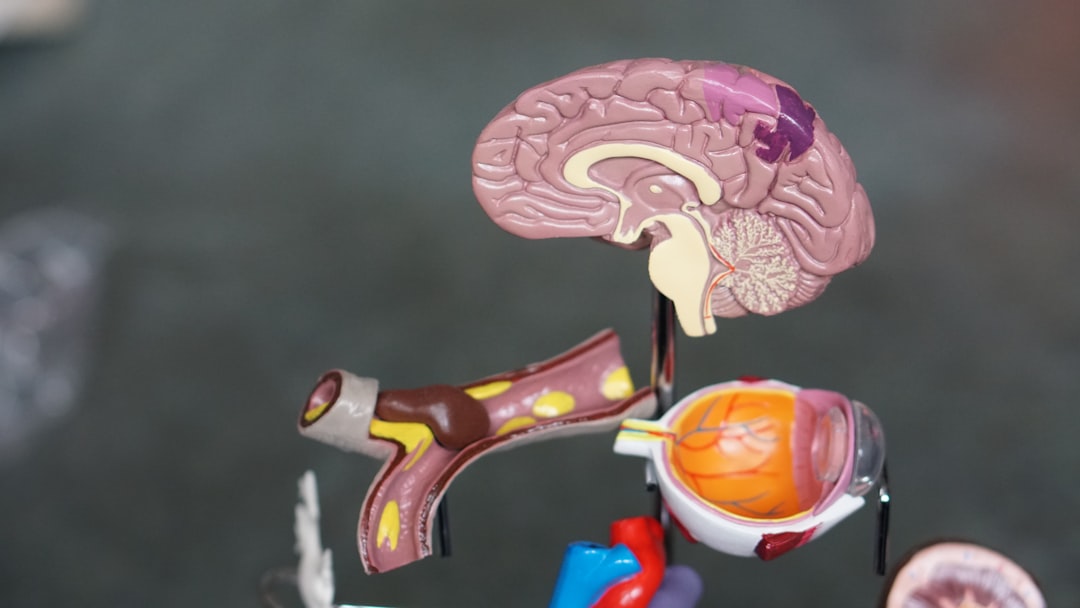
WARNING: Your Empathy Is a Biological Glitch (And They Know It)
FAQs
What are mirror neurons and how do they function?
Mirror neurons are specialized brain cells that activate both when an individual performs an action and when they observe someone else performing the same action. They play a key role in empathy, social understanding, and learning by imitation.
How do narcissists exploit mirror neurons?
Narcissists can manipulate others by triggering their mirror neurons to evoke empathy, trust, or emotional resonance. By mirroring emotions or behaviors, they create a false sense of connection, making it easier to influence or control their targets.
Can awareness of mirror neuron manipulation help protect against narcissistic behavior?
Yes, understanding how mirror neurons work and recognizing when someone is deliberately mirroring your emotions or actions can help you maintain emotional boundaries and reduce susceptibility to manipulation by narcissists.
Are mirror neurons involved in all social interactions?
Mirror neurons are active in many social interactions, especially those involving empathy and imitation. However, their activity varies depending on context, individual differences, and the nature of the interaction.
Is it possible to train or strengthen mirror neuron responses?
While mirror neuron activity is largely automatic, engaging in practices like mindfulness, empathy training, and social skills development can enhance your ability to understand and respond to others’ emotions effectively.