
You are embarking on a journey into the intricate world of human interaction, a landscape where your ability to anticipate the actions and reactions of others is not merely a social nicety, but a fundamental survival mechanism. This journey reveals how empathy, often perceived as a soft skill, is in fact a robust cognitive tool, a powerful predictor that shapes not only your individual relationships but also the very fabric of society. You will dissect the mechanisms through which you interpret the emotional and cognitive states of others, allowing you to navigate complex social scenarios with greater foresight and effectiveness. Think of yourself as a sophisticated social scientist, and empathy as your primary instrument for data acquisition and analysis.
You might typically associate empathy with feeling what another person feels – a shared emotional experience. However, its predictive power extends far beyond this. You are not merely mirroring emotions; you are actively constructing a model of another individual’s internal world. This model, built from observational cues, past experiences, and your own understanding of human behavior, allows you to project their likely future actions and responses. Consider it a mental simulation, where you run various scenarios in your mind, factoring in the other person’s probable motivations, beliefs, and emotional state. This simulation is not infallible, but it provides you with a significant advantage in social interactions.
The Spectrum of Empathy
It is crucial for you to recognize that empathy is not a monolithic construct. It exists along a spectrum, encompassing various dimensions that contribute to your predictive capabilities.
Cognitive Empathy: Your Mental Modeler
You employ cognitive empathy when you are able to understand another person’s perspective, even if you do not necessarily share their feelings. This is akin to a rational analysis, where you intellectually grasp their beliefs, intentions, and thought processes. For example, you might understand why a colleague is upset about a project deadline, even if you are not personally invested in the project. This intellectual understanding allows you to predict their likely actions – perhaps they will request an extension, or express frustration in a meeting. Your ability to mentally step into their shoes, without necessarily feeling their discomfort, is a cornerstone of your social prediction.
Emotional Empathy: Your Affective Resonator
Emotional empathy, often referred to as affective empathy, is where you genuinely feel what another person is feeling. This can manifest as empathic concern, where you feel compassion or concern for their well-being, or as personal distress, where you become overwhelmed by their emotions. While emotional empathy is a powerful motivator for prosocial behavior, its direct predictive utility lies in alerting you to their immediate emotional state and the likely behavioral consequences that follow. If you sense another person’s rising anger, you can predict potential confrontation or withdrawal, depending on their personality and the context. You are essentially acting as an emotional barometer, sensing shifts in the social atmosphere.
Somatic Empathy: Your Bodily Reflection
A more subtle, yet equally important, aspect is somatic empathy. This involves experiencing a physical reaction to another person’s emotions. You might feel a pang in your stomach when you witness someone in pain, or a subtle mirroring of their facial expressions or posture. While not always consciously recognized, these physiological responses provide you with an intuitive understanding of their state. Your body is acting as a receiving antenna, picking up non-verbal cues and translating them into a bodily understanding, further refining your predictive model.
Empathy has emerged as a crucial social prediction tool, allowing individuals to better understand and anticipate the emotions and reactions of others. A related article that explores this concept in depth can be found at Unplugged Psych, where the author discusses how empathy not only enhances interpersonal relationships but also plays a significant role in social dynamics and decision-making processes. By fostering a deeper connection with others, empathy can lead to more informed and compassionate choices in various social contexts.
The Cognitive Architecture of Social Prediction
Your brain is a marvel of evolutionary engineering, equipped with sophisticated mechanisms that facilitate empathic prediction. You possess dedicated neural circuitry that allows you to process social information rapidly and efficiently.
Mirror Neuron System: Your Internal Simulator
Consider the mirror neuron system as a fundamental component of your predictive apparatus. These specialized neurons fire both when you perform an action and when you observe someone else performing the same action. This creates an internal simulation of the observed action within your own motor system. Beyond simple actions, research suggests that mirror neurons are also involved in understanding intentions and emotions. When you see someone smile, your mirror neurons associated with smiling activate, providing you with a direct, albeit unconscious, understanding of their joy. This internal simulation allows you to directly “feel” what it is like to be them, offering a rapid, intuitive prediction of their next move. You are, in essence, running a ‘mini-me’ simulation within your own neural network.
Theory of Mind: Your Mental Calendar
Theory of Mind (ToM), often called mentalizing, is your ability to attribute mental states – beliefs, desires, intentions, and emotions – to yourself and others. This is a higher-order cognitive process that allows you to understand that others have minds distinct from your own, and that their actions are driven by their internal states. When you engage your Theory of Mind, you are essentially creating a mental calendar of another person’s potential thoughts and feelings, allowing you to anticipate their reactions based on their perceived mental landscape. For instance, if you know a friend believes they are running late, you can predict their likely actions: rushing, apologizing, or perhaps contacting you to inform you of the delay. Your ability to infer their internal world is a powerful predictive tool.
Contextual Integration: Your Environmental Awareness
Empathy does not operate in a vacuum. Your predictions are heavily influenced by the social and environmental context. You integrate information about the situation, the relationship dynamic, and cultural norms into your empathic estimations. For example, observing a person crying at a funeral elicits a different empathic response and predictive outcome than observing a person crying after winning a lottery. Your ability to integrate these contextual cues significantly enhances the accuracy of your social predictions. You are not just processing individual data points; you are assembling a rich, multi-layered picture.
Empathy in Action: Real-World Applications of Predictive Power

The predictive nature of empathy plays a crucial role in a multitude of your daily interactions, from the trivial to the profound.
Navigating Social Dynamics: Your Compass for Interaction
In everyday social interactions, empathy acts as your internal compass. When you enter a new group, you are constantly assessing the emotional climate, identifying dominant personalities, and anticipating potential conflicts or alliances. Your empathic predictions guide your conversational gambits, helping you avoid social faux pas and foster positive relationships. For example, you might observe a colleague intensely focused on a task and predict that an interruption would be unwelcome, leading you to defer your question. Without this predictive capacity, social interactions would be a chaotic and unpredictable minefield.
Conflict Resolution: Your Diplomatic Toolkit
In situations of conflict, your empathic abilities are indispensable. By understanding the underlying emotions and motivations of the parties involved, you can predict their potential reactions to different interventions. This allows you to tailor your approach, fostering understanding and de-escalation. If you can empathize with the frustration of one party, you can predict their resistance to a purely rational argument and instead focus on validating their feelings. Your empathic lens allows you to anticipate roadblocks and strategize more effective routes to resolution.
Leadership and Teamwork: Your Orchestral Score
Effective leaders and team members consistently leverage empathy for predictive advantage. By understanding the strengths, weaknesses, and emotional states of their team members, leaders can anticipate individual contributions, potential bottlenecks, and motivational issues. For instance, a leader who senses a team member’s burnout can proactively offer support or redistribute workload, preventing a decline in productivity and morale. In a team setting, your empathic understanding of your colleagues allows you to predict their needs, offer timely assistance, and collectively achieve shared goals. You are essentially conducting an orchestra, anticipating notes and ensuring harmony.
The Dark Side of Prediction: When Empathy Fails or is Misused

While empathy is overwhelmingly beneficial, it’s essential for you to acknowledge its potential limitations and vulnerabilities. Like any powerful tool, it can be misapplied or simply fail to provide accurate predictions.
Empathic Overload: Your Sensory Overwhelm
Sometimes, your empathic capacity can be a burden. Continual exposure to intense emotional distress can lead to empathic overload, where you become overwhelmed by the emotions of others. This can hinder your ability to make clear predictions, as your own emotional state becomes too intertwined with theirs. When your internal simulator is flooded with data, it becomes difficult to process and interpret effectively. This is why certain professions, such as healthcare and social work, require robust coping mechanisms to prevent burnout.
Misinterpretation and Bias: Your Distorted Lens
Your empathic predictions are not immune to cognitive biases and misinterpretations. You might project your own feelings or beliefs onto others, leading to inaccurate predictions. Cultural differences can also contribute to misinterpretations, as emotional expressions and social cues are not universally understood. For example, a gesture that signifies agreement in one culture might signify disagreement in another. Your past experiences and prejudices can act as a distorted lens, clouding your predictive accuracy.
Empathy as a Tool for Manipulation: Your Vulnerability
A disturbing aspect of empathic prediction is its potential for misuse. Individuals with a high degree of cognitive empathy but a lack of emotional empathy (often associated with psychopathy or narcissism) can use their understanding of others’ vulnerabilities and motivations to manipulate them. They can accurately predict reactions and exploit weaknesses for personal gain. This highlights that while empathy provides predictive power, its ethical application depends on your underlying moral compass. The knife that carves a masterpiece can also inflict harm; similarly, empathic insight can be wielded for good or ill.
Empathy plays a crucial role in understanding social dynamics and predicting behaviors in various contexts. For those interested in exploring this concept further, a related article discusses how empathy can serve as a powerful social prediction tool, shedding light on its implications in everyday interactions. You can read more about it in this insightful piece on Unplugged Psychology, which delves into the ways empathy influences our perceptions and decisions in social settings.
Cultivating Your Predictive Empathic Abilities
| Metric | Description | Measurement Method | Relevance to Empathy as a Social Prediction Tool | Example Data |
|---|---|---|---|---|
| Empathic Accuracy | Ability to accurately infer others’ thoughts and feelings | Performance on perspective-taking tasks and emotion recognition tests | Higher empathic accuracy improves prediction of social behavior and intentions | 75% correct in emotion recognition tasks |
| Emotional Contagion | Degree to which one automatically mirrors others’ emotions | Physiological measures (e.g., heart rate, skin conductance) during social interaction | Facilitates rapid social prediction by aligning emotional states | Increased heart rate by 10% when exposed to others’ distress |
| Theory of Mind (ToM) Score | Capacity to understand others’ mental states | Standardized ToM tests (e.g., false-belief tasks) | Critical for predicting intentions and future actions in social contexts | 85% accuracy on false-belief tasks |
| Social Prediction Accuracy | Success rate in forecasting others’ behavior in social scenarios | Behavioral experiments involving social dilemmas or cooperation games | Direct measure of empathy’s effectiveness as a prediction tool | 70% correct predictions in trust game outcomes |
| Empathy Quotient (EQ) | Self-reported measure of empathy traits | Questionnaire assessing cognitive and affective empathy | Correlates with ability to predict social outcomes | Mean score: 42 out of 80 |
You are not simply born with a fixed level of empathic prediction; it is a skill that you can cultivate and refine throughout your life.
Active Listening: Your Attentive Ear
One of the most fundamental ways to enhance your empathic prediction is through active listening. This involves paying full attention to what another person is saying, both verbally and non-verbally, without formulating your own response or judgment. By truly hearing and observing, you gather crucial data points that feed your predictive model. You are not just waiting for your turn to speak; you are actively absorbing information, much like a detective piecing together clues.
Perspective-Taking Exercises: Your Mental Rehearsal
Deliberately engaging in perspective-taking exercises can significantly boost your cognitive empathy. Try to consciously imagine what it would be like to be in another person’s situation, considering their background, beliefs, and current challenges. Read fiction, watch diverse documentaries, or engage in conversations with people from different walks of life. These mental rehearsals expand your understanding of human experience and refine your ability to predict varied responses. You are essentially expanding your mental database of human motivations and behaviors.
Emotional Regulation: Your Internal Stabilizer
To avoid empathic overload and make clear predictions, you must develop strong emotional regulation skills. This involves recognizing and managing your own emotions so that you can remain objective when interpreting the emotional states of others. Techniques such as mindfulness, deep breathing, and self-reflection can help you maintain emotional equilibrium, ensuring your predictive faculties are not clouded by your own affect. You are ensuring your instrument is finely tuned and not prone to internal interference.
Seek and Provide Feedback: Your Reality Check
Finally, actively seek feedback on your social predictions. Did your interpretation of a situation align with the reality of what unfolded? Did your understanding of someone’s feelings prove accurate? Learn from your missteps and adjust your internal models accordingly. Similarly, provide constructive feedback to others, helping them refine their empathic abilities. This iterative process of prediction, observation, and adjustment is crucial for continuous improvement. You are not only testing your hypotheses but also refining your methodologies.
In conclusion, you have explored empathy not as a mere feeling, but as a sophisticated cognitive apparatus, a key to unlock the secrets of social prediction. From the intricate dance of mirror neurons to the higher-order reasoning of Theory of Mind, your brain is wired for this anticipatory prowess. You have seen how this predictive insight underpins successful social navigation, conflict resolution, and effective leadership. While acknowledging its potential pitfalls, you are now equipped with an understanding of how to cultivate and deploy this invaluable skill. Your journey into the intricate world of human interaction is continuous, and with empathy as your guide, you are better prepared to anticipate, understand, and shape the social landscape around you.
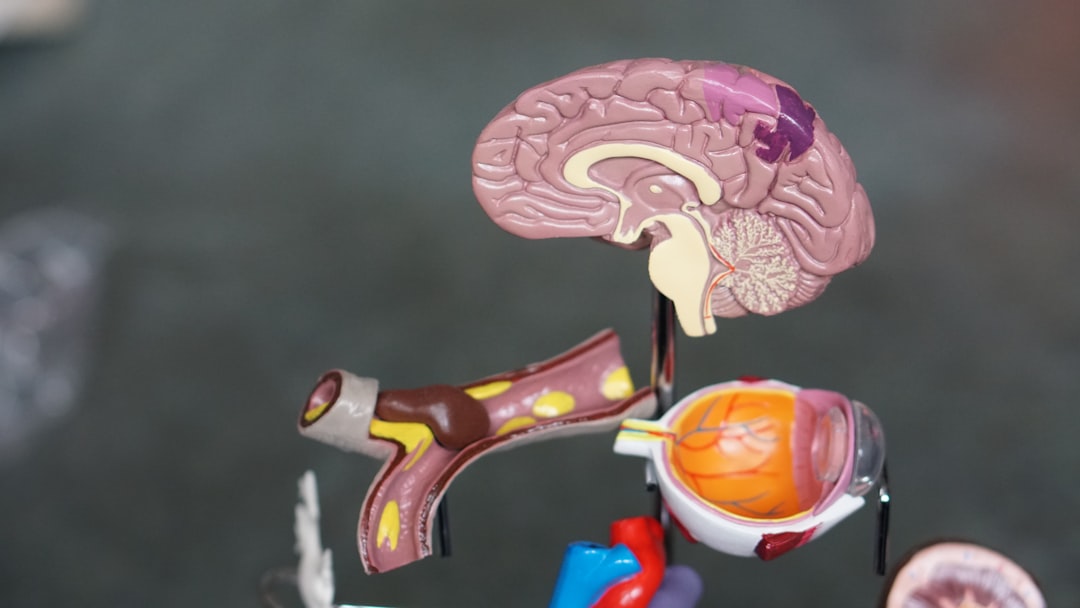
WARNING: Your Empathy Is a Biological Glitch (And They Know It)
FAQs
What is empathy as a social prediction tool?
Empathy as a social prediction tool refers to the ability to understand and share the feelings of others in order to anticipate their behaviors, intentions, and reactions in social situations.
How does empathy help in predicting social behavior?
Empathy allows individuals to mentally simulate others’ perspectives and emotions, which helps in forecasting how they might respond or act in various social contexts.
Is empathy an innate ability or can it be developed?
While some aspects of empathy are innate, it is largely a skill that can be developed and enhanced through practice, social experiences, and learning.
What role does empathy play in effective communication?
Empathy improves communication by enabling individuals to better understand others’ feelings and viewpoints, leading to more meaningful and cooperative interactions.
Can empathy be measured or assessed scientifically?
Yes, empathy can be measured using psychological assessments, questionnaires, and neuroscientific methods that evaluate emotional recognition, perspective-taking, and related brain activity.