
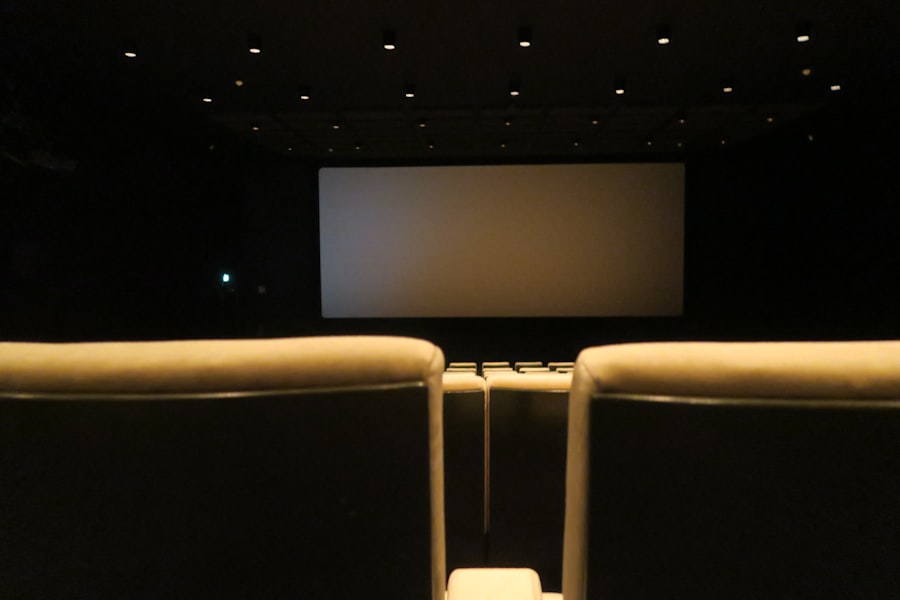
You find yourself in a peculiar theater, the only audience member. The screen, vast and shimmering, displays a familiar landscape: your own life. It’s a surreal sensation, akin to being both the protagonist of a grand epic and a detached observer, privy to every triumphant moment and every quiet tremor. This article explores that disorienting, yet strangely illuminating, experience of watching your own life unfold, not as a participant, but as a spectator.
You are suddenly granted access to the projection booth of your own existence. The reels, spooling with astonishing speed, are not fictional narratives but the tangible evidence of your days, your choices, your joys, and your regrets. It’s an intimate and often startling perspective, forcing you to confront the raw footage of your being.
The Blur of the Everyday
Initially, the film might seem to be a chaotic montage of mundane happenings. The rush to catch a train, the automatic preparation of a morning coffee, the repetitive rhythm of your workday – these scenes flicker past with a dizzying pace. You recognize them, of course, but as a viewer, you can also see the overarching patterns, the recurring motifs that weave through the fabric of your daily existence. It’s as if you’re seeing the forest where you were once lost among the trees.
The Framing of Memory
Your personal film is not a continuous, unedited stream. Memory, that fickle editor, has already begun its work. Certain scenes are crisply rendered, saturated with detail and emotion, while others are faded, their edges softened, their significance diminished. You realize that what you perceive as your life’s story is already a curated selection, a particular edit of reality. The moments that resonate most strongly, the ones that seem to anchor your narrative, are often those where stakes were high, emotions were raw, or a significant lesson was learned.
The Director’s Cut
You begin to question who is truly directing this film. Is it an unseen hand, dictating the plot? Or are you, the viewer, simultaneously the director, choosing which shots to linger on, which scenes to zoom in on, and which to fast-forward? This dual role of actor and audience, participant and observer, is the crux of this surreal cinematic experience. The more you watch, the more you realize the agency you possess, the power to reframe, to re-contextualize, and even, in a metaphorical sense, to edit future scenes.
If you’ve ever found yourself wondering why you feel like you are watching a movie instead of experiencing life in a conventional way, you might find insights in the article available at Unplugged Psych. This article explores the phenomenon of derealization and depersonalization, which can lead to a sense of detachment from reality, making everyday experiences feel surreal or cinematic. Understanding these feelings can help you navigate your emotions and enhance your connection to the world around you.
The Soundtrack of Your Existence
Every film has a soundtrack, and yours is no different. It’s a rich tapestry of sounds, from the subtle whispers of doubt to the triumphant swells of accomplishment. As you watch, you can isolate these sonic elements, appreciating their impact on the narrative.
The Underscore of Emotion
Beneath the visual narrative, there’s a constant hum of emotion. The nervous flutter of anticipation before a daunting task, the quiet warmth of connection with loved ones, the sharp pang of disappointment – these are the emotional undertones that color each frame. As a spectator, you can dissect these feelings, understanding their genesis and their impact, much like a composer analyzes the emotional arc of a symphony. It allows for a deeper understanding of why certain scenes hold such sway over your inner world.
The Dialogue with Self
A significant portion of your film’s soundtrack is the internal dialogue, the ceaseless stream of thoughts that accompany your actions. As you watch, you can hear these words, sometimes critical, sometimes encouraging, often self-deprecating. This is where the surreal often intensifies, as you witness the internal monologues that shaped your external behaviors. You might find yourself wincing at harsh self-judgments or feeling a surge of pride at moments of self-compassion.
The Echoes of Past Performances
The soundtrack also carries the echoes of past interactions, the voices of people who have shaped your journey. Laughter of friends, the stern advice of a mentor, the gentle murmur of a parent – these voices interweave, creating a complex auditory landscape. You can revisit these conversations, not just recalling the words, but feeling the resonance they still hold. It’s as if the film has embedded fragments of conversations that continue to play, shaping your present understanding.
The Cinematography of Experience

The way your life is shot – the lighting, the composition, the pacing – profoundly influences how you perceive its narrative. As you watch, you become aware of the visual language of your existence.
The Focus on Key Moments
Your film isn’t all wide shots and establishing scenes. There are moments of intense focus, where the camera zooms in on a single detail, a fleeting expression, a subtle gesture. These are the pivotal scenes, the ones that shift the narrative’s trajectory. As a viewer, you can appreciate the craftsmanship of these moments, recognizing the subtle cues that signaled their importance, even if you were too immersed in the action to notice at the time. It’s like a close-up in a thriller, drawing your attention to a detail that will later prove crucial.
The Vignettes of Reflection
Interspersed with the main narrative are often quiet vignettes, moments of stillness where you might find yourself lost in thought or observing the world around you. These are your contemplative scenes, often shot with a softer focus, allowing for introspection. As a viewer, you can appreciate the pauses, the breaths between the action, recognizing them as crucial for processing and understanding the events that have transpired. They are the quiet interludes that offer space for meaning to emerge.
The Foreshadowing and Symbolism
If your life film were a meticulously crafted drama, you might begin to notice subtle threads of foreshadowing and recurring symbolism. A seemingly insignificant object might reappear at key junctures, or a particular phrase might be spoken just before a significant event. As an observer, you can meticulously trace these threads, understanding how the narrative was subtly built, how certain themes were introduced and developed. It’s like finding hidden Easter eggs in a well-made film, revealing the artistry that went into its construction.
The Recurring Themes and Motifs
As you become more accustomed to your role as spectator, you start to discern the recurring themes and motifs that define your life’s narrative. These are the leitmotifs of your personal cinema, the patterns that emerge from the seemingly disparate events.
The Quest for Connection
You might observe a consistent thread of seeking and maintaining connection. Whether it’s with family, friends, romantic partners, or even a broader sense of community, the desire for belonging often appears in various scenes. You can pinpoint the moments where these connections were forged, nurtured, or, conversely, where their absence created a sense of longing. It’s a universal theme that resonates deeply.
The Struggle for Self-Definition
Another prominent theme might be your ongoing struggle to define yourself. The moments where you grapple with your identity, challenge societal expectations, and strive to understand your own values are often the most compelling. You can revisit these scenes of internal conflict and external assertion, recognizing the evolution of your self-perception. It’s a narrative arc that many viewers can relate to.
The Cycles of Growth and Renewal
You might also notice cyclical patterns of growth, apparent in the recurring challenges and the subsequent learning that follows. A setback, initially appearing as a dramatic cliffhanger, might later reveal itself as a catalyst for significant personal development. Recognizing these cycles of renewal can foster a sense of optimism, even when facing current obstacles, as you know the script often includes a comeback.
If you’ve ever found yourself pondering why you feel like you are watching a movie in your own life, you might find it interesting to explore the psychological aspects behind this sensation. Many people experience moments where reality seems surreal or cinematic, which can be tied to various factors such as dissociation or heightened emotional states. To delve deeper into this phenomenon, you can read a related article that discusses the intricacies of perception and reality on the Unplugged Psych website. For more insights, check out this informative resource that sheds light on these intriguing experiences.
The Post-Production of Meaning
| Reason | Description | Possible Causes | Related Symptoms |
|---|---|---|---|
| Derealization | A feeling that the external world is unreal or dreamlike, as if watching a movie. | Stress, anxiety, trauma, substance use | Emotional numbness, distorted perception of surroundings |
| Depersonalization | Feeling detached from oneself, as if observing your life from outside. | Severe stress, panic attacks, mental health disorders | Out-of-body sensations, emotional detachment |
| Fatigue or Sleep Deprivation | Extreme tiredness can cause altered perception, making reality feel surreal. | Lack of sleep, prolonged wakefulness | Difficulty concentrating, blurred vision, dizziness |
| Medication Side Effects | Some medications can cause altered sensory perception or dissociation. | Antidepressants, antipsychotics, recreational drugs | Dizziness, confusion, hallucinations |
| Psychological Stress | High stress levels can trigger feelings of unreality or detachment. | Work pressure, personal trauma, anxiety disorders | Restlessness, irritability, racing thoughts |
| Neurological Conditions | Certain brain disorders can affect perception and cause surreal experiences. | Migraine, epilepsy, brain injury | Seizures, headaches, visual disturbances |
Watching your life unfold like a film doesn’t end when the credits roll. The process of making sense of the narrative, of extracting meaning, is the crucial post-production phase.
The Editor’s Cut of Perspective
As you continue to watch, you develop a new perspective, an editor’s cut of your own life story. You can revisit scenes with the wisdom of hindsight, understanding the motivations that may have been obscured, the consequences that may have been unforeseen. This allows for a more nuanced and compassionate interpretation of your past actions, both your own and those of others. It’s like rewatching a film after understanding its ending; the initial viewing experience is transformed.
The Audience’s Interpretation
Ultimately, your life film is not just for your eyes. The story you tell yourself, and the way you present it to others, forms the audience’s interpretation. The themes you emphasize, the way you frame your successes and failures, all contribute to the narrative that is perceived by those around you. The surreal sensation intensifies when you realize that you are not only the director and protagonist but also the storyteller, shaping how your own legend is told. Your interpretation, then, becomes as significant as the events themselves.
The Unfinished Script
The most profound realization is that your film is still in production. The final reel has not yet been cut. This understanding transforms the act of watching into an active participation in the ongoing creation of your life’s narrative. The surreal sensation of observing yourself becomes a powerful impetus to shape the scenes to come, to imbue them with intention, courage, and the pursuit of a story worth watching. You are no longer just a passive observer; you are an active contributor to the script, and the audience, comprised of yourself and those you impact, awaits the next scene.
FAQs
Why do I feel like I am watching a movie in real life?
This sensation can be related to a psychological phenomenon called “derealization,” where the world feels unreal or dreamlike. It may occur due to stress, anxiety, fatigue, or certain neurological conditions.
Is feeling like I’m watching a movie a sign of a mental health issue?
It can be a symptom of mental health conditions such as anxiety disorders, depression, or dissociative disorders. However, occasional experiences are common and not necessarily indicative of a serious problem.
Can stress or trauma cause the feeling of watching life like a movie?
Yes, intense stress or traumatic experiences can trigger dissociative symptoms, including feeling detached from reality or as if observing life from outside oneself.
How can I differentiate between normal daydreaming and feeling like I’m watching a movie?
Daydreaming is a voluntary and often pleasant mental activity, whereas feeling like watching a movie is usually involuntary and accompanied by a sense of detachment or unreality.
When should I seek professional help for these feelings?
If the sensation is frequent, distressing, or interferes with daily functioning, it is advisable to consult a mental health professional for evaluation and appropriate treatment.